
The World’s Top 20 Most Fascinating Alien Contactee & Abduction Cases

Makia Freeman, Contributor
Waking Times
Alien contactee and alien abductee cases are much more common than you may believe. The topic is still largely taboo in the mainstream, due to a certain segment of society that is unable and unwilling to go beyond its narrow belief system, but despite this, investigation of alien contactee and abductee cases is genuine area of scientific research. Researchers (some alive, some dead) such as Dr. David Jacobs, Budd Hopkins, John Mack, John Carpenter, Joe Jordan, Barbara Lamb, Dr. Karla Turner, Barbara Bartholic, Roger Leir, Mary Rodwell, Kerry Cassidy and Bill Ryan of Project Camelot and many others have uncovered a wealth of alien contactee cases and in some instances given the alien contactee a platform to tell his or her story.
People Who Experienced Aliens (Full Episode) | UFOs: Investigating the Unknown | Nat Geo
There are, at least, tens of thousands if not hundreds of thousands, or millions of individuals worldwide who are alien contactees. Some have stories of beautiful friendships; others have stories of horrific coercion; the degree of free will involved in the interaction or ongoing relationship is what determines whether it can be classified as a contact or abductee case. Reading through them, you will be struck by the wide range of alien behaviors and alien agendas; it is fair to assume that that each and every alien or extraterrestrial (ET) is as different in their behavior and motivation as each and every human.
Since there is no way to cover every case, here is a list of my top 20 most influential, fascinating and mind-blowing alien contact or abductee cases.

One of the famous UFO photos of alien contactee Billy Meier taken, as the photo notates, in 1976.
Alien Contactee / Abductee #1: Billy Meier
Billy Meier (Eduard Albert “Billy” Meier) of Switzerland is perhaps the most famous of all alien contactees. He claims to have been in contact with “extraterrestrial humans” since he was 5 – and still has an ongoing relationship with these ETs whom he calls “The Plejarans” (since they said they were from the Pleiades star system). Specifically, Meier talks of his relationship with a female ET named Semjase, who imparted many wise words of wisdom to him, including important information about the current state of our world and the future of the human race.
The most incredible aspects of Meier’s case are over 1000 clear daytime pictures of UFOs/ET craft (as well as live video) – the vehicles used by the Plejarans. This was done in the 1970s – well before the advent of modern computers and software programs like Photoshop. It would have been very difficult (or even impossible) to fake these photos.

Alien contactee Alex-Collier has brought forth some mind-blowing information over the years.
Alien Contactee / Abductee #2: Alex Collier
Alex Collier is an alien contactee, well-known for his interactions with a highly evolved ET species from the Andromeda Galaxy – hence called the Andromedans. Collier claims to have been taken under the wing and mentored by 2 Andromedans, Vissaeus and Moranay. Collier remains a widely beloved and respected figure for the astounding array of information he has brought forth from his Andromedan relationship. Way back in this interview in 1994, Collier was talking of the phenomenon of missing children, the coming New World Order, the control of world politicians by dark forces, the existence of Reptilian ETs and much more. Since then, he has brought forth information about the Moon, Mars, the holographic nature of reality (he reveals how the Andromedans operate their entire society with holographic technology), the variety of ET races currently on Earth and the possibility of humanity maturing and becoming mentored by advanced ETs. Collier once revealed one of the most spiritually profound things ever told to him (by Vissaeus): “The love you withhold is the pain you feel.”

Alien contactee Simon Parkes has astonishing information to share, and an ongoing relationship with a Mantid ET race.
Alien Contactee / Abductee #3: Simon Parkes
Simon Parkes, a modern alien contactee, lives in England, where as also serves in local government as a councillor. Parkes claims to have had relationships with several ET species – Greys, Reptilians and Mantids. He is closest to the Mantids, having actually started a family with one. Parkes has stated that his belief in the idea of the soul net / trick of the white light, where at death, our souls face the choice of whether to go towards the white light. Parkes believes mankind’s psychological schism occurred when we found out that the reptilian “gods” (the Annunaki, perhaps Enlil and Enki) were not our real creators, but rather just posing as them.
He believes every experiencer (alien contactee) has an agreement with the ETs taking them, but are often not permitted to remember. He also states that the main alien agenda is to repopulate the Earth with hybrids, and that the Mantid ETs are cooperating with the Reptilian ETs to achieve this – but that the Mantids are ultimately subservient to the Reptilians. Additionally, Parkes claims that for their abductions, hostile ETs target races which have not traditionally married outside their own race much, meaning their genetics are more “pure” and closer to the original human. He also claims that, according to the Mantids, certain Reptilian overlords had contact with Hitler before he came to power. Like Collier, Parkes is full of incredible information, though much of it is hard to prove one way or another.
Alien Contactee / Abductee #4: Whitley Strieber
Whitley Strieber is a famous alien contactee or abductee with books and his own radio show. Strieber has for decades warned the public that there is overwhelming evidence of a disturbing alien agenda which already well under way – that of building ahybrid human-alien race. Strieber points out that in many abductee testimonies, men’s sperm and women’s eggs being forcibly extracted; women are being unknowingly implanted with babies; and abductees are being given alien implants under their skin. Why? Strieber proposes that the hostile ETs doing this cannot physically experience Earth in their own bodies, so they appear to be trying to experience it through others.

Alien contactee Jim Sparks who has an ongoing relationship with The Keepers.
Alien Contactee / Abductee #5: Jim Sparks
Jim Sparks claims to have a long-term relationship with intelligent ETs who call themselves The Keepers. These phenomenal beings have conquered death and live for thousands of years retaining their youthfulness and vigor. According to The Keepers, this isn’t the first time humans have gotten to this critical point (in our history) and have self destructed, but there is a good chance we can evolve this time and avoid self-destruction. Sparks outlines the exact steps advised by The Keepers of how humanity can save the Earth, save itself as a species and join the galactic neighborhood.

Alien contactee Alec Newald had an incredible 10 days aboard a UFO with a highly advanced ET race.
Alien Contactee / Abductee #6: Alec Newald
Alec Newald of New Zealand wrote the book Co-evolution about his contact / adbuctee experience, where he claims he was taken to a UFO or ET craft for 10 days. Soon after his return, Newald was covertly harassed by “government scientists” who apparently didn’t want him to go public about the fact he had had a friendly ET interaction. Newald reveals how these very human-like ETs were technologically advanced; they had biological technology to raise their vibration to make it less dense (so that they could become capable of space travel); they could splice animal, vegetable and mineral genes to grow anything; they grew “houses” which were alive and obeyed their thoughts; and they communicated via frequencies, especially color vibrations. Their UFO craft was biological and an animal/plant mix; they were part of the vehicle and would operate it with their consciousness. These ETs didn’t eat anything, but rather only drank a cosmic solution, akin to something like monatomic gold. They were trying to gather DNA from current life on Earth so they could re-integrate themselves (a common alien agenda) and they needed a bio-suit to survive, especially in space.

Alien contactee Clifford Stone claims there are 57 different ET races currently visiting the Earth.
Alien Contactee / Abductee #7: Clifford Stone
Retired Sergeant Clifford Stone is somewhat of an ET interpreter. A Vietnam veteran, Stone had a personal relationship with a green ET called Korona and has numerous alien tales, many involving his time in Vietnam where he went on UFO crash recovery missions. He has even helped an alien escape from military custody! Stone cares for the rights of ET visitors to our planet and speaks of the need for empathy for each other if we want to evolve into the galactic community. Importantly, Stone claims he has seen documents proving that there are at least 57 alien speciesalready interacting with humanity and on the Earth right now.

Alien contactee Charles Hall had an interaction with a group of Nordic ETs he called the “Tall Whites”.
Alien Contactee / Abductee #8: Charles Hall
Charles Hall worked in the USAF (US Air Force) and became familiar with Areas 53 and 54 (known as “Dreamland”) and the Dogbone Lake field where the ETs land their craft. He actually lived with ETs! He describes the race he met as tall and thin, with large eyes and transparent hair, and with the ability to dress and look like humans. Hence, he refers to them as the Tall White ETs or Tall Whites, and claims they have developed the semi-magical ability to grow again once they get old!

Alien Contactee Ernie Sears
Alien Contactee / Abductee #9: Ernie Sears
Ernie Sears is, in many ways, an ordinary man who has had many extraordinary experiences throughout his whole life. A great storyteller, he has talked about his numerous paranormal encounters, from OBEs (Out of Body Experiences) to NDEs (Near Death Experiences) to ET abduction. He literally flew as a young boy, became an energy-healer (due to his ability to see otherworldly spirits), met alien-human hybrids and was inside a UFO several times. His stories have a deep ring of validity to them, and are told in a no-nonsense down-to-earth manner.

Alien contactee James Gilliland maintains a ranch in Washington State which is a hub for UFO activity.
Alien Contactee / Abductee #10: James Gilliland
James Gilliland is a wise, down-to-earth alien contactee who has an ongoing relationship with many spirits from other dimensions – and teaches others how they can have the same. He has a property in Washington state that has an astonishingly high amount of UFO activity; every night the sky above his ranch is scattered with lights, and orbs often descend down to mingle with joyous people celebrating on the fields. As Gilliland says, “ETs are here – get over it!”

Given the amount of evidence not only for the existence of extraterrestrials or aliens, but also that they are already interacting with humanity, it’s high time we stopped debating if they existed and whether they will visit us, and rather turned our attention to questions such as:
– How do we want to present ourselves as a race to ET visitors?
– Are we emotionally, mentally and spiritually prepared to interact with aliens?
– What are we doing to analyze and discern the various alien agendas and motivations of these ET visitors?
– What are we doing to protect ourselves from hostile ETs?
There are many areas that are crying out for attention, and it’s time to confront the truth. Part 2 to follow…
Alien abductee and contactee cases are far more common than the average person believes. This is the 2nd part of the 2 part series on alien abductees and contactees (click here for part 1). The list continues on – although with these 10 individuals, there are more alien abductee cases than contactee cases, showing a darker side to the whole phenomenon. Some of the alien abductees’ accounts are truly scary and horrifying. There are many alien agendas that exist simultaneously, and it’s not all love and light:

Alien abductee / contactee Bonnie Meyer claims to have met a duck-like race of ETs.
Alien Abductee / Contactee #11: Bonnie Meyer
Bonnie Meyer claims to have come into contact with a race of advanced ETs (Extraterrestrials) who have a humanoid, duck-like appearance. According to Meyer, these ETs were loving and compassionate, and followed the ideal of non-interference (a theme which crops up in alien research, and was made famous by the science-ficton series Star Trek, which promulgated the “Prime Directive” of never interfering in the development and evolution of another race). These beings warned Bonnie about the entrenched unholy alliance between the US Government and the Greys, as well as the existence of weather manipulation programs. They also firmly stated that they were here to help – not save – humanity.

Alien abductee Niara Isley forgot an entire segment of her life (at Tonopah) until she recovered her repressed, traumatic memories.
Alien Abductee / Contactee #12: Niara Isley
Niara Isley exposes how, while serving in the USAF, she was forced at gunpoint to “forget” all the UFOs she saw near the Tonopah base in Nevada. She testifies to the reality of out-of-body travel, Reptilians, free-energy devices and humanity’s psychic abilities, and how the coming ET disclosure and raising of human consciousness will allow us to regain these powers and reactivate our full DNA. Although Isley is a self-admitted MILAB (military abductee), it is fair to also think of her as an alien abductee, since there were Reptilian ETs involved.

Alien abductee Nadira Duran learnt a lot about the Greys during her time with them.
Alien Abductee / Contactee #13: Nadira Duran
Nadira Duran is another fascinating case of an alien abductee who learnt a lot about the alien agenda through her abduction experiences. Duran claims to have actually met a female Grey ET. This Grey revealed she was wearing a mask and uniform, because the Greys are fragile, and in an Earth-type environment, human germs/bacteria would kill them. To her surprise and shock, Duran discovered her gall bladder was missing – without a visible scar – and recalled it was removed by advanced ET technician! Duran came to believe that time travel was intimately connected to the alien agenda, and that the Greys are future humans going back in time to prevent an undesirable outcome. She states that if humanity keeps on current path, we will end up in fragile bodies, emotionally deficient, unable to reproduce, with short lifespans – the exact reasons why the Greys went back in time.
Interestingly, this theme of the desensitization of humanity – of humans breeding out emotion and becoming purely logical, rational and passionless – is definitely a part of the NWO (New World Order), because the dark forces guiding this are themselves emotionless. Duran’s story has a deep ring of validity to it. Food for thought.

The Body Snatchers, a shocking book by alien abductee Susan Reed.
Alien Abductee / Contactee #14: Susan Reed
Susan Reed went public in her book The Body Snatchers to expose her traumatic relationship with a reptilian consciousness (who had overtaken a human host), who seduced and began a relationship with her. Through this she learnt much about how Reptilian ETs think and behave, and what they want. This is highly significant if you want to understand what is happening on Earth now, and in which direction we are being pushed, since many sources indicate the Reptilians are at the top of the extraterrestrial hierarchy and are theoverlords of the New World Order.

Alien abductee “Maarit” chose to remain anonymous in coming forward with her horrific tales of Reptilian abduction.
Alien Abductee / Contactee #15: Maarit
Maarit is the pseudonym of an anonymous, brave Scandinavian woman who is a MILAB (military abductee) and an alien abductee. Herstory is an eye-opener for anyone, especially those foolishly believing that only benevolent ETs exist. Maarit explains how hostile ETs (such as Draconian Reptilian ETs [from the star system of Draco]) not only exist, but have been actively carrying out mind control operations, abductions, mutilations and other forms of control against humanity. She reveals how she is herself genetically modified, and how these aliens use soul recyclingand cloning technology to keep mankind in submission.

Alien abductee Kim Carlsberg reveals the extensive genetic experimentation being performed on humans by aliens.
Alien Abductee / Contactee #16: Kim Carlsberg
Kim Carlsberg has provided us with a fascinating glimpse into the world of ET contact. She was abducted by aliens and put in a program for many years where she was part of a genetic experiment the aliens were conducting on the human race. She discovered other abductees’ experiences and published a book calledThe Art of Close Encounters, which contains 150 illustrations along with each person’s intimate story about their encounter. Like many other alien abductees, she alludes to the ongoing alien-human hybrid programs.

A alleged picture of the Venusian ET “Valiant Thor” whom Dr. Frank Stranges got to know.
Alien Abductee / Contactee #17: Frank Stranges
Have you ever wondered why aliens don’t just land on the White House lawn, if they are real? Well guess what? According to Dr. Frank Stranges, they already have. Stranges claims that in 1959 a humanoid alien from Venus called “Valiant Thor” visited Washington DC and met US President Eisenhower and Vice President Nixon. Stranges met Thor and got to know him. He claims Thor stayed at the Pentagon for 3 years, offering to humanity become free of poverty and disease, but his offers were rejected by Eisenhower, Nixon and other top US officials, who allegedly said the reason for their refusal was that “it would hurt the American economy”! They also refused to tell the public about Thor’s existence, because they said it would cause too much chaos. This fits in with what we know of the massive amount of secrecy around the ET/UFO/Alien issue ever since the Roswell crash of 1947 and the rise of the military-industrial-intellignece complex that arose after WW2.

Alien contactee Stan Romanek.
Alien Abductee / Contactee #18: Stan Romanek
Stan Romanek claims to have had incredible ET encounters and even had alien visitations in broad daylight. He even managed to catch an ET, and other inexplicable balls of light, on video. Like other alien abductees, what Romanek has experienced changed his life, and helped him realize how important and powerful the human race is. Fascinatingly, top physicists validated certain mathematical equations Romanek came up with during his hypnotic regression in July 2002, after his first abduction experience. As a side note, Romanek has been affected by this learning disability all of his life and his math competency was estimated to be at a 4th grade level. Romanek’s equations were no only real but extremely advanced, and it seems clear that he had no way of knowing about or fabricating them. Romanek’s overall message is that humanity has forgotten who it is – but we are on the road to recovering that knowledge.

Alien abductee Thomas Reed.
Alien Abductee / Contactee #19: Thomas Reed
Thomas Reed has an incredible story of multi-generational alien abduction which spans 50 years and 5 states! Reed first discovered he was an alien abductee when he was 6 years old. He reveals how he and his entire family were the subject of various visitations over the decades, some scary, some neutral, some enlightening. It has changed his life forever. To this day Reed still continues his search for the reason why all this has happened to him and his family.

Alien abductee / contactee Bridget Nielsen, who claims to have mothered several hybrid alien-human children.
Alien Abductee / Contactee #20: Bridget Nielsen
Even among alien abductees, Bridget Nielsen’s story is extremely remarkable. Nielsen claims she has not only been taken aboard ET craft, but has actually mothered numerous children with ET fathers – in other words, she claims she has created alien-human hybrids. She claims that Greys are humanity’s genetic ancestors, and states that the Greys are borrowing/taking (depending on how you look at it) human genes, like breeding a racehorse, to find certain gene sequences that have special energetic frequencies which they need to construct people. According to Nielsen, the Greys are taking DNA from 8 species: Arcturian, Orion, Pleidian, Sirian, Obsilo, Annunaki, Zeta Reticulan and Homo Sapiens. Nielsen further says the Greys are also taking energetic (not genetic) imprints. Nielsen talks about her relationship with self-admitted Grey ET “Bashar”, channeled by Darryl Anka. Bashar has joked about “abduction dating services” where people are meeting and procreating aboard alien ships. According to Nielsen who quotes Bashar, around 47% of humans are involved in ET abduction programs!
How Much Validity is There to These Cases and Accounts?
Ultimately, you have to decide how much you believe in what these 20 people are claiming. Whether you believe every little detail and word or not, there are undeniably valid themes in the cases of these 20 alien contactees / abductees, comprised of unconnected individuals of both genders, many countries, many personality types and all ages. When different, unconnected people tell stories which contain the same basic themes, over and over again, it is a sign there is areal validity to it, regardless of whether every small point can be proved to the satisfaction of the rational mind. Truth is greater than reason and logic.
Conclusion: Alien Contact and Abduction is a Very Real Phenomenon
 The above 20 cases are not isolated. There are tens of thousands of documented cases of alien contact and abduction, and in reality probably many more we don’t know about, since some people either don’t recall the incident (self-imposed memory suppression as a psychological defense mechanism to protect against trauma, or externally imposed memory wipes/mind control), or are too afraid to go public with it for fear of ridicule, ostracism or other reasons. MILABs or military abductees can not account for all the abductee cases (as some like Dr. Steven Greer suggest)! There are simply too many variables in play here.
What About “Contact”?
So where does all this leave us? Well, for starters, contact has already happened. ET is not coming; he’s here. However mass contact has not yet occurred. When considering the reasons for this, Marshall Vian Summers does a good job summing it up:
“The unpopular truth is that the human family is not ready for a direct experience of Contact and certainly not ready for an intervention. We first must put our own house in order. We do not yet have the species maturity to engage with other races in the Greater Community from a position of unity, strength and discernment. And until we can reach such a position, if ever we can, then no race should attempt to directly intervene in our world. The Allies are providing us much needed wisdom and perspective, yet they are not intervening. They tell us that our fate is and should be in our own hands. Such is the burden of freedom in the Universe.
Regardless of our lack of readiness, however, Intervention is occurring.”
The extraterrestrial issue is not just some side issue. It is hard to imagine a topic of greater importance to humanity. Also, for those interested in knowing the truth of who is running the world and how they are doing, the extraterrestrial issue is vital, because when you follow the trail to the very apex of the New World Order pyramid, you discover that it is non-human entities who are really running the show.
It’s time to stop ignoring this crucial issue. Even if we do a great job exposing political corruption, GMOs, geoengineering, secret societies and Satanism, we can’t hope to uncover the full truth while denying the existence of ETs, UFOs and the various alien agendas converging on this planet at this time.
Sources:
http://www.theyfly.com/photos/photos.htm
*http://www.youtube.com/watch?v=GpgF7pDx_zs
*http://www.youtube.com/watch?v=oQZgAEA95s8
*http://www.youtube.com/watch?v=szyHwRHuNFs
http://freedom-articles.toolsforfreedom.com/soul-net-deep-down-rabbit-hole/
*http://www.youtube.com/watch?v=aEMHvTKjD0Y
*http://www.youtube.com/watch?v=1GvSj2nvmg0
*http://www.youtube.com/watch?v=9fTQwHevSAI
http://alliesofhumanity.org/mv-summers/
About the Author
Makia Freeman is the editor of alternative news / independent media site The Freedom Articles and senior researcher at ToolsForFreedom.com, writing on many aspects of truth and freedom, from exposing aspects of the global conspiracy to suggesting solutions for how humanity can create a new system of peace and abundance.
The Top 20 Most Fascinating, Mind-Blowing Alien Abductee / Contactee Cases – Part 2

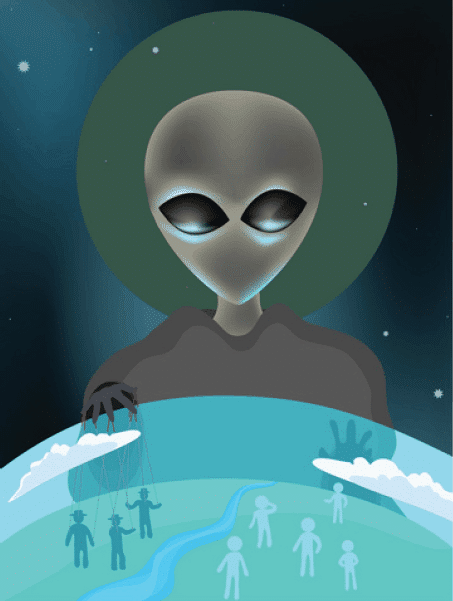
The alien abductee / contactee phenomenon is not all good.
Alien abductee and contactee cases are far more common
than the average person believes. This is the 2nd part of the 2 part series on alien abductees and contactees (click here for part 1). The list continues on – although with these 10 individuals, there are more alien abductee cases than contactee cases, showing a darker side to the whole phenomenon. Some of the alien abductees’ accounts are truly scary and horrifying. There are many alien agendas that exist simultaneously, and it’s not all love and light:

Alien abductee / contactee Bonnie Meyer claims to have met a duck-like race of ETs.
Alien Abductee / Contactee #11: Bonnie Meyer
Bonnie Meyer claims to have come into contact with a race of advanced ETs (Extraterrestrials) who have a humanoid, duck-like appearance. According to Meyer, these ETs were loving and compassionate, and followed the ideal of non-interference (a theme which crops up in alien research, and was made famous by the science-ficton series Star Trek, which promulgated the “Prime Directive” of never interfering in the development and evolution of another race). These beings warned Bonnie about the entrenched unholy alliance between the US Government and the Greys, as well as the existence of weather manipulation programs. They also firmly stated that they were here to help – not save – humanity.
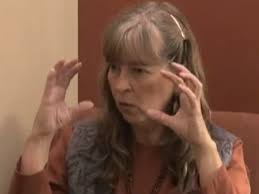
Alien abductee Niara Isley forgot an entire segment of her life (at Tonopah) until she recovered her repressed, traumatic memories.
Alien Abductee / Contactee #12: Niara Isley
Niara Isley exposes how, while serving in the USAF, she was forced at gunpoint to “forget” all the UFOs she saw near the Tonopah base in Nevada. She testifies to the reality of out-of-body travel, Reptilians, free-energy devices and humanity’s psychic abilities, and how the coming ET disclosure and raising of human consciousness will allow us to regain these powers and reactivate our full DNA. Although Isley is a self-admitted MILAB (military abductee), it is fair to also think of her as an alien abductee, since there were Reptilian ETs involved.
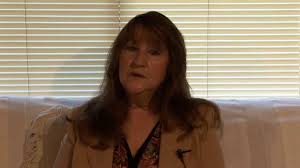
Alien abductee Nadira Duran learnt a lot about the Greys during her time with them.
Alien Abductee / Contactee #13: Nadira Duran
Nadira Duran is another fascinating case of an alien abductee who learnt a lot about the alien agenda through her abduction experiences. Duran claims to have actually met a female Grey ET. This Grey revealed she was wearing a mask and uniform, because the Greys are fragile, and in an Earth-type environment, human germs/bacteria would kill them. To her surprise and shock, Duran discovered her gall bladder was missing – without a visible scar – and recalled it was removed by advanced ET technician! Duran came to believe that time travel was intimately connected to the alien agenda, and that the Greys are future humans going back in time to prevent an undesirable outcome. She states that if humanity keeps on current path, we will end up in fragile bodies, emotionally deficient, unable to reproduce, with short lifespans – the exact reasons why the Greys went back in time.
Interestingly, this theme of the desensitization of humanity – of humans breeding out emotion and becoming purely logical, rational and passionless – is definitely a part of the NWO (New World Order), because the dark forces guiding this are themselves emotionless. Duran’s story has a deep ring of validity to it. Food for thought.
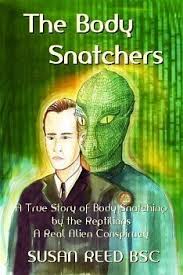
The Body Snatchers, a shocking book by alien abductee Susan Reed.
Alien Abductee / Contactee #14: Susan Reed
Susan Reed went public in her book The Body Snatchers to expose her traumatic relationship with a reptilian consciousness (who had overtaken a human host), who seduced and began a relationship with her. Through this she learnt much about how Reptilian ETs think and behave, and what they want. This is highly significant if you want to understand what is happening on Earth now, and in which direction we are being pushed, since many sources indicate the Reptilians are at the top of the extraterrestrial hierarchy and are the overlords of the New World Order.

Alien abductee “Maarit” chose to remain anonymous in coming forward with her horrific tales of Reptilian abduction.
Alien Abductee / Contactee #15: Maarit
Maarit is the pseudonym of an anonymous, brave Scandinavian woman who is a MILAB (military abductee) and an alien abductee. Her story is an eye-opener for anyone, especially those foolishly believing that only benevolent ETs exist. Maarit explains how hostile ETs (such as Draconian Reptilian ETs [from the star system of Draco]) not only exist, but have been actively carrying out mind control operations, abductions, mutilations and other forms of control against humanity. She reveals how she is herself genetically modified, and how these aliens use soul recycling and cloning technology to keep mankind in submission.

Alien abductee Kim Carlsberg reveals the extensive genetic experimentation being performed on humans by aliens.
Alien Abductee / Contactee #16: Kim Carlsberg
Kim Carlsberg has provided us with a fascinating glimpse into the world of ET contact. She was abducted by aliens and put in a program for many years where she was part of a genetic experiment the aliens were conducting on the human race. She discovered other abductees’ experiences and published a book called The Art of Close Encounters, which contains 150 illustrations along with each person’s intimate story about their encounter. Like many other alien abductees, she alludes to the ongoing alien-human hybrid programs.

A alleged picture of the Venusian ET “Valiant Thor” whom Dr. Frank Stranges got to know.
Alien Abductee / Contactee #17: Frank Stranges
Have you ever wondered why aliens don’t just land on the White House lawn, if they are real? Well guess what? According to Dr. Frank Stranges, they already have. Stranges claims that in 1959 a humanoid alien from Venus called “Valiant Thor” visited Washington DC and met US President Eisenhower and Vice President Nixon. Stranges met Thor and got to know him. He claims Thor stayed at the Pentagon for 3 years, offering to help humanity become free of poverty and disease, but his offers were rejected by Eisenhower, Nixon and other top US officials, who allegedly said the reason for their refusal was that “it would hurt the American economy”! They also refused to tell the public about Thor’s existence, because they said it would cause too much chaos. This fits in with what we know of the massive amount of secrecy around the ET/UFO/Alien issue ever since the Roswell crash of 1947 and the rise of the military-industrial-intellignece complex after WW2.
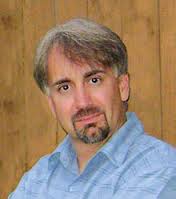
Alien contactee Stan Romanek.
Alien Abductee / Contactee #18: Stan Romanek
Stan Romanek claims to have had incredible ET encounters and even had alien visitations in broad daylight. He even managed to catch an ET, and other inexplicable balls of light, on video. Like other alien abductees, what Romanek has experienced changed his life, and helped him realize how important and powerful the human race is. Fascinatingly, top physicists validated certain mathematical equations Romanek came up with during his hypnotic regression in July 2002, after his first abduction experience. As a side note, Romanek has been affected by this learning disability all of his life and his math competency was estimated to be at a 4th grade level. Romanek’s equations were no only real but extremely advanced, and it seems clear that he had no way of knowing about or fabricating them. Romanek’s overall message is that humanity has forgotten who it is – but we are on the road to recovering that knowledge.

Alien abductee Thomas Reed.
Alien Abductee / Contactee #19: Thomas Reed
Thomas Reed has an incredible story of multi-generational alien abduction which spans 50 years and 5 states! Reed first discovered he was an alien abductee when he was 6 years old. He reveals how he and his entire family were the subject of various visitations over the decades, some scary, some neutral, some enlightening. It has changed his life forever. To this day Reed still continues his search for the reason why all this has happened to him and his family.

Alien abductee / contactee Bridget Nielsen, who claims to have mothered several hybrid alien-human children.
Alien Abductee / Contactee #20: Bridget Nielsen
Even among alien abductees, Bridget Nielsen’s story is extremely remarkable. Nielsen claims she has not only been taken aboard ET craft, but has actually mothered numerous children with ET fathers – in other words, she claims she has created alien-human hybrids. She claims that Greys are humanity’s genetic ancestors, and states that the Greys are borrowing/taking (depending on how you look at it) human genes, like breeding a racehorse, to find certain gene sequences that have special energetic frequencies which they need to construct people. According to Nielsen, the Greys are taking DNA from 8 species: Arcturian, Orion, Pleidian, Sirian, Obsilo, Annunaki, Zeta Reticulan and Homo Sapiens. Nielsen further says the Greys are also taking energetic (not genetic) imprints. Nielsen talks about her relationship with self-admitted Grey ET “Bashar”, channeled by Darryl Anka. Bashar has joked about “abduction dating services” where people are meeting and procreating aboard alien ships. According to Nielsen who quotes Bashar, around 47% of humans are involved in ET abduction programs!
How Much Validity is There to These Cases and Accounts?
Ultimately, you have to decide how much you believe in what these 20 people are claiming. Whether you believe every little detail and word or not, there are undeniably valid themes in the cases of these 20 alien contactees / abductees, comprised of unconnected individuals of both genders, many countries, many personality types and all ages. When different, unconnected people tell stories which contain the same basic themes, over and over again, it is a sign there is a real validity to it, regardless of whether every small point can be proved to the satisfaction of the rational mind. Truth is greater than reason and logic.
Conclusion: Alien Contact and Abduction is a Very Real Phenomenon
The above 20 cases are not isolated. There are tens of thousands of documented cases of alien contact and abduction, and in reality probably many more we don’t know about, since some people either don’t recall the incident (self-imposed memory suppression as a psychological defense mechanism to protect against trauma, or externally imposed memory wipes/mind control), or are too afraid to go public with it for fear of ridicule, ostracism or other reasons. MILABs or military abductees can not account for all the abductee cases (as some like Dr. Steven Greer suggest)! There are simply too many variables in play here.
What About “Contact”?
So where does all this leave us? Well, for starters, contact has already happened. ET is not coming; he’s here. However mass contact has not yet occurred. When considering the reasons for this, Marshall Vian Summers does a good job summing it up:
“The unpopular truth is that the human family is not ready for a direct experience of Contact and certainly not ready for an intervention. We first must put our own house in order. We do not yet have the species maturity to engage with other races in the Greater Community from a position of unity, strength and discernment. And until we can reach such a position, if ever we can, then no race should attempt to directly intervene in our world. The Allies are providing us much needed wisdom and perspective, yet they are not intervening. They tell us that our fate is and should be in our own hands. Such is the burden of freedom in the Universe.
Regardless of our lack of readiness, however, Intervention is occurring.”
The extraterrestrial issue is not just some side issue. It is hard to imagine a topic of greater importance to humanity. Also, for those interested in knowing the truth of who is running the world and how they are doing, the extraterrestrial issue is vital, because when you follow the trail to the very apex of the New World Order pyramid, you discover that it is non-human entities who are really running the show.
It’s time to stop ignoring this crucial issue. Even if we do a great job exposing political corruption, GMOs, geoengineering, secret societies and Satanism, we can’t hope to uncover the full truth while denying the existence of ETs, UFOs and the various alien agendas converging on this planet at this time.
*****
Want the latest commentary and analysis on Conspiracy, Natural Health, Sovereignty, Consciousness and more? Sign up for free blog updates!
Makia Freeman is the editor of alternative news / independent media site The Freedom Articles and senior researcher at ToolsForFreedom.com, writing on many aspects of truth and freedom, from exposing aspects of the worldwide conspiracy to suggesting solutions for how humanity can create a new system of peace and abundance.
Sources:
*https://www.youtube.com/watch?v=szyHwRHuNFs
Soul-Catching Net: Are We “Recycled” at Death to Remain in the Matrix?
 Charles Wharry (Darkbird18: )

