
Carlos Castaneda: The Myth and the Man
From New Dawn 187 (Jul-Aug 2021)
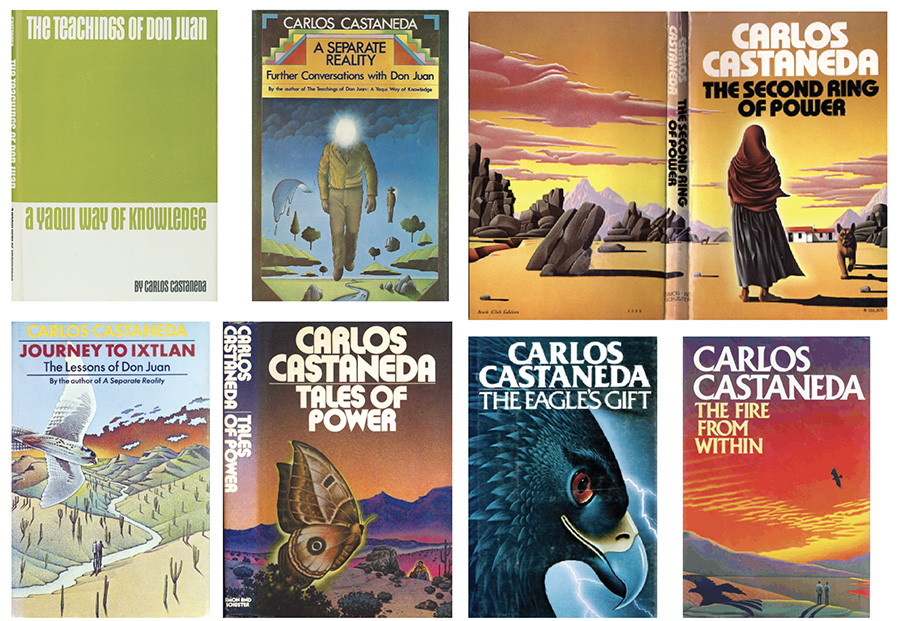
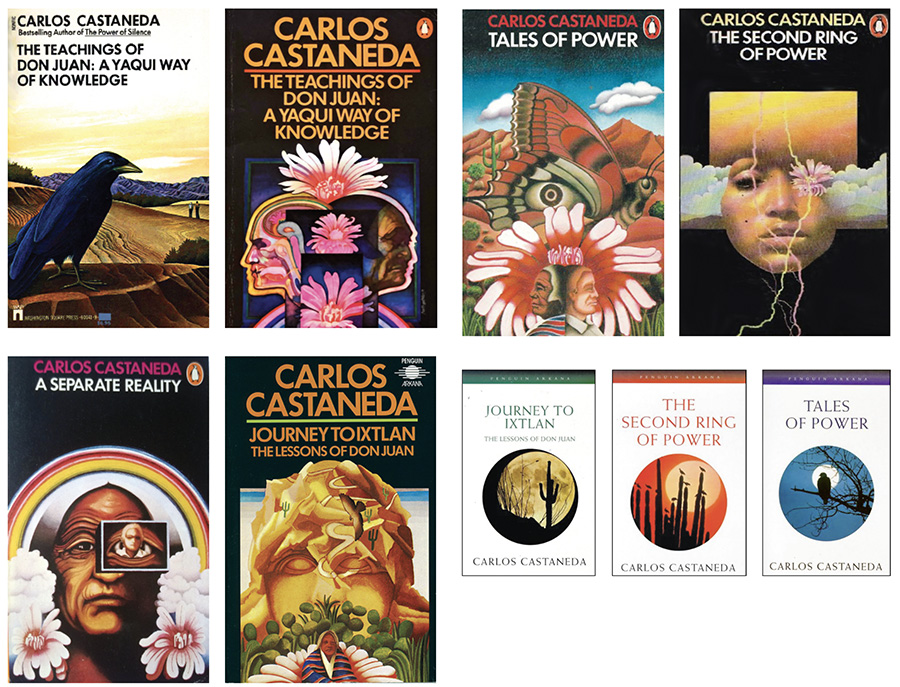
Carlos Castaneda burst onto the scene in the 1960s after rave reviews of his early books, The Teachings of Don Juan and A Separate Reality. This was during the early heyday of psychedelics and here was an anthropologist telling the world how to do it right – and by right, I mean using drugs to enter advanced states of consciousness while guided by his Native American teacher, don Juan Matus. Over the next couple decades, Castaneda went on to publish several best-sellers about an ancient lineage of shamans who originated in central Mexico.
During those years, Castaneda has been the subject of acclaim, almost to mythological proportions from adoring fans. He was also, and continues to be, the target of ruthless criticism among assertions that he was a fraud, that he made the whole darn story up, and delights in laughing at us all on the way to the bank.
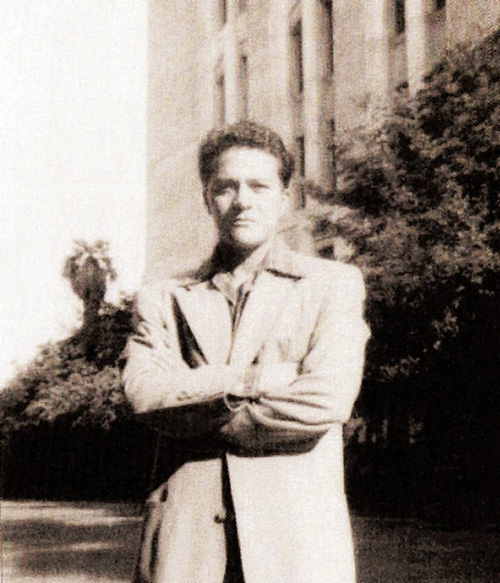
In my view, he is neither deserving of being placed on a pedestal, which is contrary to shamanic teachings he espoused, nor of having people decry his work without accurate foundation. I rest my considerations on having implemented the teachings in his books and subsequently finding my own teacher, which it turned out was to be don Juan, himself. I also used Castaneda’s books as a primary reference to fully engage the path and crystalise don Juan’s instructions to me. In other words, I replicated Castaneda’s experiment.
I think Castaneda was a brilliant anthropologist. His books clearly paved the path for others to enact. But he shouldn’t be equated as having the knowledge of don Juan, as even with Castaneda’s extensive learning their worlds remained far apart. However, with his artful renditions of encountering a world seen and lived by only a few, it is easy to allow him a meritorious rise to stardom.
The Teachings
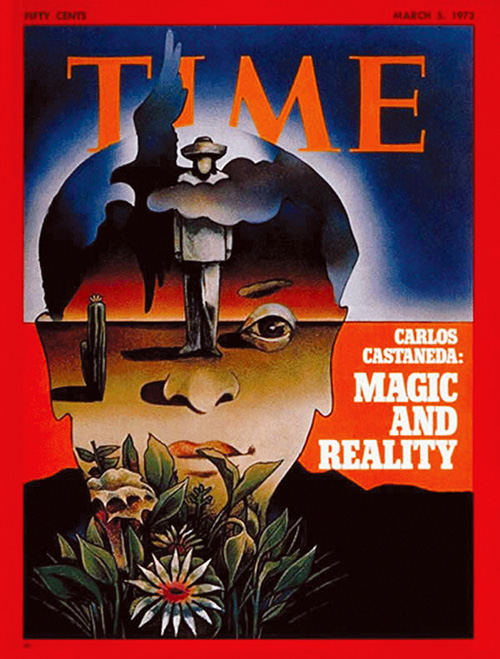
Don Juan hooked Castaneda into learning the craft by giving him an anthropologist’s dream, that of introducing him to a foreign cultures’ practices of using lizards as dreaming emissaries, visiting inorganic worlds, and learning the social machinations of shamans. But this didn’t speak to the main agenda of don Juan’s teachings: engaging Castaneda with his complete energy body, accelerating the development of consciousness, and doing so in a way that would move him away from ancient perspectives and into contemporary practices.
In the early stages of Castaneda’s apprenticeship, mind-altering substances – power plants – were integral to his learning shamanism. He initially thought they were the basis of don Juan’s teachings. However, he later realised that this thinking was erroneous. Castaneda came to understand that don Juan gave him several types of psychoactive plants to alter his awareness in order to gain experience.Without using them, don Juan thought that Castaneda was too slow to catch onto the teachings. But once Castaneda grasped the meaning behind their use, he stopped using them, noting that the most meaningful events and personal changes occurred when he was sober and clear-headed, and not from having ingested drugs.1 As a result of his research efforts, Castaneda was awarded a doctorate in anthropology from University of California, Los Angeles (UCLA).
An important consideration, Castaneda’s conversations with don Juan were in Spanish, so Castaneda translated them into English. Initially, he used the term “sorcery” for the philosophy, translating from don Juan’s use of the word “brujo” which has many connotations. Early in his apprenticeship, Castaneda also relegated the teachings to Yaqui culture. But don Juan regarded the teachings not to be associated with any culture and found both sorcery and Yaqui connections to be inadequate. In his later work, Castaneda settled on the terms “shaman” and “seer.”2-4
My Task
Carlos Castaneda - The Teachings of Don Juan (Abridged Version)
Castaneda’s task given to him by don Juan was to bring to light shamanic teachings, not by what he thought about them but in line with don Juan’s verbatim instructions and explanations. Don Juan later gave me the task of writing about Castaneda’s books. As part of my training with don Juan, I had to rely on Castaneda’s books for many of the details concerning shamanic practices. My apprenticeship was similar to yet different than Castaneda’s. While I have had many experiences that parallel his, our characters and temperaments are not well-matched. This resulted in contrasting methods of instruction by don Juan. For instance, Castaneda was with don Juan for extended periods; I was with him only for short visits. Don Juan fully explained his teachings to Castaneda; don Juan required that I obtain additional instruction from a wide variety of sources in order to expand and elaborate on his teachings to Castaneda.
The Great Debunking
Castaneda’s work was and continues to be controversial. People of high esteem claim that awarding Castaneda a doctorate was UCLA’s worst mistake ever. Everyone knows his books are fiction (really?… everyone?). Castaneda is a fraud, continued a litany of accusations. He never talked with me about it, so it must be false. Such shamans could not possibly exist. Their worldview is simply preposterous. You won’t find one anthropologist who doesn’t think Castaneda to be a clever con man. It’s a hoax. UCLA has revoked his PhD! On and on….
Debunking the Debunkers
I’ve found that much of the criticism is baseless, often riddled with errors. While I rely on my experience as evidence of Castaneda’s legitimacy, there are other factors. Hearing well-credentialed scientists decry Castaneda, stating that his PhD had been revoked, I wanted to verify the claim. A representative of the UCLA anthropology department told me that it wasn’t true, that Castaneda was viewed as any other PhD graduate and, oh, by the way, the anthropology department hears such erroneous claims and rumours all the time.5
It is noteworthy that jumping on the debunking bandwagon (any bandwagon) is a fallacy of logic, of good reasoning. People enjoying their bandwagon ride tend to studiously disregard corroborations of Castaneda’s work. A body of evidence supporting Castaneda’s efforts includes an assortment of books written by both academics and laypeople.6-15 But, hey, let’s not pay attention. Too messy to do so. Our worldview, and so the world itself, might crumble.
To balance things out, I’ve met academic notables who support Castaneda’s efforts, even saying that anthropology students would do well to verse themselves in Castaneda’s books because he demonstrated a high level of proficiency in conducting himself as an anthropologist in the field when dealing with don Juan and other shamans.16
It’s also important to assess the work of the debunkers. It is often the case that they commit the same mistakes of research methodology that they accuse Castaneda of committing. (Projection, plain and simple.) And they take to their bank the claims of their colleagues without critical evaluation, a dereliction of scientific duty. As a result, part of the arguments against Castaneda stands on compiling and continuing prior research errors. As don Juan maintained, the intent for most people is to shun information that doesn’t conform with their thoughts.17
An Emic Style
Another factor in addressing Castaneda’s legitimacy is understanding his style of anthropological investigation, which he stated was an emic approach, a classic but seldom used method.18 This is an accounting based on the point of view of a participant rather than an etic approach where the researcher is on the outside looking in. Etic practitioners often say that theirs is the more objective method whereas those in the emic camp say you really don’t know until you’ve been there yourself.
If we apply an emic standard, and so regard his research as originating from inside the shamanic tradition rather than the more common and seemingly detached observing and reporting, Castaneda’s books are entirely consistent with that body of teachings. His books may then be viewed as the culmination of a learning project where he was required to perform the teachings to achieve anthropological insight. In this light, his books represent having personally learned about and then reported on shamanism, a true representation of emic anthropology.
Wavefield Science
Controversies surrounding Castaneda are no different than those surrounding new scientific theories or pretty much any other advance in thinking and understanding. For example, modern quantum wavefield physics is also controversial as are and were many scientific discoveries. It often takes a couple generations for new views, especially those at a cosmological level, to take hold.19
It turns out that the emerging field of wavefield physics supports what shamans have known for centuries (with scientific publications occurring after Castaneda began publishing): the world is exclusively energy, physical objects only appear to be material due to a coherence of energy, other dimensions exist, and any point of view or method is an interpretation. Modern wavefield science deals exactly with the same central pillars of cosmology shamans have investigated. It is therefore accurate to say that the considerations of a new breed of wavefield researchers are now catching up to those of ancient shamans.20 Emerging wavefield theory stands to be key evidence in validating Castaneda’s work.
The Man
Aside from professional controversy, there was (and maybe still is) concerns that Castaneda had somehow slipped off the path don Juan helped him navigate only to entertain the dark side of life a bit too much. This line of thinking presents a host of problems, some of which I’ll address. First, though, darkness is a common element among mystics, shamans being one type. For example, old cycle shamans referred to the dark sea of awareness because its content was beyond their grasp, and so the unknown was dark, as in not yet grasped.
And then there’s the dark side of the old cycle that don Juan struggled to get Castaneda to turn away from, things like controlling others, seeking recognition, and succumbing to the unknown in a way that prevented more robust growth. In addition, given that he was a three-prong nagual (a certain type of energy body) subject to erratic behaviour and that he also had old cycle tendencies, a dimension of darkness was within him. Castaneda illuminated these personal foibles throughout his books, adding immeasurable insights to his writings.
It may be that Castaneda placed too much emphasis on achieving academic recognition. He may have not made the full shamanic cut in that he placed more emphasis on anthropology than on don Juan’s wisdom of trying to get him to avoid those types of pitfalls.
As portrayed in his books, Castaneda may also have fallen too much under the influence of those around him. At a given point, don Juan was out of the picture and Castaneda’s sense of membership hinged on those with whom he associated. As a result, once ardent followers lamented that his work had become darker than the higher-end shamanism of don Juan. This was something don Juan warned him about (another testament to the books and author) but he evidently struggled.
Furthermore, in his later years Castaneda suffered from terminal illness, something that can derail the best of us. He died on 27 April 1998, 72 years old, due to complications arising from liver cancer.21