

Gladio B: The Origins of NATO’s Secret Islamic Terrorist Proxies By Tom Secker | Mar 11, 2013 | Featured Articles, War and Terrorism, World News | 0 Comments

At the end of WW2, as the Allied forces withdrew from continental Europe, the American Office of Strategic Services and the British Special Operations Executive left some paramilitary and intelligence units in place in the host countries. These so-called ‘stay behind’ secret armies had been used successfully against the Axis powers during the war, alongside various other commando-type units. Notably, Ian Fleming (author of James Bond) was loosely in charge of the famed 30 Assault Unit, and his brother was involved in setting up the stay-behinds used during the war. The purpose of these secret armies in the post-war period was to act as a first resort fall back option in case of a Soviet invasion of Western Europe. However they also had an implicit mission of harassing the Soviets pro-actively in time-honoured guerrilla fashion. During the Yalta conference Josef Stalin referred to this, talking about “agents of the London government connected with the so-called resistance” in Poland who had killed 212 Russian soldiers. Franklin Roosevelt suggested that would be a good point to adjourn the meeting, before Winston Churchill, without explicitly denying what Stalin had claimed, said, “I must put on record that both the British and Soviet governments have different sources of information in Poland and get different facts.” Given that it was Churchill who notoriously gave the order that British commando and resistance forces “set Europe ablaze”, the old soak was clearly just covering his back with this remark [1].
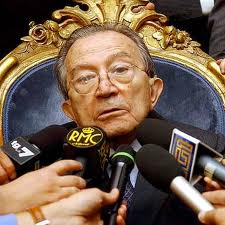
So, when the war ended this mission continued, with secret military and intelligence units operating in all the NATO member states, and even in those countries that were not members of NATO such as Sweden and, at least for a time, France. Only select members of the governments of the host countries were let in on the secret – sometimes even the heads of governments were kept in the dark by those within the military and intelligence institutions who were in the know. As such, the stay behind armies operated in the shadows, with almost no public recognition of their influence until 1990, when then Italian Prime Minister Giulio Andreotti admitted that the units in Italy, codenamed Gladio, did exist and had existed for decades.

The Third Mission
What Andreotti did not admit, but what has become clear through various official and unofficial investigations since then, is that the secret armies developed a third mission, namely, countering the domestic support for Communist and Socialist ideologies, policies and parties. MI5 files now available via the National Archives show that the paranoia in Western intelligence agencies about Communist political subversion took hold even before WW2, let alone the Cold War. Just as they had spied on, infiltrated and manipulated the turn of the century Anarchist movement, they subjected the trade unions, the labour movement, all Communist groups and many suspected Communists in positions of public authority (such as authors) to the same tactics. They even spied on their own former spies, including Arthur Ransome, who had been in Russia during the Bolshevik revolution keeping an eye on Leon Trotsky. Exactly when the pro-active part of the secret armies mission was turned into a means for domestic counter-subversion is not clear. At some point in the 1950s or 1960s there was a change in strategy that used the secret armies not just to gather intelligence on these groups and individuals, but to destroy their support through violence. Numerous terrorist outrages, from Turkey to Ireland, were instigated, provoked or simply carried out by members of the secret armies, including numerous bombings in Italy and the assassination of Aldo Moro, the Oktoberfest bombing in Munich and the Brabant Massacres in Belgium. All forms of urban terrorism were perpetrated, often by neo-Fascists posing as Leftists, in order to terrify the public, polarise public opinion and destroy support for mainstream Leftist political movements. The process was a great success, ultimately contributing to the downfall of the Soviet Union and ensuring that the policies chosen by the leaders of NATO countries were in keeping with the overall trajectory desired by the Anglo-American establishment [2] This story is relatively well-known among students of alternative history and advocates of alternative media, though the operation of the secret army here in the UK has not been subject to the detailed research of, for example, the Italian Gladio.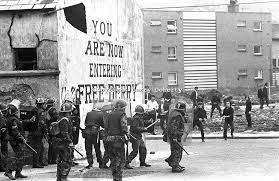
Perhaps this is a matter of semantics, because at the moment the stay behind units on the continent started their reign of terror, the Irish ‘Troubles’ also began. The same tactics were applied to the political movement for independence in Ireland as to the democratic Communist movement in Italy and elsewhere. Both the Republican and Loyalist radical factions were infiltrated, radicalised, militarised and set down a path of self-destructive and counter-productive violence. This issue of collusion in the Irish conflict has, like the stay behind armies, been outlined in numerous official and unofficial inquiries, most prominently the Cory inquiry [3]. While this knowledge about Gladio and the other secret armies is extremely significant, it is largely historical. There is no threat of domestic subversion from Communism anymore, either real or fabricated, and the world has kept on spinning. While the Irish conflict still simmers, the prolonged campaign of urban terrorism on the British mainland ended over 15 years ago, and so one might well ask why is this still important?
Gladio Part B
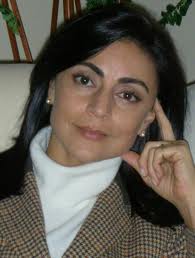 The answer to that question has been provided through a series of exceptional interviews with former FBI translator and respected whistleblower Sibel Edmonds, carried out by “one of the world’s few remaining 9/11 conspiracy theorists” James Corbett. Over the last few weeks, Edmonds has outlined how the contemporary spy-game around radical Islam, documented in the works of Nafeez Ahmed among others, is actually a follow-on from Gladio. She refers to it as ‘Gladio B’, identifying a change in policy around 1996, following the Suserluk incident that once again betrayed the forces at work in the Turkish deep state. To paraphrase Edmonds: though the collusion with radical Islam had been going on for decades, it wasn’t until 1996 that a formal decision was made by NATO to abandon their previous secret relationship with neo-Fascists and arch-Nationalists and replace them with Islamists.
When Did Gladio A Become Gladio B?
Sibel Edmonds and James Corbett on Gladio B Part 2
Meanwhile in Italy a judge named Felice Casson was investigating various acts of terrorism including the 1972 Peteano bombing. This eventually led him to the perpetrator – Vincenzo Vinciguerra, a neo-Fascist and member of Ordine Nuovo and Avanguardia Nazionale who had been spirited out of the country after the bombing and protected by the international Gladio network. Vinciguerra was brought back to Italy and he started to talk, explaining the whole operation. At this point his protection was stopped, and he was subsequently put on trial. If the information coming out of Turkey wasn’t enough to signal to NATO that the veil of secrecy around the secret armies was wearing thin, then Vinciguerra’s testimony certainly was.
Belgian stay-behind network

The Belgian stay-behind network, colloquially called "Gladio" (meaning "sword"), was a secret mixed civilian and military unit, trained to form a resistance movement in the event of a Soviet invasion and part of a network of similar organizations in North Atlantic Treaty Organization states. It functioned from at least 1951 until 1990, when the Belgian branch was promptly and officially dissolved after its existence became publicly known following revelations concerning the Italian branch of the stay-behind network.
History
The history of the Belgian branch of the Gladio network starts in 1948 when Prime Minister Paul-Henri Spaak and Minister of Justice Paul Struye gave the Staatsveiligheid (State Security Service) permission to discuss with allied intelligence services the organization of a clandestine stay-behind network. These negotiations mainly happened with Sir Stewart Menzies of the British SIS and representatives of the then freshly founded CIA. The explicit objectives of this collaboration were outlined in a top-secret letter from Menzies to Spaak:[citation needed]
— Sir Stewart Menzies, January 27, 1949
The amount of influence at this early stage, accredited to the CIA varies from source to source. CIA did not yet have full authority over the Office of Policy Coordination, which directed U.S. covert action until 1952. During the initial negotiations Menzies proposed to keep the US out of the organization, but Spaak objected to further developments not being in a tripartite (Belgium–Great-Britain–United States) or multilateral setting. In the final report of the parliamentary inquiry there is little mention of CIA involvement, but investigative journalist Walter de Bock points, based on Pentagon documents,[clarification needed] at the CIA's significant early organizational role and de facto control until 1968.[1] Similarly, Colonel Margot complains in an internal note, dated April 8, 1959, about the influence of the US intelligence services on the Belgian branch of the Gladio-network.[2]
These initial negotiations led to closer collaboration between the three countries' secret services under the name Tripartite Meeting Belgium. Following this meeting, the Belgian stay-behind network became operational, but it was not until January 4, 1952, that the first formal instructions for stay-behind operations were issued to Ludovicus Caeymaex (Staatsveiligheid) and General Etienne Baele.[3]
Growing polarization between East and West and awareness of the need for continental collaboration led to the foundation in 1949 of the Comité Clandestin de l'Union Occidentale (C.C.U.O.), which contained Belgium, The Netherlands, Luxembourg, France and Great-Britain.[4] The C.C.U.O. laid the base for the formation of the NATO and coordinated the various stay-behind networks in the five member countries.[5] Its functions were transferred to the Clandestine Planning Committee (C.P.C.), another NATO-organization in 1951, which was renamed in to Coordination and Planning Committee in 1959.[6] The C.P.C. elaborated a plan for installing two taskgroups, one for communications and one for secret networks, a structure reflected in the Allied Coordination Committee (A.C.C.) founded in 1958 to relieve the C.P.C. of some of its tasks.[6]
The A.C.C. consisted of the members of the C.C.U.O. plus the US and coordinated the stay-behind activities, as was stipulated on its first meeting in April 1959 under French supervision:
— Declaration of principles, April 29–30, 1959
These interlocking coordination organizations, like the C.P.C. and A.C.C, were initially headquartered in Paris, but moved along with SHAPE, NATO's central headquarters, to Mons in Belgium after the French withdrawal from NATO's unified command structure in 1966. After the initial six counties, Germany, Italy, Denmark and Norway became members of the A.C.C.. Though all of the counties were members of NATO, an official link between the A.C.C and NATO was denied. The parliamentary committee noted "... one can not do away with the impression that in practice closer and closer relations did come to exist".[7]
In the following decades the stay-behind activities were mainly coordinated through A.C.C.-meetings. These activities consisted officially of (multinational) training activities like infiltration, parachute jumping and long range communications, of which numerous were held at least between 1972 and 1989.[8] Due to the secretive nature of the network, the milieu of various operatives involved and the Cold War setting, allegations were raised that the stay-behind network was during this time also at least indirectly involved with clandestine actions on Belgian soil. The last documented meeting of the A.C.C took place on 23 and 24 October 1990 under supervision of General Van Calster, where the participants discussed a.o. a scaling-back of the stay-behind network in light of changing international relations.[citation needed]
This was the meeting that Italian president Giulio Andreotti[clarification needed] was referring to following the October 24, 1990 revelation of the existence of Gladio in Italy, a revelations several others governments' spokespersons[example needed] reacted to by claiming that any stay-behind in their own country was history. This only exasperated Andreotti, who declared to the press that the last stay-behind meeting had taken place in Belgium a few days ago. After the exposure of the Italian branch and inquiries by Italian officials to their Belgian counterparts, Defense minister Guy Coëme and Prime Minister Wilfried Martens made the existence of the Belgian section of the Gladio-network public in a press meeting on November 7, 1990.[citation needed]
The government decided on November 23, 1990, a few days after the proposition for a parliamentary investigation to officially disband the network.[citation needed]
Organization, activities and resources
The Belgian Gladio-branch consisted of two separate sections:
- S.D.R.A VIII (French: Service de Documentation, de Renseignments et d'Action VIII, "Documentation, Information and Action Service VIII"), residing under the military intelligence service, the Belgian General Information and Security Service (S.G.R) and thus the minister of Defense.
- S.T.C/Mob.[9] (Dutch: Sectie training, communicatie en documentatie "Training, Communication and Documentation Service"), residing under the Staatsveiligheid and thus the minister of Justice.
S.D.R.A VIII was one of the sections of S.D.R.A (military security service), which in its turn is part of the S.G.R. (general military intelligence and security service). The S.G.R's functions are formally described in a decree from 1989 and are twofold: intelligence gathering and ensuring the security of military personnel and installations, issuing clearances, etc. The S.D.R.A is mandated with the second task, and is dived into functional sections: for instance, S.D.R.A III is contra-infiltration (for S.D.R.A XI, see further).
The members of S.D.R.A VIII were military personnel, trained in unorthodox warfare, combat and sabotage, parachute jumping and maritime operations.[10] The operatives were trained to accompany the government aboard in case of a Soviet invasion, and then establish liaisons with the Belgian resistance movement and engage in warfare.[citation needed]
Oversight
During the parliamentary investigation, the committee stumbled by chance on the existence of the Coordination and Planning Committee secretariat, which formed S.D.R.A XI, but was funded through secret NATO payments. When Paul Detrembleur, former head of the S.D.R.A and last administrator of S.D.R.A XI/C.P.C.-secretariat, was called to testify before the parliamentary inquiry about the activities of this section about the Gladio-activities, he refused to divulge any information.[11][12]
The final parliamentary report stressed the resulting incomplete insight into the functioning of the C.P.C. and its relation to S.D.R.A. VIII, which formally organized the military section of the Gladio network. The report noted that the C.P.C. was responsible for the relations between the Belgian secret services and the NATO high command (especially SHAPE), and that the witnesses denied being involved with stay-behind activities. The reason was, the latter claimed, that NATO was "forward defending"-oriented and thus not interested in stay-behind activities in countries like Belgium, which did not border Warsaw Pact-nations. The commission then further noted the discrepancy between these claims and given reason, and the fact that the C.P.C. co-coordinated the S.D.R.A. VIII and participated in the A.C.C.-meetings.[13]
S.T.C/Mob. function and oversight
The civilian branch of the Belgian stay-behind had the mission to collect intelligence under conditions of enemy occupation which could be useful to the government and to organize secure communication routes to evacuate the members of the government and other people with official functions.
![[icon]](https://en.wikipedia.org/wiki/File:Wiki_letter_w_cropped.svg)
Military trainers/operatives and civilian operatives
- Recruitment (how, criteria)
- Training activities (joint international training/war games, sabotage, intelligence ....)
- Funding (equipment)
- Weapons, weapons-depots.
Both military intelligence and Staatsveiligheid maintained dossiers on Gladio training activities, of which incomplete versions were made available to the parliamentary committee. Events from the list of operations by the military branch was provided by Coëme and is denoted by A, while events from the list from the archives of the Staatsveiligheid (titled "Overzicht oefeningen in het kader ACC – periode 1980-1990") is denoted by B:
- (A) 1972: Training on clandestine techniques.
- (A) 1976: Training on radio-communications, intelligence, maritime operations, aerial operations and escape routes.
- (A) 1977: Training on optimizing techniques to locate downed pilots and the use of escape routes.
- (A) 1978: In-door training on clandestine missions.
- (A) 1980: Training on parachute-jumping, long-distance radio communication and clandestine techniques.
- (B) June 1980: OREGAN II
- (A) 1981: Lessons and training on clandestine activities.
- (A) 1983: Training on escape routes, intelligence, aerial operations and radio communications.
- (A) 1985: Six trainings (at least two outside Belgium, one in Belgium): infiltration a parachute-jumping, extracting material through escape routes.
- (A) 1986, 1987 & 1988: : Trainings outside Belgium on intelligence operations and radio communications.
Minister Melchior Wathelet testified before the parliamentary inquiry that secret weapon depots were created in the 1950s, of which a first one was discovered in 1957 due to a landslide, and a second one in 1959 by playing children. He further stated that after these discoveries it was decided to abandon the depots and transfer the weapons to a military depot.[8] An inventory report, dated 1991, for the military section of Gladio mentions inflatable boats, video-equipment and around 300 weapons, including M1 carbines, MP40 submachine guns and "armes en cocon", weapons packaged for long-term storage.[14]
Parliamentary inquiry
Overview
After the existence of the Belgian branch of the Gladio-network became public, speculations and allegations about involvement of the Gladio-operatives in various high-profile and often unsolved crimes and terrorist acts during the 1980s began to appear in the media. To investigate these allegations and clarify the operation of the Belgian branch, a senatorial investigative commission was established on 20 December 1990. It was tasked with clarifying the structure, aims etc. of the network and the amount of oversight; which connections existed with domestic and foreign intelligence and police services; and whether there was a link with events previously examined in parliamentary inquiries[15] or certain serious crimes and terrorist acts committed the previous decade.[4]
Chairman senator Roger Lallemand [clarification needed]
The commission convened from 16 January 1991 until 5 July 1991, during which fifty seven meetings were held and thirty seven witnesses were heard. Amongst those who testified before the commission were ministers Guy Coëme, Melchior Wathelet and Louis Tobback; former administrator-director-general of the Staatsveiligheid (77-90) and head of STC-MOB Albert Raes, Ludo Caeymaex (administrator-general Staatsveiligheid 58–77); then current administrator-general of the Staatsveiligheid Stéphane Schewebach, Jacques Devlieghere (Staatsveiligheid 78–89, nr. 2); S.D.R.A.-operative André Moyen; Gladio-instructors Guibert Nieweling (code name "Addie"), Michel Huys ("Alain"), Etienne Annarts ("Stéphane").
Problems
The two major obstacles facing the commission of inquiry were firstly the secret nature of the case and the related unwillingness of witnesses in disclosing information and secondly time constraints.
Firstly, due to the nature of the case, and the various legal, professional and military requirements of confidentiality, the commission went to great lengths in limiting public access to discussed material. For instance, the parliament did forgo an earlier proposition for a parliamentary in favor for the proposition by Lallemand which included the requirement that the commission operated behind closed doors (in contravention to the regular parliamentary inquiry procedures).[16] Lallemand placed also additional restriction on the ability to communicate with the press, handling of documents, etc. These restrictions were criticized both for being undemocratic, unnecessary or counter-productive and for not being strict enough.[17]
The committee initially envisaged a solution whereby the names of the operatives were handed to three selected magistrates, familiar with the relevant unsolved criminal investigations. The relevant agencies and witnesses refused to do so, with the refusal varying from polite claims of forgetfulness or references to oaths of secrecy to outright hostility.[18] This issue was compounded by the fact that records on former operatives were systematically purged and the magistrates were not up to date with more recent investigations. Gijsels noted that order... ?Names with the CIA/London? The final report then concluded that the cooperation from both the military and the Staatsveiligheid was generally satisfactory, but deplored the stubborn withholding of the names of civilian operatives. Parlementaire Commissie (1991), p. ?[clarification needed]
Secondly, the commission faced time-related problems. The time allotted to the commission was initially five months, a period which the final report deplored as "very little" and short in comparison to other inquiries. The Senate granted on July 12, 1991, a request for extra time, which enabled the committee to work for another three months. Unfortunately most of the allotted time fell during the parliamentary recess, which further frustrated the effort to fully pursue the intended lines of inquiry. For instance, the commission had planned to interview several investigative journalists, people like Richard Brenneke and had requested several "dossiers chauds" (English: "hot cases").[clarification needed]
Handled material and major findings
Handled material: Westmooreland, John Wood/Rudy Daems, ...
Conclusions and impact
Reactions & indirect effect inquiry: Comité-I.[clarification needed] In 1995, the Belgian Chamber of Representatives organized a parliamentary inquiry into the effectiveness of the Belgian police and judiciary with regards to the Nijvel gang investigation. The conclusions of this inquiry, as well as the earlier Senate inquiry on SDRA8 and the Chamber inquiry on banditism, resulted in the preparation of new legislation governing the mission and methods of the Belgian State Security Service and Belgian General Information and Security Service, which was passed in 1998.[citation needed]
Charles E. Wharry (Darkbird18),

Darkbird18 is looking at the Gladio events and I can see darkness at it highest level the Illuminati, NWO and the dark forces of darkness is at work here! This terrorist is all big plain by the dark side to control the world for same unseen reason but it most be important because they have the whole world looking but what is really happen is some where else but what? This article will help you understand how deep the rabbit holes goes and the key players in this dark game for control and power but for who? I smell a unseen player in this game so deep in darkness not even the bad guys can see it hand and man what a hand! Read this article and watch the YouTube to get the information on Gladio. The rest of the article from WideShut.co.uk can be read by clicking on the link below………….. Gladio B: The Origins of NATO’s Secret Islamic Terrorist Proxies – WideShut.co.uk: Beyond News


