by Konstandinos Kalimtgis, David Goldman, Jeffrey Steinbergfrom Archive Website
PART I
History of Britain's First Opium Wars
The Opium Wars (In Our Time)
Introduction
This is the setting for what follows below: narcotics are pouring in from abroad through a well-organized, efficient group of smugglers.
This is the setting for what follows below: narcotics are pouring in from abroad through a well-organized, efficient group of smugglers.
One-fifth of the population abuses drugs, an epidemic surpassing any known since the Great Plagues. Not only the poor, but the wealthy and the children of the wealthy have succumbed. Within the nation, organized crime displays its drug profits without shame, ruling local governments, and threatening the integrity even of national government. None of their opponents is safe from assassins, not even the chief of state. Law enforcement is in shambles. The moral fiber of the nation has deteriorated past the danger point.
And one of the leading dope-traffickers writes to his superiors abroad, "As long as this country maintains its drug traffic, there is not the slightest possibility that it will ever become a military threat, since the habit saps the vitality of the nation." (1)
And one of the leading dope-traffickers writes to his superiors abroad, "As long as this country maintains its drug traffic, there is not the slightest possibility that it will ever become a military threat, since the habit saps the vitality of the nation." (1)
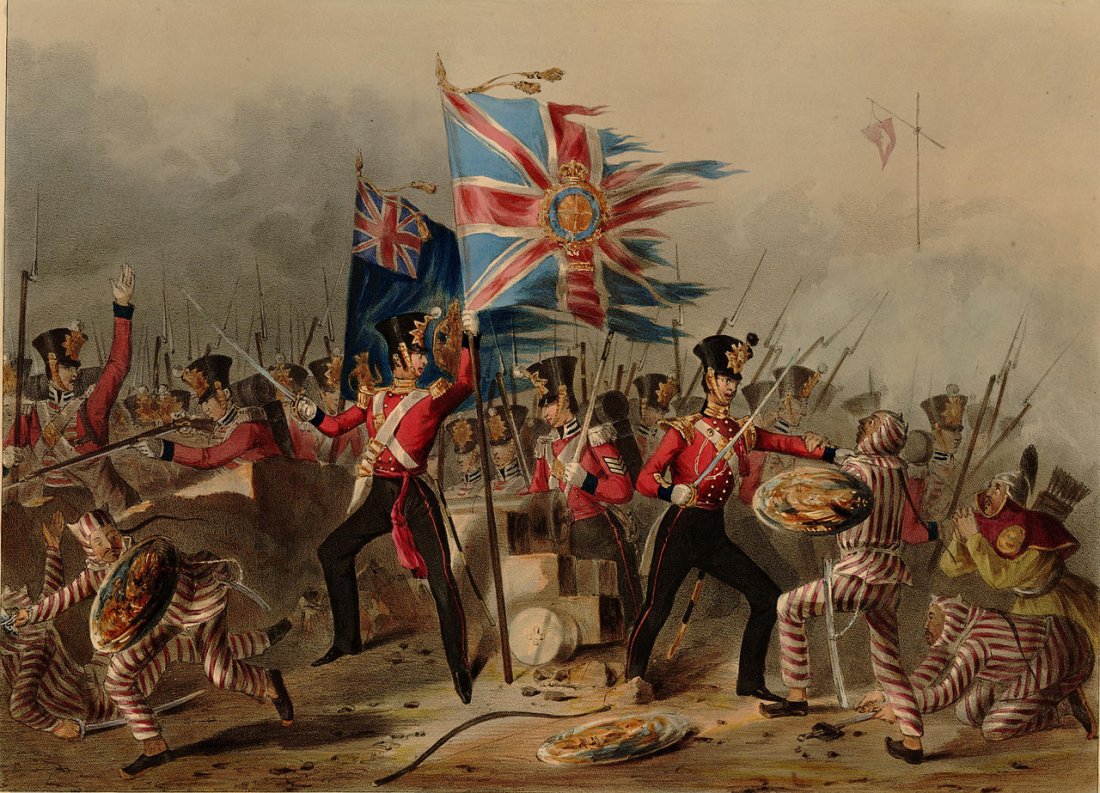
The description is familiar, but we are not writing of America in 1978, but China in 1838, on the eve of the first Opium War, when Great Britain landed troops to compel China to ingest the poison distributed by British merchants.
An American President lies dead of an assassin's bullet.
Corrupt members of the Cabinet cover the tracks leading to a conspiracy, including the leading narcotics mobs, ethnic-based secret societies, and a foreign government. The public does not believe that the assassin acted alone, but the weight of the cover-up, the silence of the leading press, and the deaths of witnesses blur the trail from the public’s view.
Was that the death of John F. Kennedy? It was also the death of Abraham Lincoln.
During the last century, British finance protected by British guns controlled the world narcotics traffic. The names of the families and institutions are known to the history student: Matheson, Keswick, Swire, Dent, Baring, and Rothschild; Jardine Matheson, the Hong Kong and Shanghai Bank, the Chartered Bank, the Peninsular and Orient Steam Navigation Company. Britain’s array of intelligence fronts ran a worldwide assassination bureau, operating through occult secret societies: the Order of Zion, Mazzini’s Mafia, the “Triads” or Societies of Heaven in China.
Paging back over the records of the narcotics traffic and its wake of corruption and murder, the most uncanny feature of the opium-based Pax Britannica is how shamelessly, how publicly the dope-runners operated.
Opium trading, for the British, was not a sordid backstreet business, but an honored instrument of state policy, the mainstay of the Exchequer, the subject of encomia from Britain’s leading apostles of “Free Trade” - Adam Smith, David Ricardo, Thomas Malthus, James Mill, and John Stuart Mill. The poisoning of China, and later the post-Civil War United States, did not lead to prison but to peerages.
Great sectors of the Far East became devoted to the growing of the opium poppy, to the exclusion of food crops, to the extent that scores of millions of people depended utterly on the growing, distribution and consumption of drugs.
The Keswicks, Dents, Swires and Barings still control the world flow of opiates from their stronghold in the British Crown Colony of Hong Kong. Jardine Matheson, the Hong Kong and Shanghai Banking Corporation, and the Peninsular and Orient Steam Navigation Company still control the channels of production and distribution of the drugs from the Far East, through the British dominion of Canada, into the United States.
By an uninterrupted chain of succession, the descendants of the Triads, the Mafia, and the Order of Zion still promote drug traffic, dirty money transfers, political corruption, and an Assassination Bureau even more awesome than the conspiracy that claimed Abraham Lincoln's life. Of course, the drug revenues of this machine are no longer tallied in the published accounts of the British Exchequer.
But the leading installations of the drug traffic are no more hidden than they were a hundred years ago. From the Crown Colony of Hong Kong, the "HongShang" Bank (a.k.a. Hong Kong & Shangai Bank) does what the Keswicks set it up to do: provide centralized rediscounting facilities for the financing of the drug trade. Even the surnames of senior management are the same.
Even today, the grand old names of Prohibition liquor and dope-running rouse the deep awareness of Americans: Bronfman, Kennedy, Lansky. Are the denizens of the India opium trade, of the Prohibition mob, imprisoned in the history books and behind the movie screen?
Even today, the grand old names of Prohibition liquor and dope-running rouse the deep awareness of Americans: Bronfman, Kennedy, Lansky. Are the denizens of the India opium trade, of the Prohibition mob, imprisoned in the history books and behind the movie screen?
Not infrequently, the observer feels a momentary lapse in time, and sees not a history book, but the morning newspaper, not the late-night movie, but the evening television newscast.
The story we have to tell happened twice. It first happened to China, and now it is happening to the United States.
The story we have to tell happened twice. It first happened to China, and now it is happening to the United States.
Emphasizing that neither the names nor the hangouts of the criminals have changed, we begin by telling how it happened the first time.
Back to Contents
Back to Contents
When Britain was the largest drug dealer in the World
1 - Britain's First Opium Wars
From 1715, when the British East India Company opened up its first Far East office in the Chinese port city of Canton, it has been official British Crown policy to foster mass-scale drug addiction against targeted foreign populations in order to impose a state of enforced backwardness and degradation, thereby maintaining British political control and looting rights.
From 1715, when the British East India Company opened up its first Far East office in the Chinese port city of Canton, it has been official British Crown policy to foster mass-scale drug addiction against targeted foreign populations in order to impose a state of enforced backwardness and degradation, thereby maintaining British political control and looting rights.
While the methods through which the British have conducted this Opium War policy have shifted over the intervening 250 years, the commitment to the proliferation of mind-destroying drugs has been unswerving.
It was the British Crown's categorical opposition to and hatred for scientific and technological progress that led it to adopt an Opium War policy during the last decade of the 18th century. Having stifled the development of domestic manufacturing during the previous century, the British Crown found its treasury rapidly being drained of silver reserves - the only payment the Chinese Emperor would accept in exchange for silk, tea, and other commodities Britain imported.
It was the British Crown's categorical opposition to and hatred for scientific and technological progress that led it to adopt an Opium War policy during the last decade of the 18th century. Having stifled the development of domestic manufacturing during the previous century, the British Crown found its treasury rapidly being drained of silver reserves - the only payment the Chinese Emperor would accept in exchange for silk, tea, and other commodities Britain imported.
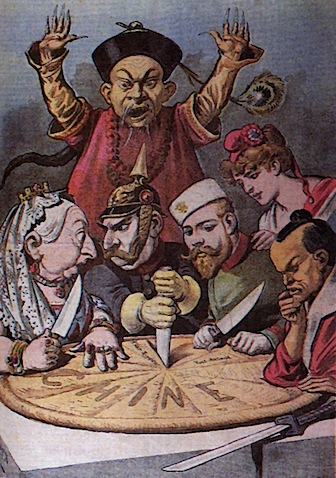
To reverse the silver exodus, which threatened to collapse the financial underpinnings of the British Empire, King George III mandated the East India Company to begin shipping large quantities of opium from Bengal in the British Crown Colony of India into China. The dual objective was to favorably alter the balance-of-payments deficit and to foster drug addiction among China's mandarin class.
By the time of the American Revolution, East India Company opium trafficking into China was officially reported to be at a scale 20 times the absolute limit of opium required for medical and related use.
In a very direct sense, the Founding Fathers of the United States fought the American Revolution against the British Crown's opium policy.
In a very direct sense, the Founding Fathers of the United States fought the American Revolution against the British Crown's opium policy.
After the American Revolution, Smith's call for a dramatic increase in opium exporting into China was enacted with a vengeance.
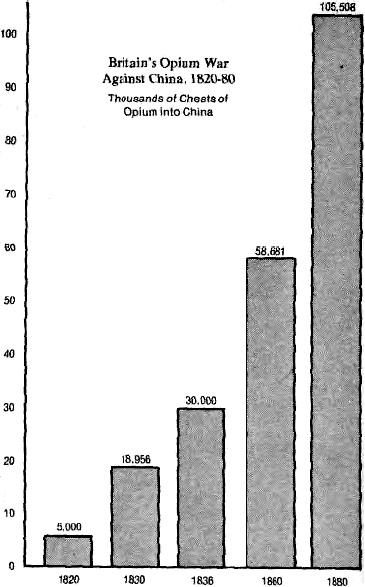
From 1801 to 1820, official British figures placed the opium trade at approximately 5,000 chests per year. By the late 1820s, a network of trading companies operating under overall East India Company "market control" was founded to facilitate the trade. Some of these British opium houses, including the biggest, Jardine Matheson & Co. Ltd., maintain an active hand in Far East heroin trafficking to this day.
The establishment of these trading companies - the core of Britain's Opium War infrastructure - fostered an epidemic- scale increase in opium trafficking into China. By 1830-31, the number of chests of opium brought into China increased fourfold to 18,956 chests. In 1836, the figure exceeded 30,000 chests. In financial terms, trade figures made available by both the British and Chinese governments showed that between 1829-1840, a total of 7 million silver dollars entered China, while 56 million silver dollars were sucked out by the soaring opium trade. (4)
When the Chinese Emperor, confronted by a galloping drug addiction crisis, tried to crack down on the British trading companies and their dope smugglers, the British Crown went to war.
The establishment of these trading companies - the core of Britain's Opium War infrastructure - fostered an epidemic- scale increase in opium trafficking into China. By 1830-31, the number of chests of opium brought into China increased fourfold to 18,956 chests. In 1836, the figure exceeded 30,000 chests. In financial terms, trade figures made available by both the British and Chinese governments showed that between 1829-1840, a total of 7 million silver dollars entered China, while 56 million silver dollars were sucked out by the soaring opium trade. (4)
When the Chinese Emperor, confronted by a galloping drug addiction crisis, tried to crack down on the British trading companies and their dope smugglers, the British Crown went to war.

In 1839, the Chinese Emperor appointed Lin Tse-hsu Commissioner of Canton to lead a campaign against opium. Lin launched a serious crackdown against the Triad gangs sponsored by the British trading companies to smuggle the drugs out of the "Factory" area into the pores of the communities. The Triad Society, also known as the "Society of Heaven and Earth," was a century-old feudalist religious cult that had been suppressed by the Manchu Dynasty for its often violent opposition to the government's reform programs.
The Triad group in Canton was profiled and cultivated by Jesuit and Church of England missionaries and recruited into the East India Company's opium trade by the early 19th century. (5)
When Lin moved to arrest one of the British nationals employed through the opium merchant houses, Crown Commissioner Capt. Charles Elliot intervened to protect the drug smuggler with Her Majesty's fleet. And when Lin responded by laying siege to the factory warehouses holding the tea shipments about to sail for Britain until the merchants turned over their opium stockpiles, Elliot assured the British drug pushers that the Crown would take full responsibility for covering their losses.
The British Crown had its "casus belli."
When Lin moved to arrest one of the British nationals employed through the opium merchant houses, Crown Commissioner Capt. Charles Elliot intervened to protect the drug smuggler with Her Majesty's fleet. And when Lin responded by laying siege to the factory warehouses holding the tea shipments about to sail for Britain until the merchants turned over their opium stockpiles, Elliot assured the British drug pushers that the Crown would take full responsibility for covering their losses.
The British Crown had its "casus belli."
Matheson of the opium house Jardine Matheson joyously wrote his partner Jardine - then in London, conferring with Prime Minister Palmerston on how to pursue the pending war with China:
. . . the Chinese have fallen into the snare of rendering themselves directly liable to the Crown. To a close observer, it would seem as if the whole of Elliot's career was expressly designed to lead on the Chinese to commit themselves, and produce a collision. Matheson concluded the correspondence: "I suppose war with China will be the next step." (6)
Indeed, on October 13, 1839, Palmerston sent a secret dispatch to Elliot in Canton informing him that an expeditionary force proceeding from India could be expected to reach Canton by March, 1840. In a follow-up secret dispatch dated November 23, Palmerston provided detailed instructions on how Elliot was to proceed with negotiations with the Chinese - once they had been defeated by the British fleet.
Palmerston's second dispatch was, in fact, modeled on a memorandum authored by Jardine dated October 26, 1839, in which the opium pusher demanded: 1) full legalization of opium trade into China; 2) compensation for the opium stockpiles confiscated by Lin to the tune of £2 million; and 3) territorial sovereignty for the British Crown over several designated off-shore islands. In a simultaneous memorandum to the Prime Minister, Jardine placed J&M's entire opium fleet at the disposal of the Crown to pursue war against China. (7)
The Chinese forces, decimated by ten years of rampant opium addiction within the Imperial Army, proved no match for the British.
The British fleet arrived in force and laid siege in June of 1840. While it encountered difficulties in Canton, its threat to the northern cities, particularly Nanking, forced the Emperor to terms. Painfully aware that any prolonged conflict would merely strengthen Britain's bargaining position, he petitioned for a treaty ending the war.
When Elliot forwarded to Palmerston a draft Treaty of Chuenpi in 1841, the Prime Minister rejected it out of hand, replying, "After all, our naval power is so strong that we can tell the Emperor what we mean to hold, rather than what he should say he would cede." Palmerston ordered Elliot to demand "admission of opium into China as an article of lawful commerce," increased indemnity payment, and British access to several additional Chinese ports. (8)
The Treaty of Nanking, signed in 1842, brought the British Crown an incredible sum of $21 million in silver - as well as extraterritorial control over the "free port" of Hong Kong - which to this day is the capital of Britain's global drug-running.
The First Opium War defined the proliferation of and profiteering from mind-destroying drugs as a cornerstone of British Imperial policy. Anyone who doubts this fact need only consider this policy statement issued by Lord Palmerston in a January 1841 communiqué to Lord Auckland, then Governor General of India:
Palmerston's second dispatch was, in fact, modeled on a memorandum authored by Jardine dated October 26, 1839, in which the opium pusher demanded: 1) full legalization of opium trade into China; 2) compensation for the opium stockpiles confiscated by Lin to the tune of £2 million; and 3) territorial sovereignty for the British Crown over several designated off-shore islands. In a simultaneous memorandum to the Prime Minister, Jardine placed J&M's entire opium fleet at the disposal of the Crown to pursue war against China. (7)
The Chinese forces, decimated by ten years of rampant opium addiction within the Imperial Army, proved no match for the British.
The British fleet arrived in force and laid siege in June of 1840. While it encountered difficulties in Canton, its threat to the northern cities, particularly Nanking, forced the Emperor to terms. Painfully aware that any prolonged conflict would merely strengthen Britain's bargaining position, he petitioned for a treaty ending the war.
When Elliot forwarded to Palmerston a draft Treaty of Chuenpi in 1841, the Prime Minister rejected it out of hand, replying, "After all, our naval power is so strong that we can tell the Emperor what we mean to hold, rather than what he should say he would cede." Palmerston ordered Elliot to demand "admission of opium into China as an article of lawful commerce," increased indemnity payment, and British access to several additional Chinese ports. (8)
The Treaty of Nanking, signed in 1842, brought the British Crown an incredible sum of $21 million in silver - as well as extraterritorial control over the "free port" of Hong Kong - which to this day is the capital of Britain's global drug-running.
The First Opium War defined the proliferation of and profiteering from mind-destroying drugs as a cornerstone of British Imperial policy. Anyone who doubts this fact need only consider this policy statement issued by Lord Palmerston in a January 1841 communiqué to Lord Auckland, then Governor General of India:
The rivalship of European manufactures is fast excluding our productions from the markets of Europe, and we must unremittingly endeavor to find in other parts of the world new vents for our industry (i.e., opium - ed.). . . If we succeed in our China expedition, Abyssina, Arabia, the countries of the Indus and the new markets of China will at no distant period give us a most important extension to the range of our foreign commerce. . . . (9)
It is appropriate to conclude this summary profile of Britain's first Opium War by quoting from the 15th edition of the Encyclopedia Britannica, published in 1977.
What the brief biographical sketch of Lin Tse-hsu - the leader of the Chinese Emperor's fight to defeat British drugging of the Chinese population - makes clear to the intelligent reader is that British policy to this day has not changed one degree:
... he (Lin—ed.) did not comprehend the significance of the British demands for free trade and international equality, which were based on their concept of a commercial empire. This concept was a radical challenge to the Chinese world order, which knew only an empire and subject peoples.... In a famous letter to Queen Victoria, written when he arrived in Canton, Lin asked if she would allow the importation of such a poisonous substance into her own country, and requested her to forbid her subjects to bring it into his. Lin relied on aggressive moral tone; meanwhile proceeding relentlessly against British erchants, in a manner that could only insult their overnment.
Britain's opium diplomacy
Not a dozen years would pass from the signing of the Treaty of Nanking before the British Crown would precipitate its second Opium War offensive against China, with similar disastrous consequences for the Chinese and with similar monumental profits for London's drug-pushers.
Out of the second Opium War (1858-1860), the British merchant banks and trading companies established the Hong Kong & Shanghai Corporation, which to this day serves as the central clearinghouse for all Far Eastern financial transactions relating to the black market in opium and its heroin derivative.
Furthermore, with the joint British-French siege of Peking during October 1860, the British completed the process of opening up all of China. Lord Palmerston, the High Priest of the Scottish Rites, had returned to the Prime Ministership in June 1859 to launch the second war and thereby fulfill the "open China" policy he had outlined 20 years earlier.
Like the 1840 invasion of Canton, the second Opium War was an act of British imperial aggression - launched on the basis of the first flimsy pretext that occurred. Just prior to his ordering of a northern campaign against Peking (which permitted the British to maintain uninterrupted opium trafficking even while a state of war was underway), Lord Palmerston wrote to his close collaborator Foreign Secretary Lord John Russell (grandfather and guardian of the evil Lord Bertrand Russell).
Furthermore, with the joint British-French siege of Peking during October 1860, the British completed the process of opening up all of China. Lord Palmerston, the High Priest of the Scottish Rites, had returned to the Prime Ministership in June 1859 to launch the second war and thereby fulfill the "open China" policy he had outlined 20 years earlier.
Like the 1840 invasion of Canton, the second Opium War was an act of British imperial aggression - launched on the basis of the first flimsy pretext that occurred. Just prior to his ordering of a northern campaign against Peking (which permitted the British to maintain uninterrupted opium trafficking even while a state of war was underway), Lord Palmerston wrote to his close collaborator Foreign Secretary Lord John Russell (grandfather and guardian of the evil Lord Bertrand Russell).
"We must in some way or other make the Chinese repent of the outrage," wrote Palmerston, referring to the defeat suffered by a joint British-French expeditionary force at Taku Forts in June 1859. The expeditionary fleet, acting on orders to seize the forts, had run aground in the mud-bogged harbor and several hundred sailors attempting to wade to shore through the mud were either killed or captured. "We might send a military-naval force to attack and occupy Peking," Palmerston continued. (10)
Following Palmerston's lead, The Times of London let loose a bloodcurdling propaganda campaign:
England, with France, or England without France if necessary. . . shall teach such a lesson to these perfidious hordes that the name of Europe will hereafter be a pass- port of fear, if it cannot be of love throughout their land. (11)
In October 1860 the joint British-French expeditionary force laid siege to Peking. The city fell within a day with almost no resistance. Despite French protests, British commander Lord Elgin ordered the temples and other sacred shrines in the city sacked and burned to the ground - as a show of Britain's absolute contempt for the Chinese.
Within four years of the signing of the Treaty of Tientsin (October 25, 1860), Britain was in control of seven eighths of the vastly expanded trade into China. This trade amounted to over £20 million in 1864 alone. Over the next 20 years, the total opium export from India - the overwhelming majority of which was still funneled into China - skyrocketed from 58,681 chests in 1860 to 105,508 chests in 1880. (12)
Furthermore, the opening of China prompted the British opium traders to diversify into "legitimate business." The opium firms opened cotton traffic into China - to the point that cotton cloth shipments into China (like the opium shipments) quadrupled from 1856-1880 from 115 million yards of cloth to 448 million yards.
The London opium traffickers' diversification into the cotton trade at the close of the second Opium War intersected with the same London oligarchy's shifting of its principal strategic policy focus to the destruction of the United States - beginning with the efforts to wreck the republic via the British-sponsored Civil War.
The massive expansion of cotton exporting was undertaken with full knowledge that U.S. cotton production - centered in the Deep South slavocracy - would be severely disrupted with the pending "civil war" destabilization in North America. (13)
The slave and cotton trade in the South was run to a significant degree by the same Scottish-based families that also ran the opium traffic in the orient. The Sutherland family, which was one of the largest slave and cotton traders in the South, were first cousins of the Matheson family of Jardine Matheson. The Barings, who founded the Peninsular & Orient Steamship Line heavily involved in the opium trade, had been the largest investors in U.S. clipper shipping from the time of the American Revolution. The Rothschild family as well as their later "Our Crowd" New York Jewish banking cousins, the Lehmans of Lehman Bros., all made their initial entry into the United States through the pre-Civil War cotton and slave trade.
In the case of the U.S. Civil War, the British opium traffickers bet on the loser. By the mid-1860s, cotton goods from the southern United States were back on the international markets, triggering waves of bankruptcies among London speculators who bet on dramatic inflation in the prices of Indian and Egyptian cotton. As in the period immediately following Britain's loss of its American colonies during 1776-87, the oligarchy turned to an expanded opium traffic to paste over the losses.
To facilitate the planned expansion of the opium trade, the British banking and merchant circle founded the Hong Kong & Shanghai Corporation in 1864. Almost simultaneously, the Matheson family founded Rio Tinto (now Rio Tinto Zinc), a tin mining venture in Spain which soon began shipping these ores as a method of payment for the opium.
Who founded the Hong Kong and Shanghai Corporation? The same circle of merchant banking, trading, and shipping families - centered around the British monarchy - who opened the East India Company's opium trade as an instrument of British state policy during the previous century.
The following points summarize British Opium War policy against China through the 19th century:
Within four years of the signing of the Treaty of Tientsin (October 25, 1860), Britain was in control of seven eighths of the vastly expanded trade into China. This trade amounted to over £20 million in 1864 alone. Over the next 20 years, the total opium export from India - the overwhelming majority of which was still funneled into China - skyrocketed from 58,681 chests in 1860 to 105,508 chests in 1880. (12)
Furthermore, the opening of China prompted the British opium traders to diversify into "legitimate business." The opium firms opened cotton traffic into China - to the point that cotton cloth shipments into China (like the opium shipments) quadrupled from 1856-1880 from 115 million yards of cloth to 448 million yards.
The London opium traffickers' diversification into the cotton trade at the close of the second Opium War intersected with the same London oligarchy's shifting of its principal strategic policy focus to the destruction of the United States - beginning with the efforts to wreck the republic via the British-sponsored Civil War.
The massive expansion of cotton exporting was undertaken with full knowledge that U.S. cotton production - centered in the Deep South slavocracy - would be severely disrupted with the pending "civil war" destabilization in North America. (13)
The slave and cotton trade in the South was run to a significant degree by the same Scottish-based families that also ran the opium traffic in the orient. The Sutherland family, which was one of the largest slave and cotton traders in the South, were first cousins of the Matheson family of Jardine Matheson. The Barings, who founded the Peninsular & Orient Steamship Line heavily involved in the opium trade, had been the largest investors in U.S. clipper shipping from the time of the American Revolution. The Rothschild family as well as their later "Our Crowd" New York Jewish banking cousins, the Lehmans of Lehman Bros., all made their initial entry into the United States through the pre-Civil War cotton and slave trade.
In the case of the U.S. Civil War, the British opium traffickers bet on the loser. By the mid-1860s, cotton goods from the southern United States were back on the international markets, triggering waves of bankruptcies among London speculators who bet on dramatic inflation in the prices of Indian and Egyptian cotton. As in the period immediately following Britain's loss of its American colonies during 1776-87, the oligarchy turned to an expanded opium traffic to paste over the losses.
To facilitate the planned expansion of the opium trade, the British banking and merchant circle founded the Hong Kong & Shanghai Corporation in 1864. Almost simultaneously, the Matheson family founded Rio Tinto (now Rio Tinto Zinc), a tin mining venture in Spain which soon began shipping these ores as a method of payment for the opium.
Who founded the Hong Kong and Shanghai Corporation? The same circle of merchant banking, trading, and shipping families - centered around the British monarchy - who opened the East India Company's opium trade as an instrument of British state policy during the previous century.
The following points summarize British Opium War policy against China through the 19th century:
Protecting the opium market
Even through the early decades of the present century, Britain retained an open diplomatic posture on behalf of unrestricted drug profiteering.
In 1911, an international conference on the narcotics problem was held at The Hague. The conference participants agreed to regulate the narcotics trade, with the goal in mind of eventual total suppression. The success of the Hague Convention, as it was called, depended on strict enforcement of the earlier Anglo- Chinese agreement of 1905. Under that agreement, the Chinese were to reduce domestic opium production, while the British were to reduce their exports to China from British India correspondingly.
The Chinese, who had subscribed enthusiastically to both the 1905 and 1911 protocols, soon discovered that the British were completely evading both by sending their opium to their extra- territorial bases, Hong Kong and Shanghai. Opium dens in the Shanghai International Settlement jumped from 87 licensed dens in 1911 at the time of the Hague Convention to 663 dens in 1914! (14) In addition to the trafficking internal to Shanghai, the Triads and related British sponsored organized crime networks within China redoubled smuggling operations - conveniently based out of the warehouses of Shanghai.
If anything, British profiteering from the opium trade jumped as the result of the reversion to a totally black-market production-distribution cycle. Ironically, the legalization of the opium trade into China forced upon the Emperor through the Opium Wars had cut into British profits on the drug. Legalization had brought with it the requirement that the British opium merchants pay import duties, an overhead they did not have to absorb when the drug trade was illegal.
In yet another act of contempt for the Hague Convention, Britain issued a major new loan to Persia in 1911. The collateral on that loan was Persia's opium revenues. (15)
Even with the post-Versailles creation of the League of Nations, Britain flaunted its drug trafficking before the world community. During this period, Her Majesty's opium trafficking was so widely known that even the Anglophile U.S. newsweekly The Nation ran a series of documentary reports highly critical of the British role. (16)
At the Fifth Session of the League of Nations Opium Committee, one delegate demanded that the British government account for the fact that there were vast discrepancies between the official figures on opium shipments into Japan released by the Japanese and British governments. The British claimed only negligible shipments, all earmarked for medical use, during the 1916-1920 period; while the Japanese figures showed a thriving British traffic. When confronted with this discrepancy as prima facie evidence of large-scale British black market smuggling of opium into Japan, the British delegate argued that such black marketeering merely proved the case for creating a government owned opium monopoly.
As late as 1927, official British statistics showed that government opium revenues - excluding the far more expansive black market figures - accounted for significant percentages of total revenue in all of the major Far East Crown colonies. (17)
British North Borneo 23 percent
Federated Malay States 14 percent
Sarawak 18 percent
Straits Settlements 37 percent
Confederated Malay 28 percent
In India as well, official Crown policy centered on protection for the opium market. According to one recently published account, when Gandhi began agitating against opium in 1921
. . . his followers were arrested on charges of "undermining the revenue." So little concerned were the British about the views of the League of Nations that after a commission under Lord Inchcape had investigated India's finances in 1923, its report, while recognizing that it might be necessary to reduce opium production again if prices fell, went on to warn against diminishing the cultivated area, because of the need to safeguard "this most important source of revenue."
. . . while the British Government was professing to be taking measures to reduce consumption of opium and hemp drugs, its agents in India were in fact busy pushing sales in order to increase the colony's revenues. (18)
Lord Inchcape - who chaired the India Commission which endorsed continued opium production in British India - was a direct descendant of the Lord Inchcape who during the previous century founded the Peninsular & Orient Steamship Line and subsequently helped found HongShang as the clearinghouse bank for opium trade. Through to the present, a Lord Inchcape sits on the boards of P & 0 and the HongShang.
In 1923, the British-run opium black market represented such a seriously perceived international problem that Representative Stephen Porter, Chairman of the U.S. House of Representatives Foreign Affairs Committee, introduced and passed a bill through Congress calling for country-by-country production and import quotas to be set on opium that would reduce consumption to approximately 10 percent of then-current levels. The 10 percent figure represented generally accepted levels of necessary medical consumption.
Porter's proposal was brought before the League of Nations Opium Committee - where it was publicly fought by the British representative. The British delegate drafted an amendment to Porter's plan which called for increased quotas to account for "legitimate opium consumption" beyond the medical usage. This referred to the massive addict population in British colonies and spheres of influence (predominantly in Asia) where no regulations restricted opium use.
In 1923, the British-run opium black market represented such a seriously perceived international problem that Representative Stephen Porter, Chairman of the U.S. House of Representatives Foreign Affairs Committee, introduced and passed a bill through Congress calling for country-by-country production and import quotas to be set on opium that would reduce consumption to approximately 10 percent of then-current levels. The 10 percent figure represented generally accepted levels of necessary medical consumption.
Porter's proposal was brought before the League of Nations Opium Committee - where it was publicly fought by the British representative. The British delegate drafted an amendment to Porter's plan which called for increased quotas to account for "legitimate opium consumption" beyond the medical usage. This referred to the massive addict population in British colonies and spheres of influence (predominantly in Asia) where no regulations restricted opium use.
The enraged U.S. and Chinese delegations led a walkout of the plenipotentiary session; the British rubberstamped the creation of a Central Narcotics Board designated with authority to gather information and nothing more; and the journalists stationed in Geneva henceforth referred to what remained of the Committee as the "Smugglers Reunion." (19)
A chest of opium in 1820 sold for $2,075 on arrival at the port of Canton. While this figure tended to drop marginally as the volume of traffic increased after 1830, any calculation of cash valuation of the opium trade into China establishes a figure that very nearly parallels "the present $100-200 billion (when appropriate calculations are made to account for differences in purchasing power of the dollar in ratio to total volume of world production) in annual "black" revenues.
2 - Palmerston's Fifth Column,USA
The assassination bureau
Narcotics traffic was the business of organized crime during the 19th century no less than in the 20th, and Britain's Opium War cabinet spun out a web of criminal connections that crisscrossed the globe.
Prime Minister Palmerston conducted, the opium business behind a screen of respectability, in full public view.
What remained hidden - until the report of the Military Commission that heard evidence on the Lincoln Assassination - was the importance of Palmerston's secret life, as Patriarch of the Scottish Rite of Freemasonry.
It does not surprise the modern student that the perpetrators of the narcotics traffic show up in every element of the dirty side of 19th century politics, including presidential assassinations. But the extent of the web of criminal networks put in place by Palmerston could have come out of a Gothic horror story, American counterintelligence specialists of the time, such as Edgar Allan Poe and Samuel Morse (1), knew the problem well.
Palmerston's irregulars, employed in illegal dope trafficking, assassinations, and "Fifth Column" subversions against the United States in the period before and during the Civil War, are the linear ancestors of what is now called organized crime.
What remained hidden - until the report of the Military Commission that heard evidence on the Lincoln Assassination - was the importance of Palmerston's secret life, as Patriarch of the Scottish Rite of Freemasonry.
It does not surprise the modern student that the perpetrators of the narcotics traffic show up in every element of the dirty side of 19th century politics, including presidential assassinations. But the extent of the web of criminal networks put in place by Palmerston could have come out of a Gothic horror story, American counterintelligence specialists of the time, such as Edgar Allan Poe and Samuel Morse (1), knew the problem well.
Palmerston's irregulars, employed in illegal dope trafficking, assassinations, and "Fifth Column" subversions against the United States in the period before and during the Civil War, are the linear ancestors of what is now called organized crime.
...followed a chain of command that led through the Scottish Rite of Freemasonry directly to Lord Palmerston and his successors.
The model for the Scottish Rite operation is the ethnic secret society - Jewish, Italian, or Chinese. Closest to hand among Palmerston's agencies was the Order of Zion, a highly specialized dirty tricks operation founded by London-based Hofjuden ("Court Jew") families, whose close ties to the British oligarchy traced back to the founding of the Bank of England, and before that to an alliance with the piratical financiers of post-Renaissance Genoa.
The model for the Scottish Rite operation is the ethnic secret society - Jewish, Italian, or Chinese. Closest to hand among Palmerston's agencies was the Order of Zion, a highly specialized dirty tricks operation founded by London-based Hofjuden ("Court Jew") families, whose close ties to the British oligarchy traced back to the founding of the Bank of England, and before that to an alliance with the piratical financiers of post-Renaissance Genoa.
The names of these families will appear and re-appear throughout this report, including the Mocattas and Goldsmids, gold dealers in London before even the Bank of England was there, now the operators of one of the world's most sophisticated money-laundering devices; the Montefiores, now central figures in the modern Most Venerable Order of St. John of Jerusalem; and the de Hirsch family, whose tightly controlled colonization program for Jews in Canada brought the present leaders of organized crime to the New World.
Control over the Order of Zion rested in the British Board of Deputies, founded in 1763 and still in action. One of the board's earliest presidents was Sir Moses Montefiore, described in contemporary accounts as "Queen Victoria's favorite Jew." (2)
Control over the Order of Zion rested in the British Board of Deputies, founded in 1763 and still in action. One of the board's earliest presidents was Sir Moses Montefiore, described in contemporary accounts as "Queen Victoria's favorite Jew." (2)

