The Good The Bad and The Ugly

Showing posts with label NWO. Show all posts

Friday, January 2, 2026

Gladio B: The Origins of NATO’s Secret Islamic Terrorist Proxies – WideShut.co.uk: Beyond News


Gladio B: The Origins of NATO’s Secret Islamic Terrorist Proxies By Tom Secker | Mar 11, 2013 | Featured Articles, War and Terrorism, World News | 0 Comments 


Conspiracy Theories

Parcast

During the Cold War, a secret military operation hid hundreds of weapons caches throughout Europe. They trained resistance fighters and prepared for a Communist invasion, and may have also orchestrated a series of devastating terrorist attacks.

At the end of WW2, as the Allied forces withdrew from continental Europe, the American Office of Strategic Services and the British Special Operations Executive left some paramilitary and intelligence units in place in the host countries. These so-called ‘stay behind’ secret armies had been used successfully against the Axis powers during the war, alongside various other commando-type units. Notably, Ian Fleming (author of James Bond) was loosely in charge of the famed 30 Assault Unit, and his brother was involved in setting up the stay-behinds used during the war. The purpose of these secret armies in the post-war period was to act as a first resort fall back option in case of a Soviet invasion of Western Europe. However they also had an implicit mission of harassing the Soviets pro-actively in time-honoured guerrilla fashion. During the Yalta conference Josef Stalin referred to this, talking about “agents of the London government connected with the so-called resistance” in Poland who had killed 212 Russian soldiers. Franklin Roosevelt suggested that would be a good point to adjourn the meeting, before Winston Churchill, without explicitly denying what Stalin had claimed, said, “I must put on record that both the British and Soviet governments have different sources of information in Poland and get different facts.” Given that it was Churchill who notoriously gave the order that British commando and resistance forces “set Europe ablaze”, the old soak was clearly just covering his back with this remark [1]. Giulio Andreotti Gladio
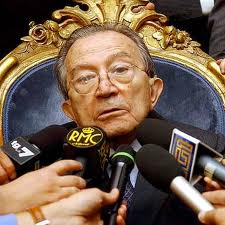
So, when the war ended this mission continued, with secret military and intelligence units operating in all the NATO member states, and even in those countries that were not members of NATO such as Sweden and, at least for a time, France. Only select members of the governments of the host countries were let in on the secret – sometimes even the heads of governments were kept in the dark by those within the military and intelligence institutions who were in the know. As such, the stay behind armies operated in the shadows, with almost no public recognition of their influence until 1990, when then Italian Prime Minister Giulio Andreotti admitted that the units in Italy, codenamed Gladio, did exist and had existed for decades.

Image result for mi5 secret service
The Third Mission   
What Andreotti did not admit, but what has become clear through various official and unofficial investigations since then, is that the secret armies developed a third mission, namely, countering the domestic support for Communist and Socialist ideologies, policies and parties. MI5 files now available via the National Archives show that the paranoia in Western intelligence agencies about Communist political subversion took hold even before WW2, let alone the Cold War. Just as they had spied on, infiltrated and manipulated the turn of the century Anarchist movement, they subjected the trade unions, the labour movement, all Communist groups and many suspected Communists in positions of public authority (such as authors) to the same tactics. They even spied on their own former spies, including Arthur Ransome, who had been in Russia during the Bolshevik revolution keeping an eye on Leon Trotsky. Exactly when the pro-active part of the secret armies mission was turned into a means for domestic counter-subversion is not clear. At some point in the 1950s or 1960s there was a change in strategy that used the secret armies not just to gather intelligence on these groups and individuals, but to destroy their support through violence. Numerous terrorist outrages, from Turkey to Ireland, were instigated, provoked or simply carried out by members of the secret armies, including numerous bombings in Italy and the assassination of Aldo Moro, the Oktoberfest bombing in Munich and the Brabant Massacres in Belgium. All forms of urban terrorism were perpetrated, often by neo-Fascists posing as Leftists, in order to terrify the public, polarise public opinion and destroy support for mainstream Leftist political movements. The process was a great success, ultimately contributing to the downfall of the Soviet Union and ensuring that the policies chosen by the leaders of NATO countries were in keeping with the overall trajectory desired by the Anglo-American establishment [2] This story is relatively well-known among students of alternative history and advocates of alternative media, though the operation of the secret army here in the UK has not been subject to the detailed research of, for example, the Italian Gladio. Irish Troubles Gladio
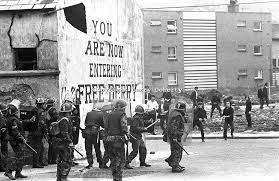
Perhaps this is a matter of semantics, because at the moment the stay behind units on the continent started their reign of terror, the Irish ‘Troubles’ also began. The same tactics were applied to the political movement for independence in Ireland as to the democratic Communist movement in Italy and elsewhere. Both the Republican and Loyalist radical factions were infiltrated, radicalised, militarised and set down a path of self-destructive and counter-productive violence. This issue of collusion in the Irish conflict has, like the stay behind armies, been outlined in numerous official and unofficial inquiries, most prominently the Cory inquiry [3]. While this knowledge about Gladio and the other secret armies is extremely significant, it is largely historical. There is no threat of domestic subversion from Communism anymore, either real or fabricated, and the world has kept on spinning. While the Irish conflict still simmers, the prolonged campaign of urban terrorism on the British mainland ended over 15 years ago, and so one might well ask why is this still important?
Gladio Part B
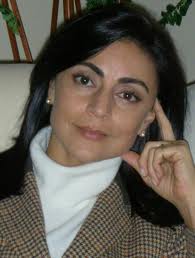
Sibel Edmonds Gladio BThe answer to that question has been provided through a series of exceptional interviews with former FBI translator and respected whistleblower Sibel Edmonds, carried out by “one of the world’s few remaining 9/11 conspiracy theorists” James Corbett. Over the last few weeks, Edmonds has outlined how the contemporary spy-game around radical Islam, documented in the works of Nafeez Ahmed among others, is actually a follow-on from Gladio. She refers to it as ‘Gladio B’, identifying a change in policy around 1996, following the Suserluk incident that once again betrayed the forces at work in the Turkish deep state. To paraphrase Edmonds: though the collusion with radical Islam had been going on for decades, it wasn’t until 1996 that a formal decision was made by NATO to abandon their previous secret relationship with neo-Fascists and arch-Nationalists and replace them with Islamists.


                 Sibel Edmonds Documentary - Kill The Messenger


When Did Gladio A Become Gladio B?


Sibel Edmonds on Gladio B - Part 1


 This is corroborated by a lot of data, for example the international Islamist organisation Al-Muhajiroun suddenly became very prominent in the UK in 1996-7. Omar Bakri, who later admitted to being an MI5 informant, was a key figure in Al-Muhajiroun and its partner organisations like the International Islamic Front. They were central to the process by which young Muslims were recruited, radicalised, trained and sent to fight NATO’s war of destabilisation in the Balkans. Likewise Al Muqatila, more commonly known as the Libyan Islamic Fighting Group or LIFG, were also prominent in Britain at this time. Following their failed assassination attempt against Colonel Gaddafi in February 1996 several senior members of the group moved to Britain and established their main office there. Among them was Anas Al-Liby, who was probably an MI6 agent recruited as part of their sponsorship of the assassination attempt. He lived in Manchester from 1996 until 2000, having been granted political asylum. A raid on houses connected to Al-Liby in May 2000 resulted in several arrests, but Al-Liby slipped away, probably tipped off by the authorities. [4] According to Edmonds, since that time the Gladio B operation has expanded and includes the radical Islamisation of Central Asia and the Caucasus region specifically and across the Middle East more generally. Again, much of the available information supports her claims, especially regarding the Gulen Movement, but also NATO’s relationship with Islamist organisations such as the Muslim Brotherhood and with terrorist groups like Jundullah who are destabilising Iran and the MEK/MKO. Most of this can be gleaned from reading mainstream media reports with the right kind of eyes and ears, and by being patient enough to tolerate their habit of dropping occasionally truthful stories into their mix, but never teasing out the implications or sticking with the story to see where it leads. We are however still left with a key question.
While much of Edmonds’ analysis of Gladio B is eminently verifiable by those who know where to look, and chimes with much of my own work on terrorist double and triple agents, there is a lot of information that suggests that at least the idea of replacing the Fascist Gladio A with the Islamist Gladio B had occurred to strategists much earlier. The exposing of Gladio A began in Turkey in the 1970s, gaining considerable attention when several Gladio documents were published. These included U.S. Army Field Manual 31-15: Operations Against Irregular Forces, a 1960s US special warfare training manual that had been translated into Turkish [5]. It was perhaps inevitable that following the Turkish revelations that the overall Gladio story would have to be admitted, rendering bit useless. Vincenzo Vinciguerra Gladio
Meanwhile in Italy a judge named Felice Casson was investigating various acts of terrorism including the 1972 Peteano bombing. This eventually led him to the perpetrator – Vincenzo Vinciguerra, a neo-Fascist and member of Ordine Nuovo and Avanguardia Nazionale who had been spirited out of the country after the bombing and protected by the international Gladio network. Vinciguerra was brought back to Italy and he started to talk, explaining the whole operation. At this point his protection was stopped, and he was subsequently put on trial. If the information coming out of Turkey wasn’t enough to signal to NATO that the veil of secrecy around the secret armies was wearing thin, then Vinciguerra’s testimony certainly was.

Belgian stay-behind network


The Belgian stay-behind network, colloquially called "Gladio" (meaning "sword"), was a secret mixed civilian and military unit, trained to form a resistance movement in the event of a Soviet invasion and part of a network of similar organizations in North Atlantic Treaty Organization states. It functioned from at least 1951 until 1990, when the Belgian branch was promptly and officially dissolved after its existence became publicly known following revelations concerning the Italian branch of the stay-behind network.

History

The history of the Belgian branch of the Gladio network starts in 1948 when Prime Minister Paul-Henri Spaak and Minister of Justice Paul Struye gave the Staatsveiligheid (State Security Service) permission to discuss with allied intelligence services the organization of a clandestine stay-behind network. These negotiations mainly happened with Sir Stewart Menzies of the British SIS and representatives of the then freshly founded CIA. The explicit objectives of this collaboration were outlined in a top-secret letter from Menzies to Spaak:[citation needed]

The present object of [Anglo-Belgian co-operation between the special services] should be directed to two main aims:

  1. The improvement of our information on the subject of Cominform and potential enemy activities in so far as they concern our two countries.
  2. The preparation of appropriate intelligence and action organizations in the event of war.

— Sir Stewart Menzies, January 27, 1949

The amount of influence at this early stage, accredited to the CIA varies from source to source. CIA did not yet have full authority over the Office of Policy Coordination, which directed U.S. covert action until 1952. During the initial negotiations Menzies proposed to keep the US out of the organization, but Spaak objected to further developments not being in a tripartite (Belgium–Great-Britain–United States) or multilateral setting. In the final report of the parliamentary inquiry there is little mention of CIA involvement, but investigative journalist Walter de Bock points, based on Pentagon documents,[clarification needed] at the CIA's significant early organizational role and de facto control until 1968.[1] Similarly, Colonel Margot complains in an internal note, dated April 8, 1959, about the influence of the US intelligence services on the Belgian branch of the Gladio-network.[2]

These initial negotiations led to closer collaboration between the three countries' secret services under the name Tripartite Meeting Belgium. Following this meeting, the Belgian stay-behind network became operational, but it was not until January 4, 1952, that the first formal instructions for stay-behind operations were issued to Ludovicus Caeymaex (Staatsveiligheid) and General Etienne Baele.[3]

Growing polarization between East and West and awareness of the need for continental collaboration led to the foundation in 1949 of the Comité Clandestin de l'Union Occidentale (C.C.U.O.), which contained Belgium, The NetherlandsLuxembourgFrance and Great-Britain.[4] The C.C.U.O. laid the base for the formation of the NATO and coordinated the various stay-behind networks in the five member countries.[5] Its functions were transferred to the Clandestine Planning Committee (C.P.C.), another NATO-organization in 1951, which was renamed in to Coordination and Planning Committee in 1959.[6] The C.P.C. elaborated a plan for installing two taskgroups, one for communications and one for secret networks, a structure reflected in the Allied Coordination Committee (A.C.C.) founded in 1958 to relieve the C.P.C. of some of its tasks.[6]

The A.C.C. consisted of the members of the C.C.U.O. plus the US and coordinated the stay-behind activities, as was stipulated on its first meeting in April 1959 under French supervision:

The A.C.C. is a six-power regional committee for providing mutual consultation and developing policy guidance on matters of common interest regarding stay behind matters in the Western European countries concerned.[6] [added emphasis]

— Declaration of principles, April 29–30, 1959

These interlocking coordination organizations, like the C.P.C. and A.C.C, were initially headquartered in Paris, but moved along with SHAPE, NATO's central headquarters, to Mons in Belgium after the French withdrawal from NATO's unified command structure in 1966. After the initial six counties, GermanyItalyDenmark and Norway became members of the A.C.C.. Though all of the counties were members of NATO, an official link between the A.C.C and NATO was denied. The parliamentary committee noted "... one can not do away with the impression that in practice closer and closer relations did come to exist".[7]

In the following decades the stay-behind activities were mainly coordinated through A.C.C.-meetings. These activities consisted officially of (multinational) training activities like infiltration, parachute jumping and long range communications, of which numerous were held at least between 1972 and 1989.[8] Due to the secretive nature of the network, the milieu of various operatives involved and the Cold War setting, allegations were raised that the stay-behind network was during this time also at least indirectly involved with clandestine actions on Belgian soil. The last documented meeting of the A.C.C took place on 23 and 24 October 1990 under supervision of General Van Calster, where the participants discussed a.o. a scaling-back of the stay-behind network in light of changing international relations.[citation needed]

This was the meeting that Italian president Giulio Andreotti[clarification needed] was referring to following the October 24, 1990 revelation of the existence of Gladio in Italy, a revelations several others governments' spokespersons[example needed] reacted to by claiming that any stay-behind in their own country was history. This only exasperated Andreotti, who declared to the press that the last stay-behind meeting had taken place in Belgium a few days ago. After the exposure of the Italian branch and inquiries by Italian officials to their Belgian counterparts, Defense minister Guy Coëme and Prime Minister Wilfried Martens made the existence of the Belgian section of the Gladio-network public in a press meeting on November 7, 1990.[citation needed]

The government decided on November 23, 1990, a few days after the proposition for a parliamentary investigation to officially disband the network.[citation needed]

Organization, activities and resources

The Belgian Gladio-branch consisted of two separate sections:

  • S.D.R.A VIII (FrenchService de Documentation, de Renseignments et d'Action VIII, "Documentation, Information and Action Service VIII"), residing under the military intelligence service, the Belgian General Information and Security Service (S.G.R) and thus the minister of Defense.
  • S.T.C/Mob.[9] (DutchSectie training, communicatie en documentatie "Training, Communication and Documentation Service"), residing under the Staatsveiligheid and thus the minister of Justice.

S.D.R.A VIII was one of the sections of S.D.R.A (military security service), which in its turn is part of the S.G.R. (general military intelligence and security service). The S.G.R's functions are formally described in a decree from 1989 and are twofold: intelligence gathering and ensuring the security of military personnel and installations, issuing clearances, etc. The S.D.R.A is mandated with the second task, and is dived into functional sections: for instance, S.D.R.A III is contra-infiltration (for S.D.R.A XI, see further).

The members of S.D.R.A VIII were military personnel, trained in unorthodox warfare, combat and sabotage, parachute jumping and maritime operations.[10] The operatives were trained to accompany the government aboard in case of a Soviet invasion, and then establish liaisons with the Belgian resistance movement and engage in warfare.[citation needed]

Oversight

During the parliamentary investigation, the committee stumbled by chance on the existence of the Coordination and Planning Committee secretariat, which formed S.D.R.A XI, but was funded through secret NATO payments. When Paul Detrembleur, former head of the S.D.R.A and last administrator of S.D.R.A XI/C.P.C.-secretariat, was called to testify before the parliamentary inquiry about the activities of this section about the Gladio-activities, he refused to divulge any information.[11][12]

The final parliamentary report stressed the resulting incomplete insight into the functioning of the C.P.C. and its relation to S.D.R.A. VIII, which formally organized the military section of the Gladio network. The report noted that the C.P.C. was responsible for the relations between the Belgian secret services and the NATO high command (especially SHAPE), and that the witnesses denied being involved with stay-behind activities. The reason was, the latter claimed, that NATO was "forward defending"-oriented and thus not interested in stay-behind activities in countries like Belgium, which did not border Warsaw Pact-nations. The commission then further noted the discrepancy between these claims and given reason, and the fact that the C.P.C. co-coordinated the S.D.R.A. VIII and participated in the A.C.C.-meetings.[13]

S.T.C/Mob. function and oversight

The civilian branch of the Belgian stay-behind had the mission to collect intelligence under conditions of enemy occupation which could be useful to the government and to organize secure communication routes to evacuate the members of the government and other people with official functions.

Military trainers/operatives and civilian operatives

  • Recruitment (how, criteria)
  • Training activities (joint international training/war games, sabotage, intelligence ....)
  • Funding (equipment)
  • Weapons, weapons-depots.

Both military intelligence and Staatsveiligheid maintained dossiers on Gladio training activities, of which incomplete versions were made available to the parliamentary committee. Events from the list of operations by the military branch was provided by Coëme and is denoted by A, while events from the list from the archives of the Staatsveiligheid (titled "Overzicht oefeningen in het kader ACC – periode 1980-1990") is denoted by B:

  • (A) 1972: Training on clandestine techniques.
  • (A) 1976: Training on radio-communications, intelligence, maritime operations, aerial operations and escape routes.
  • (A) 1977: Training on optimizing techniques to locate downed pilots and the use of escape routes.
  • (A) 1978: In-door training on clandestine missions.
  • (A) 1980: Training on parachute-jumping, long-distance radio communication and clandestine techniques.
  • (B) June 1980: OREGAN II
  • (A) 1981: Lessons and training on clandestine activities.
  • (A) 1983: Training on escape routes, intelligence, aerial operations and radio communications.
  • (A) 1985: Six trainings (at least two outside Belgium, one in Belgium): infiltration a parachute-jumping, extracting material through escape routes.
  • (A) 1986, 1987 & 1988: : Trainings outside Belgium on intelligence operations and radio communications.

Minister Melchior Wathelet testified before the parliamentary inquiry that secret weapon depots were created in the 1950s, of which a first one was discovered in 1957 due to a landslide, and a second one in 1959 by playing children. He further stated that after these discoveries it was decided to abandon the depots and transfer the weapons to a military depot.[8] An inventory report, dated 1991, for the military section of Gladio mentions inflatable boats, video-equipment and around 300 weapons, including M1 carbinesMP40 submachine guns and "armes en cocon", weapons packaged for long-term storage.[14]

Parliamentary inquiry

Overview

After the existence of the Belgian branch of the Gladio-network became public, speculations and allegations about involvement of the Gladio-operatives in various high-profile and often unsolved crimes and terrorist acts during the 1980s began to appear in the media. To investigate these allegations and clarify the operation of the Belgian branch, a senatorial investigative commission was established on 20 December 1990. It was tasked with clarifying the structure, aims etc. of the network and the amount of oversight; which connections existed with domestic and foreign intelligence and police services; and whether there was a link with events previously examined in parliamentary inquiries[15] or certain serious crimes and terrorist acts committed the previous decade.[4]

Chairman senator Roger Lallemand [clarification needed]

The commission convened from 16 January 1991 until 5 July 1991, during which fifty seven meetings were held and thirty seven witnesses were heard. Amongst those who testified before the commission were ministers Guy Coëme, Melchior Wathelet and Louis Tobback; former administrator-director-general of the Staatsveiligheid (77-90) and head of STC-MOB Albert RaesLudo Caeymaex (administrator-general Staatsveiligheid 58–77); then current administrator-general of the Staatsveiligheid Stéphane SchewebachJacques Devlieghere (Staatsveiligheid 78–89, nr. 2); S.D.R.A.-operative André Moyen; Gladio-instructors Guibert Nieweling (code name "Addie"), Michel Huys ("Alain"), Etienne Annarts ("Stéphane").

Problems

The two major obstacles facing the commission of inquiry were firstly the secret nature of the case and the related unwillingness of witnesses in disclosing information and secondly time constraints.

Firstly, due to the nature of the case, and the various legal, professional and military requirements of confidentiality, the commission went to great lengths in limiting public access to discussed material. For instance, the parliament did forgo an earlier proposition for a parliamentary in favor for the proposition by Lallemand which included the requirement that the commission operated behind closed doors (in contravention to the regular parliamentary inquiry procedures).[16] Lallemand placed also additional restriction on the ability to communicate with the press, handling of documents, etc. These restrictions were criticized both for being undemocratic, unnecessary or counter-productive and for not being strict enough.[17]

The committee initially envisaged a solution whereby the names of the operatives were handed to three selected magistrates, familiar with the relevant unsolved criminal investigations. The relevant agencies and witnesses refused to do so, with the refusal varying from polite claims of forgetfulness or references to oaths of secrecy to outright hostility.[18] This issue was compounded by the fact that records on former operatives were systematically purged and the magistrates were not up to date with more recent investigations. Gijsels noted that order... ?Names with the CIA/London? The final report then concluded that the cooperation from both the military and the Staatsveiligheid was generally satisfactory, but deplored the stubborn withholding of the names of civilian operatives. Parlementaire Commissie (1991), p. ?[clarification needed]

Secondly, the commission faced time-related problems. The time allotted to the commission was initially five months, a period which the final report deplored as "very little" and short in comparison to other inquiries. The Senate granted on July 12, 1991, a request for extra time, which enabled the committee to work for another three months. Unfortunately most of the allotted time fell during the parliamentary recess, which further frustrated the effort to fully pursue the intended lines of inquiry. For instance, the commission had planned to interview several investigative journalists, people like Richard Brenneke and had requested several "dossiers chauds" (English: "hot cases").[clarification needed]

Handled material and major findings

Handled material: Westmooreland, John Wood/Rudy Daems, ...

Conclusions and impact

Reactions & indirect effect inquiry: Comité-I.[clarification needed] In 1995, the Belgian Chamber of Representatives organized a parliamentary inquiry into the effectiveness of the Belgian police and judiciary with regards to the Nijvel gang investigation. The conclusions of this inquiry, as well as the earlier Senate inquiry on SDRA8 and the Chamber inquiry on banditism, resulted in the preparation of new legislation governing the mission and methods of the Belgian State Security Service and Belgian General Information and Security Service, which was passed in 1998.[citation needed]


                                            Charles E. Wharry (Darkbird18),


Darkbird18 is looking at the Gladio events and I can see darkness at it highest level the Illuminati, NWO and the dark forces of darkness is at work here! This terrorist is all big plain  by the dark side to control the world for same unseen reason but it most be important because they have the whole world looking but what is really happen is some where else but what? This article will help you understand how deep the rabbit holes goes and the key players in this dark game for control and power but for who? I smell a unseen player in this game so deep in darkness not even the bad guys can see it hand and man what a hand! Read this article and watch the YouTube to get the information on Gladio. The rest of the article from WideShut.co.uk can be read by clicking on the link below………….. Gladio B: The Origins of NATO’s Secret Islamic Terrorist Proxies – WideShut.co.uk: Beyond News

LiveJournal Tags: ,,,,,Secret Society


Monday, May 13, 2024

Illuminati Conspiracy Part One: A Precise Exegesis on the Available Evidence


Illuminati Conspiracy Part One: A Precise Exegesis on the Available Evidence

- by Terry Melanson, Aug. 5th, 2005
Illuminati Conspiracy Part Two: Sniffing out Jesuits

A Metaprogrammer at the Door of Chapel Perilous


Weishaupt-owlIn the literature that concerns the Illuminati relentless speculation abounds. No other secret society in recent history - with the exception of Freemasonry - has generated as much legend, hysteria, and disinformation. I first became aware of the the Illuminati about 14 years ago. Shortly thereafter I read a book, written by Robert Anton Wilson, called Cosmic Trigger: Final Secret of the Illuminati. Wilson published it in 1977 but his opening remarks on the subject still ring true today:
Briefly, the background of the Bavarian Illuminati puzzle is this. On May 1, 1776, in Bavaria, Dr. Adam Weishaupt, a professor of Canon Law at Ingolstadt University and a former Jesuit, formed a secret society called the Order of the Illuminati within the existing Masonic lodges of Germany. Since Masonry is itself a secret society, the Illuminati was a secret society within a secret society, a mystery inside a mystery, so to say. In 1785 the Illuminati were suppressed by the Bavarian government for allegedly plotting to overthrow all the kings in Europe and the Pope to boot. This much is generally agreed upon by all historians. 1 Everything else is a matter of heated, and sometimes fetid, controversy.
It has been claimed that Dr. Weishaupt was an atheist, a Cabalistic magician, a rationalist, a mystic; a democrat, a socialist, an anarchist, a fascist; a Machiavellian amoralist, an alchemist, a totalitarian and an "enthusiastic philanthropist." (The last was the verdict of Thomas Jefferson, by the way.) The Illuminati have also been credited with managing the French and American revolutions behind the scenes, taking over the world, being the brains behind Communism, continuing underground up to the 1970s, secretly worshipping the Devil, and mopery with intent to gawk. Some claim that Weishaupt didn't even invent the Illuminati, but only revived it. The Order of Illuminati has been traced back to the Knights Templar, to the Greek and Gnostic initiatory cults, to Egypt, even to Atlantis. The one safe generalization one can make is that Weishaupt's intent to maintain secrecy has worked; no two students of Illuminology have ever agreed totally about what the "inner secret" or purpose of the Order actually was (or is . . .). There is endless room for spooky speculation, and for pedantic paranoia, once one really gets into the literature of the subject; and there has been a wave of sensational "ex-poses" of the Illuminati every generation since 1776.
1
If you were to believe all this sensational literature, the damned Bavarian conspirators were responsible for everything wrong with the world, including the energy crises and the fact that you can't even get a plumber on weekends. (pp. 3-4)
That short excerpt is perhaps the most honest and succinct introduction to the Illuminati as you'll ever come across. So it is more than a bit ironic that Wilson, throughout the rest of the text, proceeds to perpetuate and expand upon similar myths, and in the process manages to take it to a whole new level. 2 In the end, the Illuminati had mystified Wilson as much as anyone in the preceding centuries.
Robert Anton Wilson (RAW) is an enigma in his own right: an archetypal Trickster in the tradition of Aleister Crowley or Timothy Leary, both of whom he greatly admires. 3 The Cosmic Trigger Trilogy is meant to awaken the reader to multiple mind-blowing streams of thought and completely shatter preconceived notions of perception, time and space - much as the writings of illuminists themselves. Herein lies the seed of speculation to the effect that he must surely be in on the conspiracy - some have gone so far as to believe he's the Grand Master (or inner head) of the Illuminati himself. Wilson has always toyed with the accusations, and in typical RAW fashion, he's never denied it outright.
Cosmic Trigger wasn't the first book Wilson dedicated to the theme, however. Two years earlier, in 1975, RAW and co-author Robert Shea popularized the modern wave of Illuminati conspiracies with the publication of the novel Illuminatus! Trilogy. A veritable cult classic, Illuminatus invigorated the underground market and spawned a whole new generation of conspiracy authors. One cannot read any of RAW's material without a healthy sense of humor, though, and Illuminatus is definitely no exception. Written between 1969 and 1971 it reads like a subversive anarchist manual, yet satirical and surreal at the same time. The cut-and-paste job of excerpts right into the flow of dialogue - from books and pamphlets on a wide range of conspiracy theories - probably boosted its appeal from the beginning.
Any researcher investigating the Illuminati today would be remiss not to mention RAW - especially in a book or document purporting to cover the subject in detail. With the exception of Myron Fagan, "Wild" Bill Cooper, 4 the John Birchers and Biblical endtimes literature, the formation of the current mythos surrounding the subject has a lot to do with the popularity of Wilson's books: have you ever seen the Illuminati and the star Sirius mentioned in the same paragraph?
Before plunging headlong into the history of the Bavarian Illuminati, it might be useful to have a look at Wilson's diagram - his interpretation (at the time) of the "occult conspiracy" as it has been transmitted through the ages (Cosmic Trigger: Final Secret of the Illuminati, p.188):


New Promethean Possibilities

“European aristocrats transferred their lighted candles from Christian altars to Masonic lodges. The flame of occult alchemists, which had promised to turn dross into gold, reappeared at the center of new "circles" seeking to recreate a golden age: Bavarian Illuminists conspiring against the Jesuits, French Philadelphians against Napoleon, Italian charcoal burners against the Hapsburgs.”
- Billington, Fire in the Minds of Men: Origins of the Revolutionary Faith, p. 6
The Bavarian Illuminati originated during an age replete with the growing belief in the acquisition of truth through observation and experience. The Age of Enlightenment was in full swing and by the end of the Eighteenth Century an explosion of natural philosophy, science, the resurgence of hermeticism and occult experimentation, all competed directly with the traditional teachings of the Church and the Jesuit monopoly in the Universities and Colleges. 5 Numerous ideologies owe an intellectual and political heritage to this period: skepticism, rationalism, atheism, liberalism, humanism, reductionism, modernism, communism, nihilism and anarchism - among the most apparent.
As the Eighteenth Century came to a close Baron de Montesquieu (1689-1755), Denis Diderot (1713-1784), Voltaire (1694-1778), Jean-Jacques Rousseau (1712-1778), Marquis de Condorcet (1743-1794), Comte de Mirabeau (1749- 1791), David Hume (1711-1776), Adam Smith (1723-1790), Immanuel Kant (1724-1804), Emanuel Swedenborg (1688-1772) and Johann Wolfgang von Goethe (1749-1832) were famous in their own time. The instrument of reason became a new faith, no less susceptible to its own breed of dogmatism. The philosophers of the Enlightenment reasoned that the physics of Newton might become applicable in all fields of endeavor: the fundamental cosmic laws of nature could transform society and man himself into a "noble savage." 6
The idea of a "glorious revolution" attained widespread acceptance, but during Weishaupt's time it was still a relatively new concept to link political change with social change. The "imminent revolution of the human mind," promulgated by the "radical Bavarian Illuminists," coincided with Mirabeau's doctrine of a coming secular upheaval and universal revolution.
Mirabeau proclaimed Prussia to be the most likely place for the start of the revolution, with the "German Illuminists as its probable leaders." History records, however, that it was Mirabeau himself who became one of the main catalysts to spark the "fire in the minds of men" during the French Revolution. 7
At about the same time Weishaupt was embarking on an academic career two important figures entered the world stage: Thomas Robert Malthus, 8 born in 1766, a major influence on Darwinism, population control and the eugenics movement; four years later we see the birth of Georg Wilhelm Friedrich Hegel, in Stuttgart Germany, the inventor of what would become known as the "Hegelian Dialectic."
"For Hegelians," Antony C. Sutton reports, "the State is almighty and seen as 'the march of God on earth.' Indeed, a State religion. Progress in the Hegelian State is through contrived conflict: the clash of opposites makes for progress. If you can control the opposites, you dominate the nature of the outcome" (Introduction to the 2002 edition of America's Secret Establishment: An Introduction to the Order of Skull & Bones, no pagination PDF copy).
Revolutionary radicals were impressed with the proof-of-concept displayed by the ruthless conspirators in France. Malthusian and Hegelian dogma became equally influential for anarchists, communists, the intelligentsia and the new breed of revolutionaries that surfaced in the 19th Century: Young Hegelians such as Bakunin, Proudhon and Marx took up the cause in the "spirit of the times" to "destroy in order to build."
 

The Bavarian Illuminati: The "Insinuating Brothers" of ☉


They're Watching You! | The History of the Illuminati

“Weishaupt . . . proposed as the end of Illuminism the abolition of property, social authority, nationality, and the return of the human race to the happy state in which it formed only a single family without artificial needs, without useless sciences, every father being priest and magistrate. Priest of we know not what religion, for in spite of their frequent invocations of the God of Nature, many indications lead us to conclude that Weishaupt had, like Diderot and d'Holbach, no other God than Nature herself. From his doctrine would naturally follow German ultra-Hegelianism and the system of anarchy recently developed in France, of which the physiognomy suggests a foreign origin.”
- Henry Martin, Histoire de France depuis les temps les plus reculés jusqu'en 1789, XVI. 533. 9
“Do you realize sufficiently what it means to rule - to rule in a secret society? Not only over the lesser or more important of the populace, but over the best of men, over men of all ranks, nations, and religions, to rule without external force, to unite them indissolubly, to breathe one spirit and soul into them, men distributed over all parts of the world? . . . And finally, do you know what secret societies are? What a place they occupy in the great kingdom of the world's events? Do you think they are unimportant, transitory appearances?”
- Adam Weishaupt, Nachtrag von weitern Originalschriften, II, pp. 44, 51. 10
A quick perusal on the World Wide Web will show the disparity of opinions and irreconcilable differences about the history of the Illuminati - Bavarian or otherwise.
It's getting better though, a recent article published by the American Atheists 11 - The Enlightenment, Freemasonry, and The Illuminati - has solid documentation and thorough references for those inclined to investigate further into primary and secondary source material; the Grand Lodge of British Columbia and Yukon has uploaded part of Vernon L. Stauffer's New England and the Bavarian Illuminati; Bilderberg.org has most of the relevant parts of John Robison's classic, Proofs of a Conspiracy Against all the Religions and Governments of Europe; the Catholic Encyclopedia has long had a good, but short, article; nearly the complete text - and the two most important chapters as it concerns the Illuminati - from Nesta Webster's Secret Societies & Subversive Movements has been posted; three important chapters from Rabbi Marvin S. Antelman's To Eliminate the Opiate Vol. I; Wikipedia.org has an adequate article; and, for those poor Dan Brown fans whose first introduction to the Illuminati was the bestseller Angels & Demons, there's a good debugging write-up from the Center for Studies on New Religions.
If you never buy a single book on the Illuminati, and just read the internet references cited above, you would have an excellent grasp - much greater than your average conspiracy theorist - on the facts (as we can safely say) concerning the rise and fall of the Bavarian Illuminati. I have taken it a bit further, however. For the last six months I've engaged in a crash course on the Illuminati and related subjects: absorbing and taking notes from Proofs of a Conspiracy ..., and other internet references; buying Barruel's Memoirs Illustrating the History of Jacobinism, Billington's Fire In the Minds of Men: Origins of the Revolutionary Faith, Webster's Secret Societies & Subversive Movements, Antelman's To Eliminate the Opiate Vol. 1, Yates' The Rosicrucian Enlightenment, Fulop-Miller's The Power and Secret of the Jesuits, Carr's Pawns in the Game; and at the same time consulting other works, in my own personal library, when needed. 12
A Chronological Overview
In an effort to keep the notes to a minimum and still provide thorough citation, the following abbreviations will be applied:

1748

February 6. Adam Weishaupt is born (d. 1830) of Westphalian parents [CE] in Ingolstadt Bavaria. Fittingly, the Weishaupt family name first appeared in Baden and was anciently associated with tribal conflicts around the area. [House of Names: Weishaupt Family Crest]

1755

Weishaupt’s father, George, dies. He is turned over to his liberal godfather, Baron Johann Adam Ickstatt (1702-1776), curator of the University of Ingolstadt and a member of the Privy Council. [VS, CG]
While growing up Weishaupt was educated by the Jesuits and was “accorded free range in the private library of his godfather, the boy’s questioning spirit was deeply impressed by the brilliant though pretentious works of the French ‘philosophers’ with which the shelves were plentifully stocked.” [VS] He studies law, economics, politics, history and philosophy; voraciously devouring every book which he came across. [VS]

1768

Weishaupt graduates from the University of Ingolstadt. He serves for four years as a tutor and catechist. [VS]

1772

Weishaupt is appointed as professor of civil law at the University of Ingolstadt. [CE]

1773

Pope Clement XIV dissolves the Jesuit Order.
Weishaupt becomes the first layman to occupy the chair of canon law; the prestigious position had been held by a Jesuit for the previous 90 years. [VS, CE]
Weishaupt marries, against the wishes of Ickstatt. [VS]

1775

Weishaupt is promoted to dean of the faculty of law. [VS]

1776

May 1. Weishaupt founds the Order of the Illuminati with an original membership of five.13 The Order is secret, hierarchical and modeled on the Jesuits. The original name for the Order was uncertain: Perfectibilists and Bees were both considered, but Weishaupt settled on Illuminati – chosen, perhaps, because of the “image of the sun radiating illumination to outer circles” [JB: 94-95] The Order was, therefore, always represented in communications between members as a circle with a dot in the center ☉ This symbolic imagery – the point within a circle, the Perfectibilists and the Bees – is also reflective of Weishaupt’s fascination with Eleusinian14 and Pythagorean Mysteries; no doubt learning of this early on having access to Ickstatt’s considerable library.
Like most secret societies the basic structure of the Order was divided into classes and degrees, in the following manner:
  1. The Nursery
    1. Preparatory Literary Essay
    2. Novitiate (Novice)
    3. Minerval (Brethren of Minerva, Academy of Illuminism)
    4. Illuminatus Minor
  2. Symbolic Freemasonry
    1. Apprentice
    2. Fellow Craft
    3. Master
      1. Scots Major Illuminatus
      2. Scots Illuminatus Dirigens (Directory)
  3. Mysteries
    1. Lesser
      1. Presbyter, Priest, or Epopt
      2. Prince or Regent
    2. Greater
      1. Magus
      2. Rex or King
“The Zoroastrian-Manichaean cult of fire was central to the otherwise eclectic symbolism of the Illuminists; their calendar was based on Persian rather than classical or Christian models.” [JB: 95] Weishaupt explains: “The allegory in which the Mysteries and Higher Grades must be clothed is Fire Worship and the whole philosophy of Zoroaster or of the old Parsees15 who nowadays only remain in India; therefore in the further degrees the Order is called ‘Fire Worship’ (Feuerdienst), the ‘Fire Order,’ or the ‘Persian Order’ – that is, something magnificent beyond all expectation.” [NW: 201] Weishaupt constructed the Illuminati calendar to commemorate the date of the Persian King Yazdegerd III (632 AD) [MI] – the Parsees (Parsis) still use the same dating system to this day.16 Barruel relates how the Illuminati Novice in-training “must … learn how to date his letters, and be conversant with the Illuminized Hegira or Calendar; for all letters which he will receive in future will be dated according to the Persian era, caled [sic] Jezdegert and beginning A.D. 630. The year begins with the Illuminees on the first of Pharavardin, which answer to the 21st of March. Their first month has no less than forty-one days; the following months, instead of being called May, June, July, August, September, and October, are AdarpahaschtChardadThirmehMerdedmehShaharimeh,Meharmeh: November and December are AbenmehAdameh: January and February, Dimeh, and Benmeh: The month of March only has twenty days, and is called Asphandar.” [AB: 429; emphasis in original] 17
For the Novice, the letters to his Superior are to be written in cipher: “he must make himself master of that cypher, which is to serve him until initiated into the higher degrees, when he will be entrusted with the hieroglyphics of the Order.” [AB: 429] Barruel (p.438) displays the first cipher18 introduced to the Illuminati Novice:
ABCDEFGHIKLM
121110987654321
NOPQRSTUWXYZ
131415161718192021222324
The Hieroglyphic cipher used in the higher Scotch Knight degrees is also reproduced by Barruel:


The Bavarian Illuminati were set up for “political intriguing rather than in speculation” [NW: 201], the Illuminati became “much more characteristic of a militia in action than an order with initiations.” [JB: 95] Weishaupt’s contempt for certain esoteric pursuits – as a “thing-in-itself” – was widely known: “… in Weishaupt’s system the phraseology of Judaism, the Cabalistic legends of Freemasonry, the mystical imaginings of the Martinistes, play at first no part at all. For all forms of ‘theosophy,’ occultism, spiritualism, and magic Weishaupt expresses nothing but contempt, and the Rose-Croix masons are bracketed with the Jesuits by the Illuminati as enemies it is necessary to outwit at every turn. Consequently no degree of Rose-Croix finds a place in Weishaupt’s system, as in all the other Masonic orders of the day which drew their influence from Eastern or Cabalistic19 sources.” [NW: 200]
Weishaupt seems to have shown the most disdain towards the occult pursuits of his own time; of the ancient mysteries he has nothing but high regard. The Insinuators, while in pursuit of potential recruits, “must remark, that there exists doctrines solely transmitted by secret traditions, because they are above the comprehension of common minds. In proof of his assertions he will cite the Gymnosophists in the Indies, the Priests of Isis in Egypt, and those of Eleusis and the Pythagorean School in Greece.” [AB: 422]
Ascending the Illuminati hierarchy wasn’t so much for the purpose of attaining wisdom as to be “remade into a totally loyal servant of a universal mission.” [JB: 94] In a letter to fellow Illuminist, Xavier Zwack, dated Mar 10 1778, Weishaupt had said, “We cannot use people as they are, but begin by making them over.” [JB: 94]

1777

Weishaupt is initiated into Freemasonry, in Munich, at the Lodge Theodore of Good Counsel. By the middle of 1779, Weishaupt’s “Insinuators” had completely wrestled control of the Lodge and it was regarded as part of the Order of the Illuminati. [VS]

1780

February 8. Weishaupt’s wife dies. [VS]
July. Baron von Knigge is initiated into the Order. [VS] Knigge was connected to the court of Hesse-Cassel [VS] and a prominent Strict Observance freemason. He subsequently restructured the Order and recruited many prominent members: “the notion of restricting the field of recruiting solely to the young was abandoned, and this phase of the propaganda was widened so as to include men of experience whose wisdom and influence might be counted upon to assist in attaining the objects of the order.” [VS] By 1784, largely due to Knigge’s circle of influence, the Illuminati had “between two and three thousand members.” [VS]

1782

July 16. Congress of Wilhelmsbad convened. Probably the most significant event of the era as far as any official coalition between secret society factions:
“At Wilhelmsbad, near the city of Hanau in Hesse-Cassel, was held the most important Masonic Congress of the eighteenth century. It was convoked by Ferdinand, Duke of Brunswick,20 Grand Master of the Order of Strict Observance … there were delegates from Upper and Lower Germany, from Holland, Russia, Italy, France, and Austria; and the order of the Illuminati was represented by the Baron Von Knigge. It is not therefore surprising that the most heterogeneous opinions were expressed.”
– Albert G. Mackey. Mackey’s Revised Encyclopedia Of Freemasonry, under “Wilhelmsbad, Congress of”
“…it was not until the Congress de Wilhelmsbad that the alliance between Illuminism and Freemasonry was finally sealed….What passed at this terrible Congress will never be known to the outside world, for even those men who had been drawn unwittingly into the movement, and now heard for the first time the real designs of the leaders, were under oath to reveal nothing. One such honest Freemason, the Comte de Virieu, a member of Martiniste Lodge at Lyons, returning from the Congre’s de Wilhelmsbad could not conceal his alarm, and when questioned on the ‘tragic secrets’ he had brought back with him, replied: ‘I will not confide them to you. I can only tell you that all this is very much more serious than you think. The conspiracy which is being woven is so well thought out that it will be, so to speak, impossible for the monarchy and the Church to escape from it.” From this time onwards, says his biographer, M. Costa de Beauregard, ‘the Comte de Virieu could only speak of Freemasonry with horror.'” (Nesta H. Webster. World Revolution – The Plot Against Civilization, p. 18.)

1784

April 20. Baron von Knigge resigns from the Illuminati. His quarrels with Weishaupt over the direction and management of the Order had reached a boiling point. A certain amount of jealousy was apparent from both parties – though Weishaupt certainly was a Machiavellian, by all accounts. On July 1st Knigge signs a formal agreement to return all property, rituals and initiations belonging to the Order, and to maintain silence about Illuminati secrets. Knigge was convinced of Weishaupt’s Jesuitism; he accused him of being “a Jesuit in disguise.” [VS, CE]
June 22. The Elector of Bavaria, Duke Carl Theodore, issues the first edict against secret societies not authorized by the law or the sovereign.
This first edict seems to have been brought upon by ex-member, Professor Joseph Utzschneider, who had quit the Order in August 1783. Just a few months later, in October, Utzschneider along with Grünberger and Cosandey, fellow professors with him in the Marianen (Marienburg) Academy21 and members of the Order, presented the Duchess Maria Anna with an internal Illuminati document, and a membership list. The Duchess was thoroughly alarmed and passed it on to the Duke. [VS, JR]

1785

February. Some members of the Illuminati appeal to Carl Theodore for an appearance before him to prove their innocence. The offer is rejected. [VS]
March 2. The Bavarian Monarch issues the second edict against secret societies, specifically naming the Illuminati and Freemasonry; shortly after a considerable amount of important documents were concealed or put to the flames. [VS] This second ban was more forceful, it “left no room for evasion.” The government enforcers were giving weapons to “wage an effective command.” [VS]
Weishaupt had already left his post at the University two weeks earlier, obviously knowing about the approaching storm. “He fled across the border to Regensburg, and finally settled at Gotha” under the protection of Illuminati member Duke of Saxe-Gotha. [VS] Thirteen years later Barruel writes, “[Weishaupt] now banished from his country as a traitor to his Prince and to the whole Universe, peacefully at the court of Ernest Lewis, Duke of Saxe Gotha, enjoys an asylum, receives a pension from the public treasury, and is dignified with the title of Honorary Councellor to that Prince.” [AB: 400]
Judicial inquiries were held at Ingolstadt. Subsequent government measures were taken and some members made formal confessions. A considerable membership was found to be held within the military; officers and soldiers were ordered to come forward and confess any involvement. State officials, professors, teachers, and students who were found out to be members were summarily dismissed. Some were even banished from the country. [VS]
September 9. Utzschneider, Grünberger, and Cosandey make a joint Juridical Deposition before the Elector:
“The object of the first degrees of Illuminism is at once to train their young men, and to be informed of every thing that is going forward by a system of espionage. The Superiors aim at procuring from their inferiors diplomatic acts, documents, and original writings. With pleasure they see them commit any treasons or treacherous acts, because they not only turn the secrets betrayed to their own advantage, but thereby have it in their power to keep the traitors in a perpetual dread, lest, if they every showed any signs of stubbornness, their malefactions should be made known.-Oderint dum metuant, let them hate, provided they fear, is the principle of their government.
“The Illuminees from these first degrees are educated in the following principles:
  1. “The Illuminee who wishes to rise to the highest degree must be free from all religion; for a religionist (as they call every man who has any religion) will never be admitted to the highest degrees.”
  2. The Patet Exitus, or the doctrine on Suicide, is expressed in the same terms as in the preceding deposition.
  3. The end sanctifies the means. The welfare of the Order will be a justification for calumnies, poisonings, assassinations, perjuries, treasons, rebellions; in short, for all that the prejudices of men lead them to call crimes.
  4. “One must be more submissive to the Superiors of Illuminism, than to the sovereigns or magistrates who govern the people; and he that gives the preference to sovereigns or governors of the people is useless to us. Honor, life, and fortune, all are to be sacrificed to the Superiors. The governors of nations are despots when they are not directed by us.-They can have no authority over us, who are free men.
  5. “The love of one’s prince and of one’s country are incompatible with views of an immense extent, with the ultimate ends of the Order, and one must glow with ardour for the attainment of that end.
“The Superiors of Illuminism are to be looked upon as the most perfect and the most enlightened of men; no doubts are to be entertained even of their infallibility.”
“It is in these moral and political principles that the Illuminees are educated in the lower degrees; and it is according to the manner in which they imbibe them and show their devotion to the Order, or are able to second its views, that they are earlier or later admitted to the higher degrees.
“They use every possible artifice to get the different post-offices in all countries entrusted to the care of their adepts only. They also boast that they are in possession of the secret of opening and reclosing letters without the circumstance being perceived.
“They made us give answers in writing to the following questions: How would it be possible to devise one single system of morals and one common Government for all Europe, and what means should be employed to effectuate it? Would the Christian Religion be a necessary requisite? Should revolt be employed to accomplish it? &c. &c.
To read more on the "Illuminati Conspiracy Part One: A Precise Exegesis on the Available Evidence" click on this link:  http://www.conspiracyarchive.com/2014/01/29/illuminati-conspiracy-part-one/

Darkbird18 is deep within the research of the Illuminati and it beginning and why they come about in the first place. The Conspiracy Archive.com is the only website I have found online that have detail and in deep research on this secret society. That is the real problem about find information online is that most website and blogs come online like a flash to get their name on the Internet wall of fame and then they’re gone! So to do good online research you have to find website/blogs that stay around and put out detail and consentient information over time. The Illuminati and information like this have to have that type of online live to make me keep coming back! So read this article and finish up on the website to get the “Illuminati History”…………
Illuminati Conspiracy Part One: A Precise Exegesis on the Avai


lable Evidence

Technorati Tags: ,