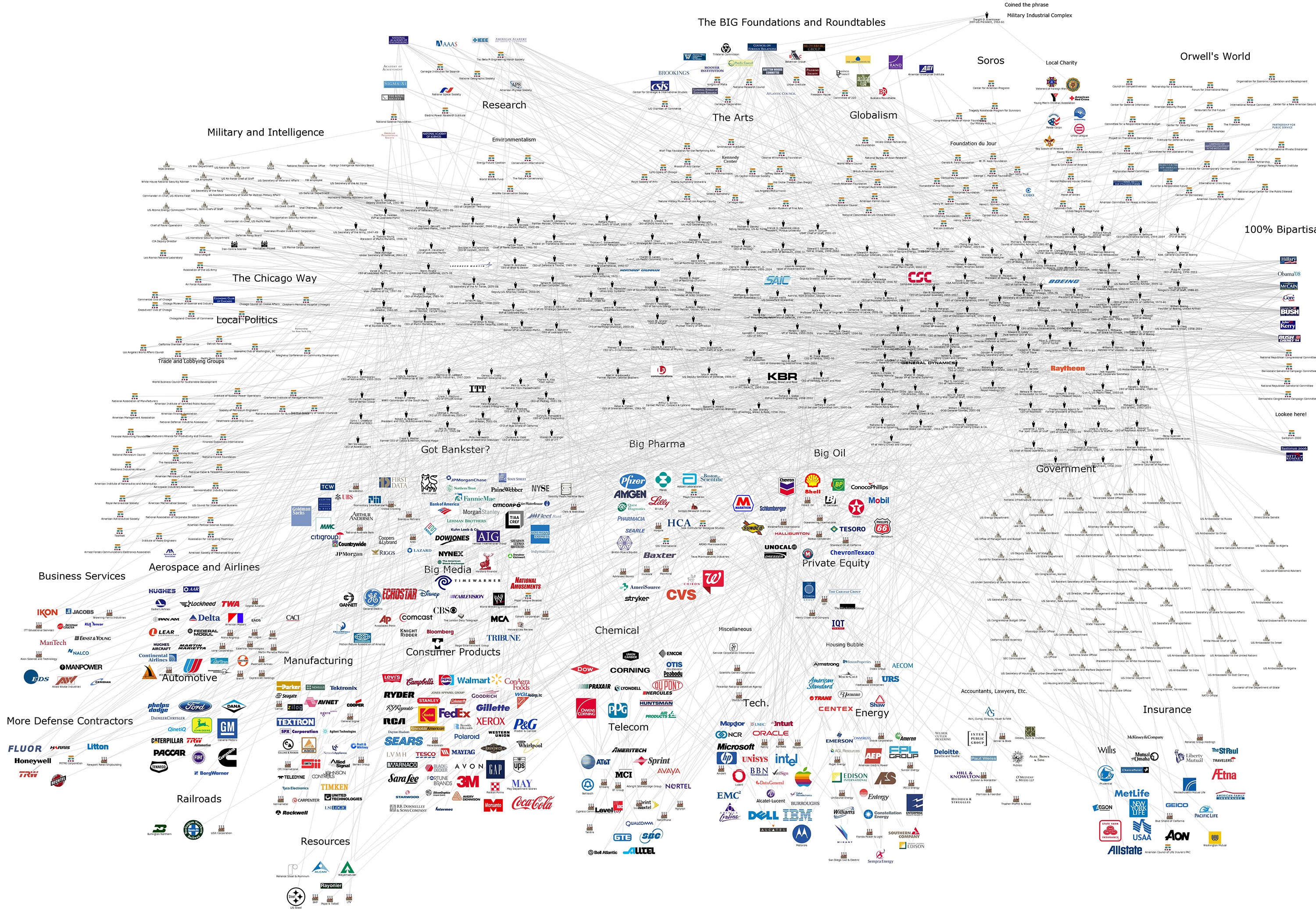


The Globalists
The global elite march in four essential columns: Corporate, Academic, Political and Organized Religion. In general, the goals for globalism are created by Corporate. Academic then provides studies and white papers that justify Corporates goals. Political sells Academic’s arguments to the public and if necessary, changes laws to accommodate and facilitate Corporate in getting what it wants. Organized Religion along with church and state secures corporate, academic and political rule into a global order.
City of London Corporation – Financial power centre, established in 1067
District of Columbia – Military power centre, established in 1871
Vatican City – Religious power centre, sovereign in 1929
All three are separate states, completely independent of their respective countries.
What Is a Globalist?
Key Players of the One World Order
(In order of importance)
(In order of importance)
1: Lord Jacob de Rothschild. 2: His son Nathaniel. 3: Baron David de Rothschild 4: Sir Evelyn de Rothschild 5: Benjamin de Rothschild 6: David Rockefeller Jr. 7: Henry Kissinger 8: George Soros 9: Lloyd Blankfein
The power behind the Committee of 300 is the Anglo-Jewish cousin-hood that dominate the financial and political systems of the world. This cousin-hood includes the Rothschild, Rockefeller, Oppenheimer, Goldsmid, Mocatta, Montefiore, Sassoon, Warburg, Samuel, Kadoorie, Franklin, Worms, Stern and Cohen families.
Ruling Families
Rothschild (Bauer or Bower) family
Rockefeller (Rockenfelder) family
Oppenheimer family
Goldsmid/Goldschmidt/Goldsmith family
Mocatta family
Montefiore family
Sassoon family
Warburg (del Banco) family
Samuel family
Kadoorie family
Worms family
Stern family
Cohen family
Schiff family
Morgan family
Lazard family
Schröder family
Merovingian family
Harriman family
Royal Family of England
Windsor (Saxe-Coburg-Gotha) family
Hanover family
Cavendish (Kennedy) family
De Medici family
Lorraine family
Plantagenet family
Habsburg/Hapsburg family
Krupp family
Bruce (Bruis, Brix, or Broase) family
Carnegie family
Mellon family
Vanderbilt family
Du Pont family
Sinclair family
Astor family
Romanov family
Li family
Onassis family
Van Duyn (Dien, or Duyne) family
Thurn und Taxis family
Guinness family
Russell family
Bush (Scherff) family
Bundy family
Taft family
Disney d’Isigny (“from Isigny”) family
Collins family
Freeman family
McDonald family
Goodyear family
Whitney family
Reynolds family
Getty family
Hearst family
Saudi (The House of Saud) family
Franklin family
Sloane family
Walton family
Koch family
Mars family
Cargill-MacMillan family
Johnson family
Cox family
Pritzker family
S.C. Johnson family
Perkins family
Kellogg family
Pratt family
Rothschild (Bauer or Bower) family
Rockefeller (Rockenfelder) family
Oppenheimer family
Goldsmid/Goldschmidt/Goldsmith family
Mocatta family
Montefiore family
Sassoon family
Warburg (del Banco) family
Samuel family
Kadoorie family
Worms family
Stern family
Cohen family
Schiff family
Morgan family
Lazard family
Schröder family
Merovingian family
Harriman family
Royal Family of England
Windsor (Saxe-Coburg-Gotha) family
Hanover family
Cavendish (Kennedy) family
De Medici family
Lorraine family
Plantagenet family
Habsburg/Hapsburg family
Krupp family
Bruce (Bruis, Brix, or Broase) family
Carnegie family
Mellon family
Vanderbilt family
Du Pont family
Sinclair family
Astor family
Romanov family
Li family
Onassis family
Van Duyn (Dien, or Duyne) family
Thurn und Taxis family
Guinness family
Russell family
Bush (Scherff) family
Bundy family
Taft family
Disney d’Isigny (“from Isigny”) family
Collins family
Freeman family
McDonald family
Goodyear family
Whitney family
Reynolds family
Getty family
Hearst family
Saudi (The House of Saud) family
Franklin family
Sloane family
Walton family
Koch family
Mars family
Cargill-MacMillan family
Johnson family
Cox family
Pritzker family
S.C. Johnson family
Perkins family
Kellogg family
Pratt family
“The United States is owned and dominated today by a hierarchy of its sixty richest families, buttressed by no more than ninety families of lesser wealth… These families are the living center of the modern industrial oligarchy which dominates the United States, functioning discreetly under a de jure democratic form of government behind which a de facto government, absolutist and plutocratic in its lineaments, has gradually taken form since the Civil War. This de facto government is actually the government of the United States — informal, invisible, shadowy. It is the government of money in a dollar democracy.” – Ferdinand Lundberg
The Globalist Agenda - What the Elites Plan for YOU
See more here: America’s 60 Families
These families hold monopolies over the worldwide banking system, entertainment industry, food industry, oil and gas industry, shipping industry, metals and mining industry. Through this domination of the financial markets they pull the strings of every government in the world.
The cousin-hood believes in a form of Babylonian Talmudic Judaism. The Babylonian Talmud and Shulchan Aruch contain the legal code which is the basis of today’s Judaism and Jewish law. In fact, Talmudic Judaism is primarily a legal system in a literal sense. It has little to do with religion and is more of an ancient political cult group with many followers who are not openly Jewish. This is why so many Jews openly claim to be Jewish and atheist at the same time.
Sovereigns and Popes, both, usually had one or more Jews as astrologers and advisers, and they frequently gave Jews control over their very life by employing them as physicians. Political power was thus gained by Jews in almost every Gentile nation along with financial power, since Jewish court-bankers manipulated state funds and taxes.
You will find that approximately 90% of people in the world today who call themselves Jews are actually Khazars, or as they like to be known, Ashkenazi Jews.
You are probably aware of the centuries old practice undertaken by many Ashkenazi Jews whereby they would change their name, in order for them to appear part of the dominant race of the country in which they lived, so as they could obtain influential positions in that country, which they would then exploit to serve their real masters elsewhere.
“The Rothschilds are the wonders of modern banking… We see the descendants of Judah, after a persecution of two thousand years, peering above kings, rising higher than emperors, and holding a whole continent in the hollow of their hands. The Rothschilds govern a Christian world. Not a cabinet moves without their advice. They stretch their hand, with equal ease, from Petersburg to Vienna, from Vienna to Paris, from Paris to London, from London to Washington. Baron Rothschild, the head of the house, is the true king of Judah, the prince of the captivity, the Messiah so long looked for by this extraordinary people. He holds the keys of peace or war, blessing or cursing… They are the brokers and counselors of the kings of Europe and of the republican chiefs of America. What more can they desire?” – Niles Weekly Register, 1835-1836
“Who controls the issuance of money controls the government!” – Nathan Meyer Rothschild
Rothschild Banks of London and Berlin
Lazard Brothers Bank of Paris
Israel Moses Sieff Bank of Italy
Warburg Batiks of Hamburg and Amsterdam
Lehman Brothers Bank of New York
Kuhn Loeb Bank of New York
Chase Manhattan Bank of New York (controlled by the Rockefellers)
Goldman Sachs Bank of New York
Lazard Brothers Bank of Paris
Israel Moses Sieff Bank of Italy
Warburg Batiks of Hamburg and Amsterdam
Lehman Brothers Bank of New York
Kuhn Loeb Bank of New York
Chase Manhattan Bank of New York (controlled by the Rockefellers)
Goldman Sachs Bank of New York
“Let me issue and control a nation’s money and I care not who writes the laws.” – Mayer Amschel Rothschild (1744-1812), founder of the House of Rothschild.
“The few who understand the system will either be so interested in its profits or be so dependent upon its favours that there will be no opposition from that class, while on the other hand, the great body of people, mentally incapable of comprehending the tremendous advantage that capital derives from the system, will bear its burdens without complaint, and perhaps without even suspecting that the system is inimical to their interests.” – The Rothschild brothers of London writing to associates in New York, 1863.
“The modern banking system manufactures money out of nothing. The process is perhaps the most astounding piece of sleight of hand that was ever invented. Banking was conceived in inequity and born in sin. Bankers own the Earth. Take it away from them but leave them the power to create money, and with a flick of a pen, they will create enough money to buy it back again. Take this great power away from them and all great fortunes like mine will disappear, for then this would be a better and happier world to live in. But if you want to continue to be the slaves of bankers and pay the cost of your own slavery, then let bankers continue to create money and control credit.” – Sir Josiah Stamp, president of the Rothschild Bank of England and the second richest man in Britain in the 1920s, speaking at the University of Texas in 1927.
“Money is the god of our time, and Rothschild is his prophet,” – Heinrich Heine
“If my sons did not want wars, there would be none.” Gutle Schnaper. – Mayer Amschel Rothschild’s wife.
“History records that the money changers have used every form of abuse, intrigue, deceit, and violent means possible to maintain their control over governments by controlling money and its issuance.” – James Madison
When a government is dependent upon bankers for money, they and not the leaders of the government control the situation, since the hand that gives is above the hand that takes… Money has no motherland; financiers are without patriotism and without decency; their sole object is gain.” – Napoleon Bonaparte, Emperor of France, 1815
“It is well enough that people of the nation do not understand our banking and money system, for if they did, I believe there would be a revolution before tomorrow morning.” – Henry Ford, founder of the Ford Motor Company.
“From now on, depressions will be scientifically created.” – Congressman Charles A. Lindbergh, on the creation of the Federal System. 1913
“The Federal Reserve banks are one of the most corrupt institutions the world has ever seen. There is not a man within the sound of my voice who does not know that this nation is run by the International bankers.” — Congressman Louis T. McFadden (Rep. Pa)
“All problems, depressions, wars, disasters, assassinations ‒ all of them were planned, caused, instigated, and implemented by the international bankers and their attempt to establish a central bank in every country in the world, which they have now done, thanks to corrupt politicians who have been bought and paid for. This is all you need to know about the history of the world.” ‒ Mary Elizabeth Croft
Read more Quotes on Banking and the Federal Reserve.
The Committee of 300 is a product of the British East India Company’s Council of 300. The East India Company was chartered by the British royal family in 1600. It made vast fortunes in the opium drug trade with China and became the largest company on earth in its time. Today, through many powerful alliances, the Committee of 300 rules the world and is the driving force behind the criminal agenda to create a “New World Order”, under a “Totalitarian Global Government”.
There is no need to use “they” or “the enemy” except as shorthand. We know who “they”, the enemy, is. The Committee of 300 with its “aristocracy”, its ownership of the U.S. Federal Reserve banking system, insurance companies, giant corporations, foundations, communications networks, presided over by a hierarchy of conspirators-this is the enemy. Secret societies exist by deception.
Each is a hierarchy with an inner circle at the top, who deceives those below with lies, such as claiming a noble agenda; thus, duping them into following a web of compartmentalized complicity. The inner circle of the Committee of 300 is the Order of the Garter, headed by Queen Elizabeth Windsor II. It is interesting to note that the Windsor’s changed their name from the Germanic Saxe-Coburg-Gotha during WWI, because of anti-German sentiment.
The enemy is clearly identifiable as the Committee of 300 and its front organizations, such as the Royal Institute for International Affairs (Chatham House), the Club of Rome, NATO, U.N., the Black Nobility, the Tavistock Institute, CFR and all its affiliated organizations, the think tanks and research institutions controlled by Stanford and the Tavistock Institute of Human Relations and last, but certainly not least, the military establishment.
The Committee of 300 is the ultimate secret society made up of an untouchable ruling class, which includes the Queen of the United Kingdom (Elizabeth II), the Queen of the Netherlands, the Queen of Denmark and the royal families of Europe. These aristocrats decided at the death of Queen Victoria, the matriarch of the Venetian Black Guelphs that, in order to gain world-wide control, it would be necessary for its aristocratic members to “go into business” with the non-aristocratic but extremely powerful leaders of corporate business on a global scale, and so the doors to ultimate power were opened to what the Queen of England likes to refer to as “the commoners”. Through their illicit banking cartel, they own the stock of the Federal Reserve, which is a private for profit corporation that violates U.S. Constitution and is a root of the problem.
The decadent American families of the unholy partnership, thoroughly corrupted and wallowing in tainted opium money, went on to become what we know today as the Eastern Liberal Establishment. Its members, under the careful guidance and direction of the British Crown, and subsequently, its foreign policy executive arm, the Royal Institute for International Affairs (RIIA), now known as Chatham House, located in England (across St. James’s Square from the Astors), ran the United States from top to bottom through their secret upper-level, parallel government, which is tightly meshed with the Committee of 300, the ultimate secret society. That secret, all-powerful government is now more in control of the United States than ever before.
The “Committee of 300” membership list as of 2010.
• Abdullah II of Jordan
• Abramovich, Roman Arkadyevich
• Ackermann, Josef
• Adeane, Edward
• Agius, Marcus Ambrose Paul
• Ahtisaari, Martti Oiva Kalevi
• Akerson, Daniel
• Albert II of Belgium
• Alexander – Crown Prince of Yugoslavia
• Alexandra (Princess) – The Honourable Lady Ogilvy
• Alphonse, Louis – Duke of Anjou
• Amato, Giuliano
• Anderson, Carl A.
• Andreotti, Giulio
• Andrew (Prince) – Duke of York
• Anne – Princess Royal
• Anstee, Nick
• Ash, Timothy Garton
• Astor, William Waldorf – 4th Viscount Astor
• August, Ernst – Prince of Hanover
• Aven, Pyotr
• Balkenende, Jan Peter
• Ballmer, Steve
• Balls, Ed
• Barroso, José Manuel
• Beatrix (Queen)
• Belka, Marek
• Bergsten, C. Fred
• Berlusconi, Silvio
• Bernake, Ben
• Bernhard (Prince) of Lippe-Biesterfeld
• Bernstein, Nils
• Berwick, Donald
• Bildt, Carl
• Bischoff, Sir Winfried Franz Wilhen “Win”
• Blair, Tony
• Blankfein, Lloyd
• Blavatnik, Leonard
• Bloomberg, Michael
• Bolkestein, Frits
• Bolkiah, Hassanal
• Bonello, Michael C
• Bonino, Emma
• Boren, David L.
• Borwin – Duke of Mecklenburg
• Bronfman, Charles Rosner
• Bronfman, Edgar Jr.
• Bruton, John
• Brzezinski, Zbigniew (Deceased)
• Budenberg, Robin
• Buffet, Warren
• Bush, George HW
• Cameron, David William Donald
• Camilla – Duchess of Cornwall
• Cardoso, Fernando Henrique
• Carington, Peter – 6th Baron Carrington
• Carlos – Duke of Parma
• Carlos, Juan – King of Spain
• Carney, Mark J.
• Carroll, Cynthia
• Caruana, Jaime
• Castell, Sir William
• Chan, Anson
• Chan, Margaret
• Chan, Norman
• Charles – Prince of Wales
• Chartres, Richard
• Chiaie, Stefano Delle
• Chipman, Dr John
• Chodiev, Patokh
• Christoph, Prince of Schleswig-Holstein
• Cicchitto, Fabrizio
• Clark, Wesley Kanne Sr. (General)
• Clarke, Kenneth
• Clegg, Nick
• Clinton, Bill
• Cohen, Abby Joseph
• Cohen, Ronald
• Cohn, Gary D.
• Colonna, Marcantonio (di Paliano) – Prince and Duke of Paliano
• Constantijn (Prince) of the Netherlands
• Constantine II Greece
• Cooksey, David
• Cowen, Brian
• Craven, Sir John
• Crockett, Andrew
• Dadush, Uri
• D’Aloisio, Tony
• Darling, Alistair
• Davies, Sir Howard
• Davignon, Étienne
• Davis, David
• De Rothschild, Benjamin
• De Rothschild, David René James
• De Rothschild, Evelyn Robert
• De Rothschild, Leopold David
• Deiss, Joseph
• Deripaska, Oleg
• Dobson, Michael
• Draghi, Mario
• Du Plessis, Jan
• Dudley, William C.
• Duisenberg, Wim
• Edward (Prince) – Duke of Kent
• Edward (The Prince) – Earl of Wessex
• Elkann, John
• Emanuele, Vittorio – Prince of Naples, Crown Prince of Italy
• Fabrizio (Prince) – Massimo-Brancaccio
• Feldstein, Martin Stuart “Marty”
• Festing, Matthew
• Fillon, François
• Fischer, Heinz
• Fischer, Joseph Martin
• Fischer, Stanley
• FitzGerald, Niall
• Franz, Duke of Bavaria
• Fridman, Mikhail
• Friedrich, Georg – Prince of Prussia
• Friso (Prince) of Orange-Nassau
• Gates, Bill
• Geidt, Christopher
• Geithner, Timothy
• Gibson-Smith, Dr Chris
• Gorbachev, Mikhail
• Gore, Al
• Gotlieb, Allan
• Green, Stephen
• Greenspan, Alan
• Grosvenor, Gerald – 6th Duke of Westminster
• Gurría, José Ángel
• Gustaf, Carl XVI of Sweden
• Hague, William
• Hampton, Sir Philip Roy
• Hans-Adam II – Prince of Liechtenstein
• Harald V Norway
• Harper, Stephen
• Heisbourg, François
• Henri – Grand Duke of Luxembourg
• Hildebrand, Philipp
• Hills, Carla Anderson
• Holbrooke, Richard
• Honohan, Patrick
• Howard, Alan
• Ibragimov, Alijan
• Ingves, Stefan Nils Magnus
• Isaacson, Walter
• Jacobs, Kenneth M.
• Julius, DeAnne
• Juncker, Jean-Claude
• Kenen, Peter
• Kerry, John Forbes
• King, Mervyn
• Kinnock, Glenys
• Kissinger, Henry
• Knight, Malcolm
• Koon, William H. II
• Krugman, Paul
• Kufuor, John
• Lajolo, Giovanni
• Lake, Anthony
• Lambert, Richard
• Lamy, Pascal
• Landau, Jean-Pierre
• Laurence, Timothy James Hamilton
• Leigh-Pemberton, James
• Leka, Crown Prince of Albania
• Leonard, Mark
• Levene, Peter – Baron Levene of Portsoken
• Leviev, Lev
• Levitt, Arthur
• Levy, Michael – Baron Levy
• Lieberman, Joe
• Livingston, Ian
• Loong, Lee Hsien
• Lorenz (Prince) of Belgium, Archduke of Austria-Este
• Louis-Dreyfus, Gérard
• Mabel (Princess) of Orange-Nassau
• Mandelson, Peter Benjamin
• Manning, Sir David Geoffrey
• Margherita – Archduchess of Austria-Este
• Margrethe II Denmark
• Martínez, Guillermo Ortiz
• Mashkevitch, Alexander
• Massimo, Stefano (Prince) – Prince of Roccasecca dei Volsci
• McDonough, William Joseph
• McLarty, Mack
• Mersch, Yves
• Michael (Prince) of Kent
• Michael of Romania
• Miliband, David
• Miliband, Ed
• Mittal, Lakshmi
• Moreno, Glen
• Moritz – Prince and Landgrave of Hesse-Kassel
• Murdoch, Rupert
• Napoléon, Charles
• Nasser, Jacques
• Niblett, Robin
• Nichols, Vincent
• Nicolás, Adolfo
• Noyer, Christian
• Ofer, Sammy
• Ogilvy, David – 13th Earl of Airlie
• Ollila, Jorma Jaakko
• Oppenheimer, Nicky
• Osborne, George
• Oudea, Frederic
• Parker, Sir John
• Patten, Chris
• Pébereau, Michel
• Penny, Gareth
• Peres, Shimon
• Philip (Prince) – Duke of Edinburgh
• Pio, Dom Duarte – Duke of Braganza
• Pöhl, Karl Otto
• Powell, Colin
• Prokhorov, Mikhail
• Quaden, Guy Baron
• Rasmussen, Anders Fogh
• Ratzinger, Joseph Alois (Pope Benedict XVI)
• Reuben, David
• Reuben, Simon
• Rhodes, William R. “Bill”
• Rice, Susan
• Richard (Prince) – Duke of Gloucester
• Rifkind, Sir Malcolm Leslie
• Ritblat, Sir John
• Roach, Stephen S.
• Robinson, Mary
• Rockefeller, David Jr.
• Rockefeller, David Sr. (Deceased)
• Rockefeller, Nicholas
• Rodríguez, Javier Echevarría
• Rogoff, Kenneth Saul “Ken”
• Roth, Jean-Pierre
• Rothschild, Jacob – 4th Baron Rothschild
• Rubenstein, David
• Rubin, Robert
• Ruspoli, Francesco – 10th Prince of Cerveteri
• Safra, Joseph
• Safra, Moises
• Sands, Peter A.
• Sarkozy, Nicolas
• Sassoon, Isaac S.D.
• Sassoon, James Meyer – Baron Sassoon
• Sawers, Sir Robert John
• Scardino, Marjorie
• Schwab, Klaus
• Schwarzenberg, Karel
• Schwarzman, Stephen A.
• Shapiro, Sidney
• Sheinwald, Nigel
• Sigismund (Archduke) – Grand Duke of Tuscany
• Simeon of Saxe-Coburg and Gotha
• Snowe, Olympia
• Sofía (Queen) of Spain
• Soros, George
• Specter, Arlen
• Stern, Ernest
• Stevenson, Dennis – Baron Stevenson of Coddenham
• Steyer, Tom
• Stiglitz, Joseph E.
• Strauss-Kahn, Dominique
• Straw, Jack
• Sutherland, Peter
• Tanner, Mary
• Tedeschi, Ettore Gotti
• Thompson, Mark
• Thomson, Dr. James A.
• Tietmeyer, Hans
• Trichet, Jean-Claude
• Tucker, Paul
• Van Rompuy, Herman
• Vélez, Álvaro Uribe
• Verplaetse, Alfons Vicomte
• Villiger, Kaspar
• Vladimirovna, Maria – Grand Duchess of Russia
• Volcker, Paul
• Von Habsburg, Otto
• Waddaulah, Hassanal Bolkiah Mu’izzaddin
• Walker, Sir David Alan
• Wallenberg, Jacob
• Walsh, John
• Warburg, Max
• Weber, Axel Alfred
• Weill, Michael David
• Wellink, Nout
• Whitman, Marina von Neumann
• Willem-Alexander – Prince of Orange
• William (Prince) of Wales
• Williams, Dr Rowan
• Williams, Shirley – Baroness Williams of Crosby
• Wilson, David – Baron Wilson of Tillyorn
• Wolfensohn, James David
• Wolin, Neal S.
• Woolf, Harry – Baron Woolf
• Woolsey, R. James Jr.
• Worcester, Sir Robert Milton
• Wu, Sarah
• Zoellick, Robert Bruce
• Abramovich, Roman Arkadyevich
• Ackermann, Josef
• Adeane, Edward
• Agius, Marcus Ambrose Paul
• Ahtisaari, Martti Oiva Kalevi
• Akerson, Daniel
• Albert II of Belgium
• Alexander – Crown Prince of Yugoslavia
• Alexandra (Princess) – The Honourable Lady Ogilvy
• Alphonse, Louis – Duke of Anjou
• Amato, Giuliano
• Anderson, Carl A.
• Andreotti, Giulio
• Andrew (Prince) – Duke of York
• Anne – Princess Royal
• Anstee, Nick
• Ash, Timothy Garton
• Astor, William Waldorf – 4th Viscount Astor
• August, Ernst – Prince of Hanover
• Aven, Pyotr
• Balkenende, Jan Peter
• Ballmer, Steve
• Balls, Ed
• Barroso, José Manuel
• Beatrix (Queen)
• Belka, Marek
• Bergsten, C. Fred
• Berlusconi, Silvio
• Bernake, Ben
• Bernhard (Prince) of Lippe-Biesterfeld
• Bernstein, Nils
• Berwick, Donald
• Bildt, Carl
• Bischoff, Sir Winfried Franz Wilhen “Win”
• Blair, Tony
• Blankfein, Lloyd
• Blavatnik, Leonard
• Bloomberg, Michael
• Bolkestein, Frits
• Bolkiah, Hassanal
• Bonello, Michael C
• Bonino, Emma
• Boren, David L.
• Borwin – Duke of Mecklenburg
• Bronfman, Charles Rosner
• Bronfman, Edgar Jr.
• Bruton, John
• Brzezinski, Zbigniew (Deceased)
• Budenberg, Robin
• Buffet, Warren
• Bush, George HW
• Cameron, David William Donald
• Camilla – Duchess of Cornwall
• Cardoso, Fernando Henrique
• Carington, Peter – 6th Baron Carrington
• Carlos – Duke of Parma
• Carlos, Juan – King of Spain
• Carney, Mark J.
• Carroll, Cynthia
• Caruana, Jaime
• Castell, Sir William
• Chan, Anson
• Chan, Margaret
• Chan, Norman
• Charles – Prince of Wales
• Chartres, Richard
• Chiaie, Stefano Delle
• Chipman, Dr John
• Chodiev, Patokh
• Christoph, Prince of Schleswig-Holstein
• Cicchitto, Fabrizio
• Clark, Wesley Kanne Sr. (General)
• Clarke, Kenneth
• Clegg, Nick
• Clinton, Bill
• Cohen, Abby Joseph
• Cohen, Ronald
• Cohn, Gary D.
• Colonna, Marcantonio (di Paliano) – Prince and Duke of Paliano
• Constantijn (Prince) of the Netherlands
• Constantine II Greece
• Cooksey, David
• Cowen, Brian
• Craven, Sir John
• Crockett, Andrew
• Dadush, Uri
• D’Aloisio, Tony
• Darling, Alistair
• Davies, Sir Howard
• Davignon, Étienne
• Davis, David
• De Rothschild, Benjamin
• De Rothschild, David René James
• De Rothschild, Evelyn Robert
• De Rothschild, Leopold David
• Deiss, Joseph
• Deripaska, Oleg
• Dobson, Michael
• Draghi, Mario
• Du Plessis, Jan
• Dudley, William C.
• Duisenberg, Wim
• Edward (Prince) – Duke of Kent
• Edward (The Prince) – Earl of Wessex
• Elkann, John
• Emanuele, Vittorio – Prince of Naples, Crown Prince of Italy
• Fabrizio (Prince) – Massimo-Brancaccio
• Feldstein, Martin Stuart “Marty”
• Festing, Matthew
• Fillon, François
• Fischer, Heinz
• Fischer, Joseph Martin
• Fischer, Stanley
• FitzGerald, Niall
• Franz, Duke of Bavaria
• Fridman, Mikhail
• Friedrich, Georg – Prince of Prussia
• Friso (Prince) of Orange-Nassau
• Gates, Bill
• Geidt, Christopher
• Geithner, Timothy
• Gibson-Smith, Dr Chris
• Gorbachev, Mikhail
• Gore, Al
• Gotlieb, Allan
• Green, Stephen
• Greenspan, Alan
• Grosvenor, Gerald – 6th Duke of Westminster
• Gurría, José Ángel
• Gustaf, Carl XVI of Sweden
• Hague, William
• Hampton, Sir Philip Roy
• Hans-Adam II – Prince of Liechtenstein
• Harald V Norway
• Harper, Stephen
• Heisbourg, François
• Henri – Grand Duke of Luxembourg
• Hildebrand, Philipp
• Hills, Carla Anderson
• Holbrooke, Richard
• Honohan, Patrick
• Howard, Alan
• Ibragimov, Alijan
• Ingves, Stefan Nils Magnus
• Isaacson, Walter
• Jacobs, Kenneth M.
• Julius, DeAnne
• Juncker, Jean-Claude
• Kenen, Peter
• Kerry, John Forbes
• King, Mervyn
• Kinnock, Glenys
• Kissinger, Henry
• Knight, Malcolm
• Koon, William H. II
• Krugman, Paul
• Kufuor, John
• Lajolo, Giovanni
• Lake, Anthony
• Lambert, Richard
• Lamy, Pascal
• Landau, Jean-Pierre
• Laurence, Timothy James Hamilton
• Leigh-Pemberton, James
• Leka, Crown Prince of Albania
• Leonard, Mark
• Levene, Peter – Baron Levene of Portsoken
• Leviev, Lev
• Levitt, Arthur
• Levy, Michael – Baron Levy
• Lieberman, Joe
• Livingston, Ian
• Loong, Lee Hsien
• Lorenz (Prince) of Belgium, Archduke of Austria-Este
• Louis-Dreyfus, Gérard
• Mabel (Princess) of Orange-Nassau
• Mandelson, Peter Benjamin
• Manning, Sir David Geoffrey
• Margherita – Archduchess of Austria-Este
• Margrethe II Denmark
• Martínez, Guillermo Ortiz
• Mashkevitch, Alexander
• Massimo, Stefano (Prince) – Prince of Roccasecca dei Volsci
• McDonough, William Joseph
• McLarty, Mack
• Mersch, Yves
• Michael (Prince) of Kent
• Michael of Romania
• Miliband, David
• Miliband, Ed
• Mittal, Lakshmi
• Moreno, Glen
• Moritz – Prince and Landgrave of Hesse-Kassel
• Murdoch, Rupert
• Napoléon, Charles
• Nasser, Jacques
• Niblett, Robin
• Nichols, Vincent
• Nicolás, Adolfo
• Noyer, Christian
• Ofer, Sammy
• Ogilvy, David – 13th Earl of Airlie
• Ollila, Jorma Jaakko
• Oppenheimer, Nicky
• Osborne, George
• Oudea, Frederic
• Parker, Sir John
• Patten, Chris
• Pébereau, Michel
• Penny, Gareth
• Peres, Shimon
• Philip (Prince) – Duke of Edinburgh
• Pio, Dom Duarte – Duke of Braganza
• Pöhl, Karl Otto
• Powell, Colin
• Prokhorov, Mikhail
• Quaden, Guy Baron
• Rasmussen, Anders Fogh
• Ratzinger, Joseph Alois (Pope Benedict XVI)
• Reuben, David
• Reuben, Simon
• Rhodes, William R. “Bill”
• Rice, Susan
• Richard (Prince) – Duke of Gloucester
• Rifkind, Sir Malcolm Leslie
• Ritblat, Sir John
• Roach, Stephen S.
• Robinson, Mary
• Rockefeller, David Jr.
• Rockefeller, David Sr. (Deceased)
• Rockefeller, Nicholas
• Rodríguez, Javier Echevarría
• Rogoff, Kenneth Saul “Ken”
• Roth, Jean-Pierre
• Rothschild, Jacob – 4th Baron Rothschild
• Rubenstein, David
• Rubin, Robert
• Ruspoli, Francesco – 10th Prince of Cerveteri
• Safra, Joseph
• Safra, Moises
• Sands, Peter A.
• Sarkozy, Nicolas
• Sassoon, Isaac S.D.
• Sassoon, James Meyer – Baron Sassoon
• Sawers, Sir Robert John
• Scardino, Marjorie
• Schwab, Klaus
• Schwarzenberg, Karel
• Schwarzman, Stephen A.
• Shapiro, Sidney
• Sheinwald, Nigel
• Sigismund (Archduke) – Grand Duke of Tuscany
• Simeon of Saxe-Coburg and Gotha
• Snowe, Olympia
• Sofía (Queen) of Spain
• Soros, George
• Specter, Arlen
• Stern, Ernest
• Stevenson, Dennis – Baron Stevenson of Coddenham
• Steyer, Tom
• Stiglitz, Joseph E.
• Strauss-Kahn, Dominique
• Straw, Jack
• Sutherland, Peter
• Tanner, Mary
• Tedeschi, Ettore Gotti
• Thompson, Mark
• Thomson, Dr. James A.
• Tietmeyer, Hans
• Trichet, Jean-Claude
• Tucker, Paul
• Van Rompuy, Herman
• Vélez, Álvaro Uribe
• Verplaetse, Alfons Vicomte
• Villiger, Kaspar
• Vladimirovna, Maria – Grand Duchess of Russia
• Volcker, Paul
• Von Habsburg, Otto
• Waddaulah, Hassanal Bolkiah Mu’izzaddin
• Walker, Sir David Alan
• Wallenberg, Jacob
• Walsh, John
• Warburg, Max
• Weber, Axel Alfred
• Weill, Michael David
• Wellink, Nout
• Whitman, Marina von Neumann
• Willem-Alexander – Prince of Orange
• William (Prince) of Wales
• Williams, Dr Rowan
• Williams, Shirley – Baroness Williams of Crosby
• Wilson, David – Baron Wilson of Tillyorn
• Wolfensohn, James David
• Wolin, Neal S.
• Woolf, Harry – Baron Woolf
• Woolsey, R. James Jr.
• Worcester, Sir Robert Milton
• Wu, Sarah
• Zoellick, Robert Bruce