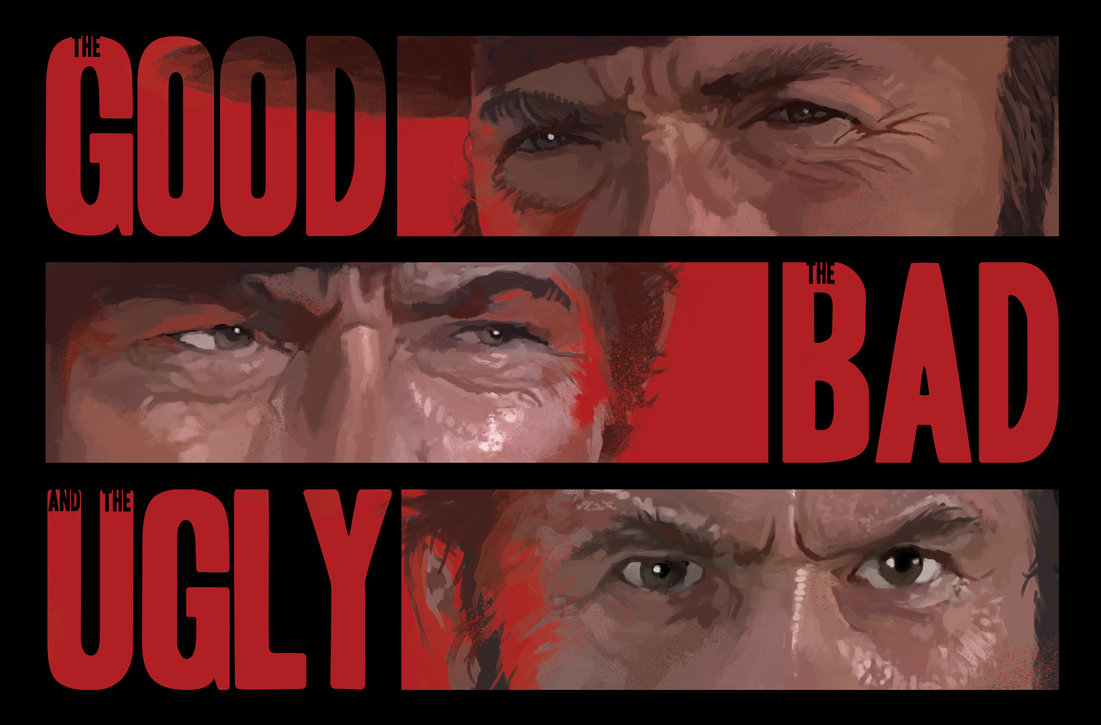
The Good The Bad and The Ugly

Thursday, August 2, 2012

‘Global Economic Crisis’ Exposes Plans For a Global Military Dictatorship : The Intel Hub.com

Tuesday, March 1, 2011

Global Economic Crisis’ Exposes Plans For a Global Military Dictatorship.

The Intel Hub
By Rady Ananda – Contributing Writer
February 26th, 2011
Review of: The Global Economic Crisis: The Great Depression of the XXI Century Editors, Michel Chossudovsky and Andrew Gavin Marshall
Publisher: Global Research, 2010 (391 pp)
image
Editors, Michel Chossudovsky and Andrew Gavin Marshall
Publisher: Global Research, 2010 (391 pp)
There’s a certain irony to my reading this book while waiting at the Food Stamp office. I’m part of an increasing number suffering under the New World Order’s systematic destruction of the planet’s middle classes so as to concentrate wealth in the hands of fewer and fewer families. While global uprisings now threaten global governance under a single currency, scheming rulers have long anticipated this reaction. In The Global Economic Crisis, we learn exactly how a planet-wide military dictatorship plans to enforce its feudal vision.
Neatly organized into five sections comprising 20 essays by fifteen different authors, Global Economic Crisis carefully ties militarization with the planned economic meltdown. Client states and the U.S. itself have openly and sometimes secretly developed the legal framework for martial law. Testifying before a US Senate committee on Intelligence in early 2009, Obama’s Director of National Intelligence, Dennis Blair, warned that civil unrest owing to the economic collapse posed a greater threat than Arab terrorism. One of the book’s essayists, Bill Van Auken, points out that this is the first time in several years that Al Qaeda did not top the list of threats to national security.
The book’s major theme, supported by well-documented sources (and we expect nothing less from Global Research), hammers out the connection between military dominance and planned economic crises. Cuts in social spending augment the buildup of arms. Intellectual property laws bolster control of the world’s food supply by a handful of multinational corporations. Captured by transnational corporations that escape national anti-trust laws, the “free market” has given way to corporate control of prices, while driving down wages. Social protest of such polices is met by military and police violence.
In GEC, we learn that today’s global economy is driven by trade in oil, arms, drugs, and slavery (including prostitution). Where neoliberalism flourishes, so do these sectors. On the drug trade, Michel Chossudovsky writes, “The underlying military and intelligence objective is to protect the cocaine and heroin markets, which feed billions of narco-dollars into the Western banking system.” Indeed, a recent report by Bloomberg News exposed how Bank of America and Wachovia (now owned by Wells Fargo) finances Mexico’s drug cartels:

“They are multinational businesses, after all,” says [Mexican Senator Felipe] Gonzalez, as he slowly loads his revolver at his desk in his Mexico City office. “And they cannot work without a bank.”
One can travel to any major city in the world and buy supposedly illegal drugs, arms, prostitutes or slaves. The level of infrastructure required for such a ubiquitous global market implies government and banking support.Those writing about the social and economic ramifications of globalist actions will greatly appreciate Peter Phillips’ essay, “Poverty and Social Inequality.” It’s chock full of charts laying out facts and statistics.
One of the more intricate essays, “The Political Economy of World Government,” details how economic classes are being restructured, with the potential for the middle classes to unite “using access to knowledge, resources and skills to shape transnational processes.” In this piece, Andrew Gavin Marshall shows how various private interest groups like the Council on Foreign Relations, the Bilderberg group and the Trilateral Commission are deliberately restructuring society to make national borders irrelevant.
On par, Ellen Brown’s piece, “The Towers of Basel: Secretive Plan to create a Global Central Bank” shows how a shadowy global banking committee can break national economies, or boost them if the country does what the moneylenders dictate.
Not entirely an easy read, Global Economic Crisis nonetheless exposes the deep underworkings of a criminal class of bankers and industrialists who serve their own economic interests at the expense of everyone else, backed up by an expanding global military presence.
The last book to get me this angry was John Perkins’ Confessions of an Economic Hitman. Like Confessions, strategies to circumvent and overturn the globalists’ plans are offered in GEC. The “Cook Plan,” for example, emphasizes the need to dissolve the debt-based monetary system – a theme often discussed by Ellen Brown. Claudia von Werlhoff also offers alternatives, describing the various labor and peasant movements that restore local economies while protecting the environment from the ravages of corporate ecocide.
By fully digesting the information presented, the world’s people can best strategize effective resistance. Nonviolence has been a key feature of street protests and strikes that started in Greece and France last year, though often met with violence by police and military. But the stark “austerity” measures neoliberals are foisting on the globe, while they rake in trillions of dollars in bankster bailouts and no-bid contracts, have emboldened populists across Northern Africa. Austerity has even inspired the otherwise anemic US labor movement, with protests spreading from Wisconsin to Ohio, Michigan, Indiana and beyond.
Such street action must also be coupled with direct measures taken at the local level, however. It is here that the ideas presented in Global Economic Crisis can be of most use. By understanding how banks engineered this “bloodless coup,” we find impetus for restoring national sovereignty and a more sane and equitable economy.
image

Rady Ananda
Food Freedom: http://foodfreedom.wordpress.com/
COTO Report: http://coto2.wordpress.com/
Follow Me: http://twitter.com/geobear
Global Research: http://globalresearch.ca/index.php?context=va&aid=20425

Darkbird18 is on point about the Worlds Economic Crisis because the people who are in control of this problem are “The Bad” just the Angle Eyes from the movie,'”The Good The Bad and The Ugly”! They have different names, the Illuminati,NWO, and Shadow Governments but one thing for sure who ever they maybe, they have no heart and all for themselves. This article from The Hub.com exposes a dark plan that may one day show us all what is really going on with the folks behind the NWO, Illuminati and the Shadow Governments. Read on and leave a comment about what you think on my Blog and the Hub blog; also listen too  their radio show  by clicking on the image above………………
 

Darkbird18's Illuminati and NWO Infoproduct at Payloadz.com

image
Darkbird18 have also a online Estore which contain all of his online research in a tool he calls, “Infoproducts”. The Illuminati and NWO Infoproduct have very detail information about these Shadow Governments figures who seam to have control of the world and the minds of man kind. But the key to fighting  them is knowledge, so buy Darkbird18’s Infoproducts and stay in the know about Internet Information, from “The Good The bad and The Ugly Internet Information” website, http://www.darkbird18.com/.
‘Global Economic Crisis’  “Exposes Plans For a Global Military Dictatorship :
Technorati Tags:

Saturday, July 28, 2012

Why 2012?

THE HOW AND WHY OF THE MAYAN END DATE IN 2012 A.D.

by John Major Jenkins

¾ May 23rd, 1994

Originally published in the Dec-Jan '95 issue of Mountain Astrologer.

Why did the ancient Mayan or pre-Maya choose December 21st, 2012 A.D., as the end of their Long Count calendar? This article will cover some recent research. Scholars have known for decades that the 13-baktun cycle of the Mayan "Long Count" system of timekeeping was set to end precisely on a winter solstice, and that this system was put in place some 2300 years ago. This amazing fact - that ancient Mesoameri- can skywatchers were able to pinpoint a winter solstice far off into the future - has not been dealt with by Mayanists. And why did they choose the year 2012? One immediately gets the impression that there is a very strange mystery to be confronted here. I will be building upon a clue to this mystery reported by epigrapher Linda Schele in Maya Cosmos (1994). This article is the natural culmination of the research relating to the Mayan Long Count and the precession of the equinoxes that I explored in my recent book Tzolkin: Visionary Perspectives and Calendar Studies (Borderlands Science and Research Foundation, 1994).

The Mayan Long Count

Just some basics to get us started. The Maya were adept skywatchers. Their Classic Period is thought to have lasted from 200 A.D. to 900 A.D., but recent archeological findings are pushing back the dawn of Mayan civilization in Mesoamerica. Large ruin sites indicating high culture with distinctly Mayan antecedents are being found in the jungles of Guatemala dating back to before the common era. And even before this, the Olmec civilization flourished and developed the sacred count of 260 days known as the tzolkin. The early Maya adopted two different time keeping systems, the "Short Count" and the Long Count. The Short Count derives from combining the tzolkin cycle with the solar year and the Venus cycle of 584 days. In this way, "short" periods of 13, 52 and 104 years are generated. Unfortunately, we won't have occasion to dwell on the properties of the so-called Short Count system here. The Long Count system is somewhat more abstract, yet is also related to certain astronomical cycles. It is based upon nested cycles of days multiplied at each level by that key Mayan number, twenty:

Number of Days / Term

1 / Kin (day)

20 / Uinal

360 / Tun

7200 / Katun

144000 / Baktun

Notice that the only exception to multiplying by twenty is at the tun level, where the uinal period is instead multiplied by 18 to make the 360-day tun. The Maya employed this counting system to track an unbroken sequence of days from the time it was inaugurated. The Mayan scholar Munro Edmonson believes that the Long Count was put in place around 355 B.C. This may be so, but the oldest Long Count date as yet found corresponds to 32 B.C. We find Long Count dates in the archeological record beginning with the baktun place value and separated by dots. For example: 6.19.19.0.0 equals 6 baktuns, 19 katuns, 19 tuns, 0 uinals and 0 days. Each baktun has 144000 days, each katun has 7200 days, and so on. If we add up all the values we find that 6.19.19.0.0 indicates a total of 1007640 days have elapsed since the Zero Date of 0.0.0.0.0. The much discussed 13-baktun cycle is completed 1872000 days (13 baktuns) after 0.0.0.0.0. This period of time is the so called Mayan "Great Cycle" of the Long Count and equals 5125.36 years.

But how are we to relate this to a time frame we can understand? How does this Long Count relate to our Gregorian calendar? This problem of correlating Mayan time with "western" time has occupied Mayan scholars since the beginning. The standard question to answer became: what does 0.0.0.0.0 (the Long Count "beginning" point) equal in the Gregorian calendar? When this question is answered, archeological inscriptions can be put into their proper historical context and the end date of the 13-baktun cycle can be calculated. After years of considering data from varied fields such as astronomy, ethnography, archeology and iconography, J. Eric S. Thompson determined that 0.0.0.0.0 correponded to the Julian date 584283, which equals August 11th, 3114 B.C. in our Gregorian calendar. This means that the end date of 13.0.0.0.0, some 5125 years later, is December 21st, 2012 A.D.1

The relationship between the Long Count and Short Count has always been internally consistent (both were tracked alongside each other in an unbroken sequence since their conception). Now it is very interesting to note that an aspect of the "Short Count", namely, the sacred tzolkin count of 260 days, is still being followed in the highlands of Guatemala. As the Mayan scholar Munro Edmonson shows in The Book of the Year, this last surviving flicker of a calendar tradition some 3000 years old supports the Thompson correlation of 584283. Edmonson also states that the Long Count was begun by the Maya or pre-Maya around 355 B.C., but there is reason to believe that the Long Count system was being perfected for at least 200 years prior to that date.

The point of interest for these early astronomers seems to have been the projected end date in 2012 A.D., rather than the beginning date in 3114 B.C. Having determined the end date in 2012 (for reasons we will come to shortly), and calling it 13.0.0.0.0, they thus proclaimed themselves to be living in the 6th baktun of the Great Cycle. The later Maya certainly attributed much mythological significance to the beginning date, relating it to the birth of their deities, but it now seems certain that the placement of the Long Count hinges upon its calculated end point. Why did early Mesoamerican skywatchers pick a date some 2300 years into the future and, in fact, how did they pinpoint an accurate winter solstice? With all these considerations one begins to suspect that, for some reason, the ancient New World astronomers were tracking precession.

The Precession

The precession of the equinoxes, also known as the Platonic Year, is caused by the slow wobbling of the earth's polar axis. Right now this axis roughly points to Polaris, the "Pole Star," but this changes slowly over long periods of time. The earth's wobble causes the position of the seasonal quarters to slowly precess against the background of stars. For example, right now, the winter solstice position is in the constellation of Sagittarius. But 2000 years ago it was in Capricorn. Since then, it has precessed backward almost one full sign. It is generally thought that the Greek astronomer Hipparchus was the first to discover precession around 128 B.C. Yet scholarship indicates that more ancient Old World cultures such as the Egyptians (see Schwaller de Lubicz's book Sacred Science) and Babylonians also knew about the precession.

I have concluded that even cultures with simple horizon astronomy and oral records passed down for a hundred years or so, would notice the slow shifting of the heavens. For example, imagine that you lived in an environment suited for accurately demarcated horizon astronomy. Even if this wasn't the case, you might erect monoliths to sight the horizon position of, most likely, the dawning winter solstice sun. This position in relation to background stars could be accurately preserved in oral verse or wisdom teachings, to be passed down for centuries. Since precession will change this position at the rate of 1 degree every 72 years, within the relatively short time of 100 years or so, a noticeable change will have occurred. The point of this is simple. To early cultures attuned to the subtle movements of the sky, precession would not have been hard to notice.2

The Maya are not generally credited with knowing about the precession of the equinoxes. But considering everything else we know about the amazing sophistication of Mesoamerican astronomy, can we realistically continue to deny them this? Many of the as yet undeciphered hieroglyphs may ultimately describe precessional myths. Furthermore, as I show in my book Tzolkin: Visionary Perspectives and Calendar Studies, the Long Count is perfectly suited for predicting future seasonal quarters, indefinitely, and precession is automatically accounted for. Some of the most incredible aspects of Mayan cosmo-conception are just now being discovered. As was the case with the state of Egyptology in the 1870's, we still have a lot to learn. In addition, Mayanists like Gordon Brotherston (The Book of the Fourth World) consider precessional knowledge among Mesoamerican cultures to be more than likely.

The Sacred Tree

We are still trying to answer these questions: What is so important about the winter solstice of 2012 and, exactly how were calculations made so accurately, considering that precession should make them exceedingly difficult?

If we make a standard horoscope chart for December 21st, 2012 A.D., nothing very unusual appears. In this way I was led astray in my search until Linda Schele provided a clue in the recent book Maya Cosmos. Probably the most exciting breakthrough in this book is her identification of the astronomical meaning of the Mayan Sacred Tree. Drawing from an impressive amount of iconographic evidence, and generously sharing the process by which she arrived at her discovery, the Sacred Tree is found to be none other than the crossing point of the ecliptic with the band of the Milky Way. Indeed, the Milky Way seems to have played an important role in Mayan imagery. For example, an incised bone from 8th century Tikal depicts a long sinking canoe containing various deities. This is a picture of the night sky and the canoe is the Milky Way, sinking below the horizon as the night progresses, and carrying with it deities representing the nearby constellations. The incredible Mayan site of Palenque is filled with Sacred Tree motifs and references to astronomical events. In their book Forest of Kings, Schele and Freidel suggested that the Sacred Tree referred to the ecliptic. Apparently that was only part of the picture, for the Sacred Tree that Pacal ascends in death is more than just the ecliptic, it is the sacred doorway to the underworld. The crossing point of Milky Way and ecliptic is this doorway and represents the sacred source and origin. In the following diagram of the well known sarcophagus carving, notice that the Milky Way tree serves as an extension of Pacal's umbilicus. The umbilicus is a human being's entrance into life, and entrance into death as well:


Diagram 1: Pacal and the Sacred Tree.

We may also remember at this point that the tzolkin calendar is said to spring from the Sacred Tree. The Sacred Tree is, in fact, at the center of the entire corpus of Mayan Creation Myths. We should definitely explore the nature of this astronomical feature.

The first question that came up for me was as follows. Since Lord (Ahau) Pacal is, by way of divine kingship, equated with the sun, and he is portrayed "entering" the Sacred Tree on his famous sarcophagus lid, on what day does the sun come around to conjunct the crossing point of ecliptic and Milky Way? This would be an important date. In the pre-dawn skies of this date, the Milky Way would be seen to arch overhead from the region of Polaris (Heart of Sky) and would point right at where the sun rises. This (and the corollary date 6 months later) is the only date when the Sun/Lord could jump from the ecliptic track and travel the Milky Way up and around the vault of heaven to the region of Polaris, there to enter the "Heart of Sky." It should be mentioned that 1300 years ago, during the zenith of Palenque's glory, Polaris was much less an exact "Pole Star" than it is now. Schele demonstrates that it wasn't a Pole Star that the Maya mythologized in this regard, it was the unmarked polar "dark region" symbolizing death and the underworld around which everything was observed to revolve. Life revolves around death - a characteristically Mayan belief. The dates on which the sun conjuncts the "Sacred Tree" are thus very important. These dates will change with precession. Schele doesn't pursue this line of reasoning, however, and doesn't even mention that these dates might be significant. If we go back to 755 A.D., we find that the sun conjuncts the Sacred Tree on December 3rd. I should point out here that the Milky Way is a wide band, and perhaps a 10-day range of dates should be considered.

To start with, however, I use the exact center of the Milky Way band that one finds on star charts, known as the "Galactic Equator" (not to be confused with Galactic Center). Where the Galactic Equator crosses the ecliptic in Sagittarius just happens to be where the dark rift in the Milky Way begins. This is a dark bifurcation in the Milky Way caused by interstellar dust clouds. To observers on earth, it appears as a dark road which begins near the ecliptic and stretches along the Milky Way up towards Polaris. The Maya today are quite aware of this feature; the Quich» Maya call it xibalba be (the "road to Xibalba") and the Chorti Maya call it the "camino de Santiago". In Dennis Tedlock's translation of the Popol Vuh, we find that the ancient Maya called it the "Black Road". The Hero Twins Hunahpu and Xbalanque must journey down this road to battle the Lords of Xibalba. (Tedlock 334, 358). Furthermore, what Schele has identified as the Sacred Tree was known to the ancient Quich» simply as "Crossroads."

This celestial feature was not marginal in ancient Mayan thought and is still rec- ognized even today. In terms of how this feature was mythologized, it seems that when a planet, the sun, or the moon entered the dark cleft of the Milky Way in Sagittarius (which happens to be the exact center of the Milky Way, the Galactic Equator), entrance to the underworld road was possible, which could then take the journeyer up to the Heart of Sky. Shamanic vision rites were probably involved in this scenario. In the Yucatan, underground caves were ritual places used by shaman to journey to the underworld. Schele explains that "Mayan mythology identifies the Road to Xibalba as going through a cave" (Forest of Kings, 209). Here we have a metaphorical reference to the "dark rift" in the Milky Way by way of its terrestrial counterpart, a syncretism between earth and sky which is characteristic of Mayan thinking. Above all, what is becoming apparent from the corpus of Mayan Creation Myths is that creation seems to have taken place at a celestial crossroads - the crossing point of ecliptic and Milky Way.

To clarify this ever growing picture, we should stop here and plot out some charts. In addition to the detailed star maps from Norton's 2000.0 Star Atlas which allowed me to pinpoint the crossing point of Galactic Equator and ecliptic, I use EZCosmos to plot these positions3. What I found answers the question of why the Maya chose the winter solstice of 2012, a problem seemingly avoided by astronomers and Mayanists alike. While it is true that the sun conjuncts the Sacred Tree on December 3rd in the year 755 A.D., over the centuries precession has caused the conjunction date to approach the winter solstice. So, how close are we to perfect conjunction today? Exactly when might we expect the winter solstice sun to conjunct the crossing point of Galactic Equator and ecliptic - the Mayan Sacred Tree? Any astronomer will tell you that, presently, the Milky Way crosses the ecliptic through the constellation of Sagittarius and this area is rich in nebulae and high density objects. In fact, where the Milky Way crosses the ecliptic in Sagittarius also happens to be the direction of the Galactic Center.4

The Charts

So the quest returns to identifying why December 21st, 2012 A.D. might represent some kind of astronomical anomoly. I'll get right to the heart of the matter. Let's look at a few charts.


Chart 1.

Here is a full view of the sky at noon on December 21st, 2012 A.D. The band of the Milky Way can be seen stretching from the lower right to the upper left. The more or less vertical dotted line indicates the Galactic Equator. The planets can be seen tracing a roughly horizontal path through the chart, indicating the ecliptic. The sun, quite strikingly, is dead center in the Sacred Tree. Let's look closer.


Chart 2.

The field is now reduced from a horizon-to-horizon view to a field of 30 degrees. Part of the constellation of Sagittarius can be seen in the lower left portion of the chart. The planet in the middle-to-upper left portion of the chart is Pluto, which rarely travels directly along the ecliptic. The center square near the sun is placed on the Trifid Nebula (M20). According to the star chart I used, this nebula is very close to the crossing point of Galactic Equator and ecliptic. However, a small star (4 Sgr) is even closer; it sits right on the Galactic Equator and its declination is only 00 .08' below the ecliptic. Let's look closer at these features.


Chart 3.

The field is now reduced to a 5-degree span, what astrology considers to be within conjunction. The dot to the lower right of the sun is the star 4 Sgr. Amazingly, the Sun is right on target. We couldn't have hoped for a closer conjunction. 1 day before or after will remove the sun a noticeable distance from the crossing point. December 21st, 2012 (13.0.0.0.0 in the Long Count) therefore represents an extremely close conjunction of the winter solstice sun with the crossing point of Galactic Equator and the ecliptic, what the ancient Maya recognized as the Sacred Tree. It is critical to understand that the winter solstice sun rarely conjuncts the Sacred Tree. In fact, this is an event that has been coming to resonance very slowly over thousands and thousands of years. What this might mean astrologically, how this might effect the "energy weather" on earth, must be treated as a separate topic.

But I should at least mention in passing that this celestial convergence appears to parallel the accelerating pace of human civilization. It should be noted that because precession is a very slow process, similar astronomical alignments will be evident on the winter solstice dates within perhaps 5 years on either side of 2012. However, the accuracy of the conjunction of 2012 is quite astounding, beyond anything deemed calculable by the ancient Maya, and serves well to represent the perfect mid-point of the process.

Let's go back to the dawn of the Long Count and try to reconstruct what may have been happening.

Why: Winter Solstice Sun Conjuncts The Sacred Tree in 2012 A.D.

First, the tzolkin count originated among the Olmec at least as early as 679 B.C. (see Edmonson's Book of the Year). We may suspect that astronomical observations were being made from at least that point. The tzolkin count has been followed unbroken since at least that time, up to the present day, demonstrating the high premium placed by the Maya upon continuity of tradition. In this way, star records, horizon positions of the winter solstice sun, and other pertinent observations could also have been accurately preserved. As suggested above, precession can be noticed by way of even simple horizon astronomy in as little time as 100 to 150 years. (Hipparchus, the alleged "discoverer" of precession among the Greeks, compared his own observations with data collected only 170 years before his time.) Following Edmonson, the Long Count system may have appeared as early as 355 B.C. Part of the reason for implementing the Long Count system, as I will show, was probably to calculate future winter solstice dates.

We must assume that even at this early point in Mesoamerican history, the crossing point of ecliptic and Milky Way was understood as the "Sacred Tree". Since the Sacred Tree concept is intrinsically tied into the oldest Mayan Creation Myths, this is not improbable. At the very least, the "dark rift" was already a recognized feature. Early skywatchers of this era (355 B.C.) would then observe the sun to conjunct the dark ridge in the Milky Way on or around November 18th.5 This would be easily observed in the pre-dawn sky as described above: the Milky Way points to the rising sun on this date.

Over a relatively short period of time, as an awareness of precession was emerging, this date was seen to slowly approach winter solstice, a critical date in its own right in early Mayan cosmo-conception. At this point, precession and the rate of precession was calculated, the Long Count was perfected and inaugurated, and the appropriate winter solstice date in 2012 A.D. was found via the Long Count in the following way.

How: Long Count and Seasonal Quarters

Long Count katun beginnings will conjunct sequential seasonal quarters every 1.7.0.0.0 days (194400 days). This is an easily tracked Long Count interval. Starting with the katun beginning of 650 B.C.:

Long Count Which Quarter? Year

6.5.0.0.0 Fall 650 B.C.

7.12.0.0.0 Winter 118 B.C.

8.19.0.0.0 Spring 416 A.D.

10.6.0.0.0 Summer 948 A.D.

11.13.0.0.0 Fall 1480 A.D.

13.0.0.0.0 Winter 2012 A.D.

Note that the last date is not only a katun beginning, but a baktun beginning as well. It is, indeed, the end date of 2012.6

The Long Count may have been officially inaugurated on a specific date in 355 B.C., as Edmonson suggests, but it must have been formulated, tried, tested, and proven before this date. This may well have taken centuries, and the process no doubt paralleled (and was perhaps instigated by) the discovery of precession. The Long Count system automatically accounts for precession in its ability to calculate future seasonal quarters - a property which shouldn't be underestimated.

Summary

This has been my attempt to fill a vacuum in Mayan Studies, an answer to the why and how of the end date of the 13-baktun cycle of the Mayan Long Count. The solution requires a shift in how we think about the astronomy of the Long Count end date. The strange fact that it occurs on a winter solstice immediately points us to possible astronomical reasons, but they are not obvious. We also shouldn't forget the often mentioned fact that the 13-baktun cycle of some 5125 years is roughly 1/5th of a precessional cycle. This in itself should have been suggestive of a deeper mystery very early on. Only with the recent identification of the astronomical nature of the Sacred Tree has the puzzle revealed its fullness. And once again we are amazed at the sophistication and vision of the ancient New World astronomers, the decendants of whom still count the days and watch the skies in the remote outbacks of Guatemala.

This essay is not contrived upon sketchy evidence. It basically rests upon two facts:

1) the well known end date of the 13-baktun cycle of the Mayan Long Count, which is December 21st, 2012 A.D. and

2) the astronomical situation on that day. Based upon these two facts alone, the creators of the Long Count knew about and calculated the rate of precession over 2300 years ago. I can conceive of no other conclusion. To explain this away as "coincidence" would only obscure the issue.

For early Mesoamerican skywatchers, the slow approach of the winter solstice sun to the Sacred Tree was seen as a critical process, the culmination of which was surely worthy of being called 13.0.0.0.0, the end of a World Age. The channel would then be open through the winter solstice doorway, up the Sacred Tree, the Xibalba be , to the center of the churning heavens, the Heart of Sky.

Notes:

1Linda Schele and David Freidel, unlike most Mayanists, continue to support the work of Floyd Lounsbury in promoting the 584285 correlation. This is 2 days off from the Thompson correlation that I use. The decisive factor in supporting the Thompson correlation of 584283 is the fact that it corresponds with the tzolkin count still followed in the highlands of Guatemala. To account for this discrepency in his correlation, Lounsbury claims that the count was shifted back two days sometime before the conquest (not likely), thus explaining its present placement. This means that either correlation will give the December 21st end date. Nevertheless, Schele and Freidel still report that the end date is December 23rd, 2012 rather than Dec. 21st, an unfortunate faux pas understandable only because they aren't particularly interested in the specifics of the correlation debate. For a detailed discussion of this topic, refer to my book Tzolkin: Visionary Perspectives and Calendar Studies.

2Case in point is the mysterious existence of myths obviously describing precession in the ancient verses of the Kalevala, the Finnish National Epic. These myths were relayed from the earliest times by way of singers. Many of these stories are thoroughly magical and are filled with sky lore. The Finnish language is not of Indo- European origin and up until the late 19th century peasants in Finland and northwestern Russia had little contact with Europe. Indeed, their heritage suggests more contact with Central Asia than Europe. Some of the Kalevala stories describe a sacred Mill called the Sampo (derived from sanskrit Skambha = pillar or pole) with a "many ciphered cover". This spinning Mill is a metaphor for a Golden Age of plenty and the starry sky spinning around the Pole Star (known as the Nail of the North), which in the Far North is almost straight over head. The Mill at some point is disturbed, its pillar being pulled out of its peg, and a new one - a new "age" - must be constructed. This becomes the chore of Ilmarinen, the primeval smith. In this legend, ancient knowledge of precession among unsophisticated "peasants" who were nonetheless astute skywatchers, was preserved via oral tradition almost down to modern times.

3EZCosmos is a graphic software package that can accurately plot and animate the positions of planets, stars, nebula and so on, for 14,000 years. It is well suited to this research because it accounts for precession in its positional calculations. It also happens to be the software that Linda Schele used to discover the astronomical meaning of the Mayan Sacred Tree.

4 Here we briefly converge with the ideas of Terence McKenna. In the book he co- authored with his brother Dennis (Invisible Landscape, Seabury Press 1975 and Harper San Francisco, 1993), Terence suggests that the position of winter solstice sun within 3 degrees of the Galactic Center in the year 2012 A.D. (a "once-in-a-precessional- cycle" event) may provide the eschatological end point for his theory of time known as Timewave Zero. His end date was chosen for historical reasons and was, apparently, only later discovered to correspond with the Mayan end date. The McKennas point out that this unusual astronomical situation has been noted by other writers, namely, Giorgio de Santillana and Hertha von Dechend in Hamlet's Mill (1969). As ACS Publication's The American Ephemeris for the 21st Century shows, in the year 2012 the Galactic Center is at 27 Sagittarius (within 3 of winter solstice). Thus McKenna demonstrates that on winter solstice of 2012, Galactic Center will be rising heliacally just before dawn, in a way reminiscent of how the Maya observed Venus's last morningstar appearance.

5This basically follows the "1 degree every 72 years" rule of precession. In this way, back in 3114 B.C. the sun conjuncted the Sacred Tree on Oct 10th, which is 72 degrees, or 1/5th of the ecliptic from the winter solstice. The Fall Equinox sun conjuncted the Sacred Tree about 6400 years ago (1/4th of a precessional cycle). Ancient cultures in Mesopotamia may have recognized this alignment, and called it a Golden Age. The fall from this state of alignment may be responsible for the original Fall from Paradise myth, which filtered out to the Judaic tradition.

6The Long Count has other strange astronomical properties. For instance, the 13- katun cycle of 256 years was known to the Yucatec Maya as a prophecy cycle. We see it used in the Books of Chilam Balam. The astronomical reference here is to conjunction cycles of Uranus and Pluto, two of which equal 256 years. From another angle, 3 katuns equal exactly 37 synodical cycles of Venus.

Sources:

Brotherston, Gordon. The Book of the Fourth World. Cambridge University Press. 1992.

Edmonson, Munro. The Book of the Year. University of Utah Press, Salt Lake City, Utah. 1988.

EZCosmos. Astrosoft, Inc. DeSoto, Texas. 1990.

Jenkins, John Major. Tzolkin: Visionary Perspectives and Calendar Studies. Borderlands Science and Research Foundation. Garberville, CA. 1994.

Mayan Calendrics. Dolphin Software. 48 Shattuck Square #147, Berkeley, CA. 94704. 1989 &1993.

Meeus, Jean. Astronomical Tables of the Sun, Moon and Planets. Willmann- Bell Publishers. Richmond, VA. 1983.

Michelsen, Neil F. The American Ephemeris for the 21st Century. ACS Publications. San Diego, CA. 1982, 1988.

Ridpath, Ian (ed.). Norton's 2000.0: Star Atlas and Reference Handbook. Longman Group UK Limited. 1989.

Schele, Linda and Freidel, David. A Forest of Kings: The Untold Story of the Ancient Maya. William Morrow and Company, Inc. New York. 1990.

Schele, Linda; Freidel, David; Parker, Joy. Maya Cosmos: Three Thousand Years on the Shaman's Path. William Morrow and Company, Inc. New York. 1993.

Tedlock, Dennis. The Popol Vuh: The Definitive Edition of the Mayan Book of the Dawn of Life and the Glories of Gods and Kings. Simon & Schuster. New York.

1985

Author's Biographical Information:

John Major Jenkins (March 4th, 1964, 9:19 p.m., Chicago) is a student of Mayan time. On several trips to Central America in the late 80's, he worked and lived with the Quich» and Tzutujil Maya in Guatemala. Observations gathered on these trips were published in Chicago area newspapers. Since then he has devoted his time to studying Mayan cosmo-conception and the mathematical and philosophical properties of the sacred calendar. More thought provoking ideas can be found in his recent book Tzolkin: Visionary Perspectives and Calendar Studies (Borderlands Science and Research Foundation, 1994). Additional information on the Mayan end date alignment is available by writing the author at Four Ahau Press: P.O. Box 3; Boulder, CO 80306. Four Ahau Web Site


Go Hyperborea.
McKenna home page

Technorati Tags: ,

Why 2012?

Saturday, July 14, 2012

» Planet Infowars: Network Against NWO Tyranny Alex Jones' Infowars: There's a war on for your mind!

header4 Alex Jones


Planet Infowars: Network Against NWO Tyranny:

Planet Infowars
May 24, 2012
Join the Resistance. Create your free profile at Planet.Infowars.com, then connect, network and find friends, allies and future family members ready to stand for the Constitution and Bill of Rights, confront New World Order minions and turn this world back towards freedom. Planet Infowars is your tool for publishing, launching a personalized media platform, and organizing with like-minded individuals at the local and global level. Planet Infowars is what you make it– waiting for you to breathe life into it. You are the resistance, you are victory! Use it while we still have some vestiges of a free Internet.
Darkbird18 is back on point with the online research form my theme, “The Good The Bad and Ugly Internet Information.” The Bad all controlling the world and have big plans to make this happen and theNWO “New World Order” is the key behind their plans. Alex Jones have been online sine I started my online business back in 1995 and he still is fighting the good fight of keeping us in the “Know” about the NWO and all the underworld groups who seek to take away our freedoms and souls! Read this article and
watch this video and let me know if he speaks the truth!

» Planet Infowars: Network Against NWO Tyranny Alex Jones' Infowars: There's a war on for your mind!

Friday, June 29, 2012

UrbanSurvival.com Daily News Update Ugly Internet Information (Note: This website is no longer online, 06/27/2021)


Unemployment:  WTF? Unchanged???
OK, here's the deal - hot of the Labor Dept. website:
"Total nonfarm payroll employment declined by 131,000 in July, and the unem- ployment rate was unchanged at 9.5 percent, the U.S. Bureau of Labor Statistics reported today. Federal government employment fell, as 143,000 temporary workers hired for the decennial census completed their work. Private-sector payroll employment edged up by 71,000.
Household Survey Data
Both the number of unemployed persons, at 14.6 million, and the unemployment rate, at 9.5 percent, were unchanged in July. (See table A-1.)
Among the major worker groups, the unemployment rate for adult men (9.7 per- cent), adult women (7.9 percent), teenagers (26.1 percent), whites (8.6 per- cent), blacks (15.6 percent), and Hispanics (12.1 percent) showed little or no change in July. The jobless rate for Asians was 8.2 percent, not seasonally adjusted. (See tables A-1, A-2, and A-3.)
In July, the number of long-term unemployed (those jobless for 27 weeks and over) was little changed at 6.6 million. These individuals made up 44.9 per- cent of unemployed persons. (See table A-12.)
The civilian labor force participation rate (64.6 percent) and the employment- population ratio (58.4 percent) were essentially unchanged in July; however, these measures have declined by 0.6 percentage point and 0.4 point, respectively, since April. (See table A-1.)
The number of persons employed part time for economic reasons (sometimes re- ferred to as involuntary part-time workers) was essentially unchanged over the month at 8.5 million but has declined by 623,000 since April. These in- dividuals were working part time because their hours had been cut back or because they were unable to find a full-time job. (See table A-8.)
About 2.6 million persons were marginally attached to the labor force in July, an increase of 340,000 from a year earlier. (The data are not seasonally adjusted.) These individuals were not in the labor force, wanted and were avail- able for work, and had looked for a job sometime in the prior 12 months. They were not counted as unemployed because they had not searched for work in the 4 weeks preceding the survey. (See table A-16.)
Among the marginally attached, there were 1.2 million discouraged workers in July, up by 389,000 from a year earlier. (The data are not seasonally ad- justed.) Discouraged workers are persons not currently looking for work because they believe no jobs are available for them. The remaining 1.4 million persons marginally attached to the labor force had not searched for work in the 4 weeks preceding the survey for reasons such as school attendance or family responsibilities.
As long as the workforce number is being reduced, it keeps the unemployment figures in check.  However, the real number to look at is the labor participation rate.  In April it was 65.2% and now its down to 64.6%.
That's how you lose 131,000 jobs and hold the rate steady...only change the participation rate a tenth for the month...
The CES Birth/Death Model also shows declines in new/small business/estimated job creation. Last month 147,000 new jobs were estimated into existence.  This month:  Just 6,000 with another 12,000 lost in manufacturing and 9-thousand each in Financial activities and the Trade Transportation and utilities group.
On a Not Seasonally Adjusted basis,  the Alternative Measures of Labor Underutilization figure was up another tenth to 16.8% of the workforce.  Same place we were a year ago.
Feedback: "George, did you mention that the June Jobs report was revised majorly downward to -221K, from -125K? eom"  No, wouldn't want to complete f/u the weekend.
Predictably, the futures point down.  But it gets worse...
How Gov't Screws Job-Seekers
As long as we're talking about the job collapse, reading InformationWeek may not be on your list of sites to scan for economic news, but a fine case of screwing up the recovery is being presented by the federal government and what the article refers to as a 'hand-picked Obama appointee" as the (got a blood pressure pill handy?) "U.S. to Train 3,000 Offshore IT Workers".
What's worse?  On Thursday InformationWeek did a follow-on story about how "USAID Funds IT in Eurasia".
If you're an unemployed American IT wizard, and you're asking "WTF is wrong with these people in Washington?  Don't they know we have a serious unemployment problem right here in America?", I'd have to point out that America isn't what it used to be.
Seems to me that when Treasury Secretary Tim Geithner said this week...
"The President has proposed to terminate or reduce government programs we do not need and cannot afford. He has proposed to freeze non-security, discretionary spending, which will by 2014 bring such spending to its lowest share of the economy since the 1960s.... "
...he could have mentioned that cutting government spending by outsourcing was in the plan somewhere.
----
No, I'm not picking on Obama; the reason all presidents have been acting the same, regardless of party, is that corporate strings pull both parties.  Obama is just the latest marionette; Bush the preceding puppet. Campaign promises to withdraw from Iraq?  Create new jobs and industries?  And what about that surveillance promise?  Bush was of the same ilk, same wars, same.....well,  you get the idea.
Ever since the Kennedy days (at least that's a good point of transition to consider, since he was killed with a move to begin taking back direct government control of money from the Federal Reserve pending under Executive Order 11110)) we have done a smooth transition from government "by, of, and for the people" to a government "by, for, and of corporation interests in general and their bankers in particular.  Need a few more zeroes on your bailout?"
---
But what's the use?  We're probably past the point of no return, although I'll still vote against every incumbent I can in November.  The hard part isn't the voting, it's the remembering that the corporate agenda is to keep voters believing in left-right divisions so the up/down manipulation and exploitation can profitably (to the few) continue.
Besides, we really do need more IT outsourcing to South Asia, and Armenia, don't we?  I mean, how else could American corporate interests keep cutting jobs, right?  And what better way to cut federal costs than to outsource them to South Asia and Armenia?
Hell, I'm so old I can remember when my job competitor was the human standing next to me...not a piece of software or some faceless corpslave in an Asian prison sweat shop.  Now that's old.
ViceGrips (to pinch yourself) and a Bic lighter (for your vaporizer) only go so far.
With America facing massive unemployment - and by my reckoning, more to come - how is it we need foreign aid programs, in the first place?
Bad Idea On Housing
Word this week that fixed-rate mortgages hit record lows prompted an ugly trial-balloon to be launched by the Obamanistas:  Idea tossed around Washington was "What about forgiving $800 billion in Freddie and Fannie home loans?"
So visceral was my reaction that I called my lawyer/consigliore and asked him "What's it gonna cost to file a class action lawsuit on behalf of people who have a) no mortgage, b) renters, and c) people who didn't cross the moral hazard line and lived within their means?  It's a crock of crap and a clear violation of equal protection to give one class of citizens a loan forgiveness windfall at the expense of the rest of us, right?"
His answer was instructive:
"You can't afford it, George.  It will cost at least $2-million dollars to challenge an idea as bad as this, even though it's an easy call and load of crap on the surface.  I'd need to hire researchers, spend hundreds - maybe thousands - of hours in research, hire expert opinions - and that's expensive, I've done it before - and frankly, you're pockets aren't that deep..."
Crap.  So I tried to tempt him in other way: "Could you do it on a contingent basis for part of the settlement, triple damages, and such?
"Nope.  Not interested."
In end, someone in Treasury apparently had the good sense to announce there won't be any change of Treasury policy about Freddie and Fannie.
But is that the end of it?  Hell no:  The Democorps are facing disaster at the polls in November which is probably why the week after elections is when the Middle East will blow up.  Lame ducks can do anything they want - or so they think.
Global Food Crisis, Commodities, War
Did the linguistics, or did the linguistics not tell you that food was going to go ballistic late this year.  And is not word that Russian Prime Minister and his marionette president what's-his-name have banned export of grains from Russia because of severe drought and failing crops.
---
Which brings us to a couple of commodities to watch:  Wheat prices are rising and so is copper.  Copper's a worry because it usually goes up ahead of major wars.
March To War Dept.
Shortly after Elaine was wandered around the house yesterday muttering about how stupid killing people over tree trimming along the Lebanese-Israel border was when this popped in: "Chinese missile could shift Pacific power balance."
---
While the rumor mill buzzes that Wikileaks may have a follow-on posting around August 10th only dealing with Iran War plans, the recent Ugly Truth article "assembling the evidence for high likelihood of coming third world war" is worth some study.
Or, you might want to chat with Shane over at http://www.ki4u.com/ about radiation detectors and potassium iodide pills....
Speaking of which, Shane sent me his review of the new documentary "Countdown to Zero" which also builds the case that some kind of nuke use is increasingly likely...
No surprise the new 'Countdown to Zero' disarmament movie omits any life-saving strategies from their agenda of banning nukes, like advocating public Civil Defense, to try and better survive nukes in the meantime.
The disarmament movement has for decades espoused that with nukes; all will die or it will be so bad you'll wish you had. They've largely succeeded, as most now think it futile, bordering on lunacy, to ever try to learn how to survive a nuclear blast and radioactive fallout.
Ironically, these disarmament activists have rendered millions more American families more vulnerable to perishing from nukes in the future.
For instance, most now ridicule 'duck & cover', but for the vast majority, not right at 'ground zero' and already gone, the blast wave will be delayed in arriving after the flash, like lightening & thunder, anywhere from a fraction of a second up to 20 seconds, or more.
Today, without 'duck & cover' training, everyone at work, home, and your children at school, will impulsively rush to the nearest windows to see what that 'bright flash' was, just-in-time to be shredded by the glass imploding inward from that delayed blast wave. They'd never been taught that even in the open, just laying flat, reduces by eight-fold the chances of being hit by debris from that brief, 3-second, tornado strength blast.
Then, later, before the radioactive fallout can hurt them, most won't know to move perpendicular away from the downwind drift of the fallout to get out from under it before it even arrives. And, for those who can't evacuate in time, few know how quick & easy it is to throw together an expedient fallout shelter, to safely wait out the radioactive fallout as it loses 99% of its lethal intensity in the first 48 hours.
The greatest tragedy of that horrific loss of life, when nukes come to America, will be that most families had needlessly perished, out of ignorance of how easily they might have avoided becoming additional casualties, all because they were sold it was futile to ever try to learn how to beforehand.


Darkbird18 doesn’t talk much about the “Ugly Internet Information” because just like in the movie,” The Good The Bad and The Ugly”, Tuco the Ugly character was a survivalist and didn’t trust anyone. The Ugly will fight to the bitter end and may not still win but it the fight that counts. The UrbanSurvival.com is all about that fight and they have good Intel to help the Ugly survive in the world made by the “Bad”, who control it at the present time. Read this information and you will have the inside knowledge to keep up with the world of the Bad and make survival for you and your family possible..stay on point! Read more at this website…………………………..
UrbanSurvival.com Daily News Update
del.icio.us Tags:

Technorati Tags:


Friday, June 15, 2012

The Web and You: Is the Key behind Understanding the WWW and The Internet

I have been online since 1995 and had to learn the hard way about what to do online and what not to do online! I love to help other learn this information without the pains I went through to learn the WWW and the Internet because without this knowledge the Internet can be a mean and dangers place to work and play. This Internet Tutorial will help you understand Net Culture and the why of what the Information Super Highway is all about and why the New Information Age is part of human evolution.


Internet Tutorials

The Web and You: A Guide to Participation

In 2006, Time magazine named You as the Person of the Year with the comment: "Yes, you. You control the Information Age. Welcome to your world."
This tutorial will explain how you - yes, you - can participate in and therefore control your experience of the Web. The Web allows anyone with an Internet connection to join in. (Unfortunately, some of this capability is blocked in certain countries.) With the proper tools, you can create content either alone or collaboratively, share your content, and comment on the content of others. There are various terms used to describe this phenomenon, including web 2.0, the social web, the read-write web. The topic is huge. This tutorial is intended as a brief introduction to the lay of the land.

It's interesting to watch as the content of the social Web is entering the mainstream of the Web experience. For example, blog posts can be found in search engine results. The search engine Bing indexes Twitter content in order to provide up-to-the-minute results, and Facebook status updates are in the works. This brings up the importance of the social Web to the real-time web. It is becoming increasingly important to the development of the Web to present real-time, or near real-time, content.

A large factor in interacting with the Web is having access to the Web at any time and any place. The Web and its functionalities are becoming increasingly mobile. While laptop computers have been around for years, the focus now is on cell phones and other portable devices connected to the Web. The iPhone is just one example of a device that allows people to take the Web with them wherever they go to access Web sites, social networks, search engines, and location-based information. Mobile devices can keep us connected to the networked world with ever-expanding capabilities.

tip! To keep up with the latest developments, check out the suggested sources on Keeping Current.

First, a word about security and safet

The Web has sometimes been referred to as the Wild Wild Web. As the Web becomes more open to user interaction, dangers can be lurking. Computer viruses of various types, identity theft, bogus e-mail messages and Web sites, and predators, are just a few of the dangers you might encounter.
When you interact with strangers on the Web, proceed with caution. Don't automatically trust what you see or who you encounter. There are many sites on the Web that can help you become aware of potential dangers and provide guidelines for dealing with them. For an example, check out the useful Internet Safety Project.

Social networking sites


Facebook social networking sites are online communities in which members interact. In fact, everything covered in this tutorial involves social networking of some sort. A site that specializes in social networking is focused on making connections among its users. The activities may be limited to one activity or interest, such as sharing videos, to multiple activities such as creating a personal profile, posting your current activity or state of mind, making "friends", engaging in discussions, joining groups, sending messages, sharing photos, and so on. Social networking can involve individuals or institutions, and can be used for recreational, informational, academic, and professional purposes.

Interactivity among social networking sites is evolving. This means that you can share content, friends, and activities among many sites. Streamy is an example of a site that gathers the activities and shared items of you and your friends from numerous social networking sites.

It is becoming easier to share content from around the Web. Let's say you have read an article that you want to share on your Facebook account. Web sites, especially blog and news sites, sometimes offer an easy way to post this content to the social networking site of which you are a member. Here is an example of the many sharing options featured on a technology blog. If you have an account on any of these services, you can share the posting there with just a few clicks. The ShareThis application is shown in the example below.

ShareThis

A blog is a journal entry system organized around postings about which readers can comment. Entries are usually organized with the most recent postings first. The word "blog" comes from "Weblog" because a blog consists of a Web-based signed and dated log of individual postings. Blogs often focus on personal narratives or opinion and are usually maintained by single individuals. However, there are also plenty of blogs maintained by groups of people who share the same interests or expertise.

The social nature of blogs comes from reader responses to the blog author's postings. These are known as comments. Readers can respond not only to postings, but also to their comments, resulting in a lively conversation. Most comments are written in text. However, video comments are also possible. For example, the TechCrunch blog uses Seesmic for this purpose.


seesmic

Blogger
Anyone can start a blog for free. Take a look at Wordpress and Blogger for a couple of examples. If you rent space on a Web server, you can download blog software and run your own customized blog. Some excellent blog software is available at no cost, including WordPress and MovableType.

Technorati and Google Blog Search are two useful search engines for locating content posted to blogs.

Twitter
microblogging is also popular. This is exemplified by Twitter. With Twitter, you can create an account and blog in spurts of up to 140 characters. Also, excerpted postings or headlines from "regular" blogs can be sent automatically to your Twitter account. For an example, visit the TechCrunch page on Twitter. With a Twitter account, you can choose to "follow" other members and receive their "tweets" on your own page. Twitter is used by the famous and non-famous alike for recreational, professional, commercial, and informational purposes. Twitter's trending topics provide a real-time look at comments on subjects of current interest. Below is an example of a few tweets.

tweets

As with many other social networking sites, a universe of creative tools have been built by the Web community to enhance the Twitter experience. For example, check out 99 Essential Twitter Tools and Applications from Smashing Magazine.

The phenomenon of blogs has helped to advance the practice of commenting across the Web. In fact, one hallmark of the social Web is the option for public comment. For example, you can comment on YouTube videos and Flickr photos. Many news sites offer their readers the option to comment on stories. Commenting is showing up in all kinds of Web sites and in all kinds of contexts, so be on the lookout for opportunities.

The nature of any comment you make is up to you. Comments can range from polite to insulting and anything in between. Below is an example of comments from the news sharing site iReport.

comments
Read more at www.internettutorials.net

Wednesday, May 23, 2012

A Mutant ,Viral Form of Capitalism : ICH - Information Clearing House

ICH4 
Listen to Segment || Download Show mp3
Watch 128k stream Watch 256k stream
Confessions of an Economic Hit Man
How the U.S. Uses Globalization to Cheat Poor Countries Out of Trillions
We speak with John Perkins, a former respected member of the international banking community. In his book Confessions of an Economic Hit Man he describes how as a highly paid professional, he helped the U.S. cheat poor countries around the globe out of trillions of dollars by lending them more money than they could possibly repay and then take over their economies.
John Perkins describes himself as a former economic hit man - a highly paid professional who cheated countries around the globe out of trillions of dollars.
20 years ago Perkins began writing a book with the working title, "Conscience of an Economic Hit Men."
Perkins writes, "The book was to be dedicated to the presidents of two countries, men who had been his clients whom I respected and thought of as kindred spirits - Jaime Roldós, president of Ecuador, and Omar Torrijos, president of Panama. Both had just died in fiery crashes. Their deaths were not accidental. They were assassinated because they opposed that fraternity of corporate, government, and banking heads whose goal is global empire. We Economic Hit Men failed to bring Roldós and Torrijos around, and the other type of hit men, the CIA-sanctioned jackals who were always right behind us, stepped in.
John Perkins goes on to write: "I was persuaded to stop writing that book. I started it four more times during the next twenty years. On each occasion, my decision to begin again was influenced by current world events: the U.S. invasion of Panama in 1980, the first Gulf War, Somalia, and the rise of Osama bin Laden. However, threats or bribes always convinced me to stop."
But now Perkins has finally published his story. The book is titled Confessions of an Economic Hit Man. John Perkins joins us now in our Firehouse studios.
  • John Perkins, from 1971 to 1981 he worked for the international consulting firm of Chas T. Main where he was a self-described "economic hit man." He is the author of the new book Confessions of an Economic Hit Man.
RUSH TRANSCRIPT
AMY GOODMAN: John Perkins joins us now in our firehouse studio. Welcome to Democracy Now!
JOHN PERKINS: Thank you, Amy. It’s great to be here.
AMY GOODMAN: It’s good to have you with us. Okay, explain this term, “economic hit man,” e.h.m., as you call it.
JOHN PERKINS: Basically what we were trained to do and what our job is to do is to build up the American empire. To bring -- to create situations where as many resources as possible flow into this country, to our corporations, and our government, and in fact we’ve been very successful. We’ve built the largest empire in the history of the world. It's been done over the last 50 years since World War II with very little military might, actually. It's only in rare instances like Iraq where the military comes in as a last resort. This empire, unlike any other in the history of the world, has been built primarily through economic manipulation, through cheating, through fraud, through seducing people into our way of life, through the economic hit men. I was very much a part of that.
AMY GOODMAN: How did you become one? Who did you work for?
JOHN PERKINS: Well, I was initially recruited while I was in business school back in the late sixties by the National Security Agency, the nation's largest and least understood spy organization; but ultimately I worked for private corporations. The first real economic hit man was back in the early 1950's, Kermit Roosevelt, the grandson of Teddy, who overthrew of government of Iran, a democratically elected government, Mossadegh’s government who was Time's magazine person of the year; and he was so successful at doing this without any bloodshed -- well, there was a little bloodshed, but no military intervention, just spending millions of dollars and replaced Mossadegh with the Shah of Iran. At that point, we understood that this idea of economic hit man was an extremely good one. We didn't have to worry about the threat of war with Russia when we did it this way. The problem with that was that Roosevelt was a C.I.A. agent. He was a government employee. Had he been caught, we would have been in a lot of trouble. It would have been very embarrassing. So, at that point, the decision was made to use organizations like the C.I.A. and the N.S.A. to recruit potential economic hit men like me and then send us to work for private consulting companies, engineering firms, construction companies, so that if we were caught, there would be no connection with the government.
AMY GOODMAN: Okay. Explain the company you worked for.
JOHN PERKINS: Well, the company I worked for was a company named Chas. T. Main in Boston, Massachusetts. We were about 2,000 employees, and I became its chief economist. I ended up having fifty people working for me. But my real job was deal-making. It was giving loans to other countries, huge loans, much bigger than they could possibly repay. One of the conditions of the loan–let's say a $1 billion to a country like Indonesia or Ecuador–and this country would then have to give ninety percent of that loan back to a U.S. company, or U.S. companies, to build the infrastructure–a Halliburton or a Bechtel. These were big ones. Those companies would then go in and build an electrical system or ports or highways, and these would basically serve just a few of the very wealthiest families in those countries. The poor people in those countries would be stuck ultimately with this amazing debt that they couldn’t possibly repay. A country today like Ecuador owes over fifty percent of its national budget just to pay down its debt. And it really can’t do it. So, we literally have them over a barrel. So, when we want more oil, we go to Ecuador and say, “Look, you're not able to repay your debts, therefore give our oil companies your Amazon rain forest, which are filled with oil.” And today we're going in and destroying Amazonian rain forests, forcing Ecuador to give them to us because they’ve accumulated all this debt. So we make this big loan, most of it comes back to the United States, the country is left with the debt plus lots of interest, and they basically become our servants, our slaves. It's an empire. There's no two ways about it. It’s a huge empire. It's been extremely successful.
AMY GOODMAN: We're talking to John Perkins, author of Confessions of an Economic Hit Man. You say because of bribes and other reason you didn't write this book for a long time. What do you mean? Who tried to bribe you, or who -- what are the bribes you accepted?
JOHN PERKINS: Well, I accepted a half a million dollar bribe in the nineties not to write the book.
AMY GOODMAN: From?
JOHN PERKINS: From a major construction engineering company.
AMY GOODMAN: Which one?
JOHN PERKINS: Legally speaking, it wasn't -- Stoner-Webster. Legally speaking it wasn't a bribe, it was -- I was being paid as a consultant. This is all very legal. But I essentially did nothing. It was a very understood, as I explained in Confessions of an Economic Hit Man, that it was -- I was -- it was understood when I accepted this money as a consultant to them I wouldn't have to do much work, but I mustn't write any books about the subject, which they were aware that I was in the process of writing this book, which at the time I called “Conscience of an Economic Hit Man.” And I have to tell you, Amy, that, you know, it’s an extraordinary story from the standpoint of -- It's almost James Bondish, truly, and I mean--
AMY GOODMAN: Well that's certainly how the book reads.
JOHN PERKINS: Yeah, and it was, you know? And when the National Security Agency recruited me, they put me through a day of lie detector tests. They found out all my weaknesses and immediately seduced me. They used the strongest drugs in our culture, sex, power and money, to win me over. I come from a very old New England family, Calvinist, steeped in amazingly strong moral values. I think I, you know, I’m a good person overall, and I think my story really shows how this system and these powerful drugs of sex, money and power can seduce people, because I certainly was seduced. And if I hadn't lived this life as an economic hit man, I think I’d have a hard time believing that anybody does these things. And that's why I wrote the book, because our country really needs to understand, if people in this nation understood what our foreign policy is really about, what foreign aid is about, how our corporations work, where our tax money goes, I know we will demand change.
AMY GOODMAN: We're talking to John Perkins. In your book, you talk about how you helped to implement a secret scheme that funneled billions of dollars of Saudi Arabian petrol dollars back into the U.S. economy, and that further cemented the intimate relationship between the House of Saud and successive U.S. administrations. Explain.
JOHN PERKINS: Yes, it was a fascinating time. I remember well, you're probably too young to remember, but I remember well in the early seventies how OPEC exercised this power it had, and cut back on oil supplies. We had cars lined up at gas stations. The country was afraid that it was facing another 1929-type of crash–depression; and this was unacceptable. So, they -- the Treasury Department hired me and a few other economic hit men. We went to Saudi Arabia. We --
AMY GOODMAN: You're actually called economic hit men --e.h.m.’s?
JOHN PERKINS: Yeah, it was a tongue-in-cheek term that we called ourselves. Officially, I was a chief economist. We called ourselves e.h.m.'s. It was tongue-in-cheek. It was like, nobody will believe us if we say this, you know? And, so, we went to Saudi Arabia in the early seventies. We knew Saudi Arabia was the key to dropping our dependency, or to controlling the situation. And we worked out this deal whereby the Royal House of Saud agreed to send most of their petro-dollars back to the United States and invest them in U.S. government securities. The Treasury Department would use the interest from these securities to hire U.S. companies to build Saudi Arabia–new cities, new infrastructure–which we’ve done. And the House of Saud would agree to maintain the price of oil within acceptable limits to us, which they’ve done all of these years, and we would agree to keep the House of Saud in power as long as they did this, which we’ve done, which is one of the reasons we went to war with Iraq in the first place. And in Iraq we tried to implement the same policy that was so successful in Saudi Arabia, but Saddam Hussein didn't buy. When the economic hit men fail in this scenario, the next step is what we call the jackals. Jackals are C.I.A.-sanctioned people that come in and try to foment a coup or revolution. If that doesn't work, they perform assassinations. or try to. In the case of Iraq, they weren't able to get through to Saddam Hussein. He had -- His bodyguards were too good. He had doubles. They couldn’t get through to him. So the third line of defense, if the economic hit men and the jackals fail, the next line of defense is our young men and women, who are sent in to die and kill, which is what we’ve obviously done in Iraq.
AMY GOODMAN: Can you explain how Torrijos died?
JOHN PERKINS: Omar Torrijos, the President of Panama. Omar Torrijos had signed the Canal Treaty with Carter much -- and, you know, it passed our congress by only one vote. It was a highly contended issue. And Torrijos then also went ahead and negotiated with the Japanese to build a sea-level canal. The Japanese wanted to finance and construct a sea-level canal in Panama. Torrijos talked to them about this which very much upset Bechtel Corporation, whose president was George Schultz and senior council was Casper Weinberger. When Carter was thrown out (and that’s an interesting story–how that actually happened), when he lost the election, and Reagan came in and Schultz came in as Secretary of State from Bechtel, and Weinberger came from Bechtel to be Secretary of Defense, they were extremely angry at Torrijos -- tried to get him to renegotiate the Canal Treaty and not to talk to the Japanese. He adamantly refused. He was a very principled man. He had his problem, but he was a very principled man. He was an amazing man, Torrijos. And so, he died in a fiery airplane crash, which was connected to a tape recorder with explosives in it, which -- I was there. I had been working with him. I knew that we economic hit men had failed. I knew the jackals were closing in on him, and the next thing, his plane exploded with a tape recorder with a bomb in it. There's no question in my mind that it was C.I.A. sanctioned, and most -- many Latin American investigators have come to the same conclusion. Of course, we never heard about that in our country.
AMY GOODMAN: So, where -- when did your change your heart happen?
JOHN PERKINS: I felt guilty throughout the whole time, but I was seduced. The power of these drugs, sex, power, and money, was extremely strong for me. And, of course, I was doing things I was being patted on the back for. I was chief economist. I was doing things that Robert McNamara liked and so on.
AMY GOODMAN: How closely did you work with the World Bank?
JOHN PERKINS: Very, very closely with the World Bank. The World Bank provides most of the money that’s used by economic hit men, it and the I.M.F. But when 9/11 struck, I had a change of heart. I knew the story had to be told because what happened at 9/11 is a direct result of what the economic hit men are doing. And the only way that we're going to feel secure in this country again and that we're going to feel good about ourselves is if we use these systems we’ve put into place to create positive change around the world. I really believe we can do that. I believe the World Bank and other institutions can be turned around and do what they were originally intended to do, which is help reconstruct devastated parts of the world. Help -- genuinely help poor people. There are twenty-four thousand people starving to death every day. We can change that.
AMY GOODMAN: John Perkins, I want to thank you very much for being with us. John Perkins' book is called, Confessions of an Economic Hit Man.
Darkbird18 have been reading the Information Clearing House News and information for many years to get the other side of all major news story that come out in the Major News Media, because there is always two sides too a coin and two sides two any news story. This Confessions of an Economic Hit Man, will make you think and some of what has been going on in the world will make some cents. There is more to this Economic Crisis then what they’re telling us and this article will help fill in the blind spots; so read on to get the rest of this interview………………………….
A Mutant ,Viral Form of Capitalism : ICH - Information Clearing House

Technorati Tags: ,

Tuesday, May 15, 2012

Global Control Matrix Revealed (Who Really Runs the World? Part II)

Voices


Global Control Matrix Revealed (Who Really Runs the World? Part II)

May 10th, 2012
By Cosmic Convergence Research Group


Isn't it amazing that in 2012 the Illuminati, the New World Order, the Rothchilds have literally become household words?! Virtually any website that is not considered mainstream media (MSM) may have at least one reference to one of these mysterious entities which comprise the Global Control Matrix.
Truly, the internet has encouraged the widespread and rapid dissemination of what was once considered either secret or highly privileged information. Even the US Federal Government is now known to be completely subservient to and under the command of an international crime syndicate and ultra-secret cabal which functions as a Shadow Government.
Let's revisit Law #7 from Part I of this series:
Law #7 At its very core, life on planet Earth is nothing more than a test. The Global Control Matrix, which is directed by those at the peak of worldly power, assists in maintaining a system of planetary control whereby no one can ever get away with anything. This highly controlled system has its own rules and regulations, some of which seem to be totally unreasonable, irrational, and downright crazy. Others seem purposefully destructive, divisive and self-defeating. Still others appear to be completely unjust, discriminatory and unfair.
Welcome to the Global Control Matrix!
In our lifelong quest to identify just who-it-is (TPTB) that is running the show down here, many do seem to lose sight of the most important laws of all. True worldly power never reveals itself, and it always acts in absolute secrecy. In light of these two inviolable laws, let's consider the following.
Secret Societies, Secret Orders and Rich & Powerful Controllers
Since most of us have seen the many references on the internet, in books, on TV and radio, etc. to the many royal families and banking families, powerbrokers and controllers, political leaders and government authorities, secret societies, national power structures, rich business magnates, global oligarchs, religious institutions, the all-powerful military industrial complex ... ... ...
Many have also seen references to the Illuminati, the Incanabula, the Cahilla, the Shadow Government, the New World Order, the Club of Rome, the Group of Thirty, The Committee of Three Hundred, etc. Then, of course, there are all the creations of the control matrix of the last century, which include the Bilderbergers, Trilateral Commission, and Council on Foreign Relations (RIIA in UK). We also have the many foundations and think tanks, which seem to wield so much power in our neck of the woods (Anglo-American society) such as the Ford Foundation, Rhodes Foundation, Rand Corporation, Bill & Melinda Gates Foundation, Tavistock Institute and J. Paul Getty Trust.
Then there are those unique concentrations of planetary power which for centuries have resided in the hands of the British Crown, the City of London, the Jesuits, the Priory of Scion, the Templars, the Rosicrucians, the Freemasons, the Zionists, the Jews, the Vatican, Opus Dei, the Mafia, the Black Nobility ....
Who has not heard of the many orders and variations of Freemasonry?

There are also those countless secret societies which have been operating for various causes for centuries. Some working ostensibly within a single nation and for a single cause; others working trans-nationally for every reason under the sun including world domination. Skull and Bones, Scroll and Key, and Wolf's Head are three examples of college-based societies that are all found at Yale University. Dartmouth College has their Dragon Society, Fire and Skoal, and Casque and Gauntlet.

Darkbird18 here and I maybe homeless but I'm still on point about, "The Good The Bad and The Ugly Internet Information!" The Bad is still up to control of the world and the minds within that wold! The People Voice.org  is a website that keep up with his information and keep us inform about them, this article have very detail information on the real 1%'er who control and run the world from behind the goverments of the world. This is not the whole article so to read the whole article click on this link..............................

Global Control Matrix Revealed (Who Really Runs the World? Part II)
